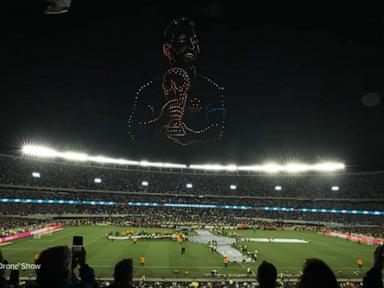
The turf in Rabat was already growing cool under the autumn shadows when the final whistle blew, but the argument was only just beginning.
Football is supposed to be simple. Two halves, twenty-two players, one ball, and a referee's whistle that draws a hard, unyielding line under ninety minutes of human endeavor. When the noise fades, the scoreboard remains. That is the social contract of the sport. We accept the heartbreak of a deflected cross or a missed penalty because the rules tell us the field is the absolute courtroom of fate.
Yet, sometimes the field is too small to contain the grievances.
Months have bled away since the Africa Cup of Nations tournament concluded in chaotic, disputed fashion, yet Senegal and Morocco are lacing up their boots once more. Only, this time, they are trading studs for legal briefs. Their rematch is scheduled not under the roaring lights of a stadium, but inside the austere, quiet chambers of the Court of Arbitration for Sport in Switzerland.
Consider what that means for the soul of the game.
Imagine sitting in a high-backed chair in Lausanne, thousands of miles away from the drums of Dakar and the coastal breeze of Casablanca, while lawyers dissect the exact angle of a disputed challenge and the precise psychological state of a technical area. It feels unnatural. It feels like trying to weigh smoke on a kitchen scale.
To understand why two footballing giants of the African continent are fighting a proxy war in a Swiss courtroom, you have to look past the bureaucratic filings and touch the raw nerve of national pride. In West Africa, football is breath and pulse. In the Maghreb, it is an article of faith and fierce ambition. When these two powerhouses collide, the gravity of the match pulls in millions of people who measure their joy and their collective dignity by what happens between the white lines.
When a match ends in a disputed administrative ruling, or when disciplinary bodies issue retroactive punishments that feel less like justice and more like a coin toss, the wound doesn't heal. It festers. Fans do not forget the look in a player's eyes when a referee points to the spot, nor do they forget the heavy silence that follows a controversial VAR review.
This legal battle at the CAS is not merely about a technicality. It is about validation.
Think about the players for a moment. They spend their entire childhoods kicking deflated balls on dusty lots, running until their lungs burn, chasing a dream that offers a microscopic chance of escape and glory. They endure torn ligaments, grueling flights across continents, and the crushing weight of expectation from hundreds of millions of compatriots. They leave their blood and sweat on the pitch. To have the final chapter of their sweat-soaked labor written by a panel of sports lawyers in Europe feels like a betrayal of the sweat itself.
Yet, recourse is all that remains when the pitch fails to provide closure.
The mechanics of sports arbitration are cold, methodical, and painfully slow. Arbitrators sift through pages of video evidence, referee reports, and statutory bylaws. They look for procedural flaws, breaches of fair play, and administrative overreaches. They do not care about the roar of the crowd. They do not care about the tears of a nineteen-year-old winger who played his heart out on a strained hamstring. They care about precedent, jurisdiction, and narrow legal thresholds.
This creates a strange, jarring dissonance. The passion of the African continent's football faithful crashes against the unbending wall of Swiss jurisprudence.
Why does this keep happening? Because the stakes have grown too high for the administrative structures to bear. Modern football is an industrial titan fueled by multi-million-dollar broadcast rights, state-backed sponsorships, and geopolitical prestige. A single tournament victory or qualification berth alters the economic and political landscape of a federation. When millions of dollars and national honor hang in the balance, no one is willing to simply accept a bad call and walk away.
The courtroom has become the new penalty box.
As the legal teams trade arguments in Lausanne, the supporters back home wait in a state of suspended animation. The joy of the original tournament has long since curdled into suspicion. Every administrative delay is read as a conspiracy; every procedural update is treated like team news ahead of a derby.
This is the hidden cost of the modern game. We have traded spontaneity for governance, and romance for regulation. We have built a system so vast and litogenic that even a simple game of football can end up marooned in a Swiss valley, miles away from the people who love it most.
Yet, beneath the cynicism, there is a stubborn, unbreakable hope.
Senegal and Morocco will play again. Not tomorrow in Lausanne, and perhaps not next week in a courtroom, but eventually, the lawyers will pack their briefcases, the judges will sign their rulings, and the teams will return to the green grass. The ball will roll. The drums will sound. The past will be swallowed by the fierce, beautiful urgency of the next kickoff.
Because no matter how many courts try to cage the game, football always escapes. It runs back to the streets, back to the children, back to the simple, wild truth that on any given day, eleven human beings can lace up their boots and make an entire continent stand still.