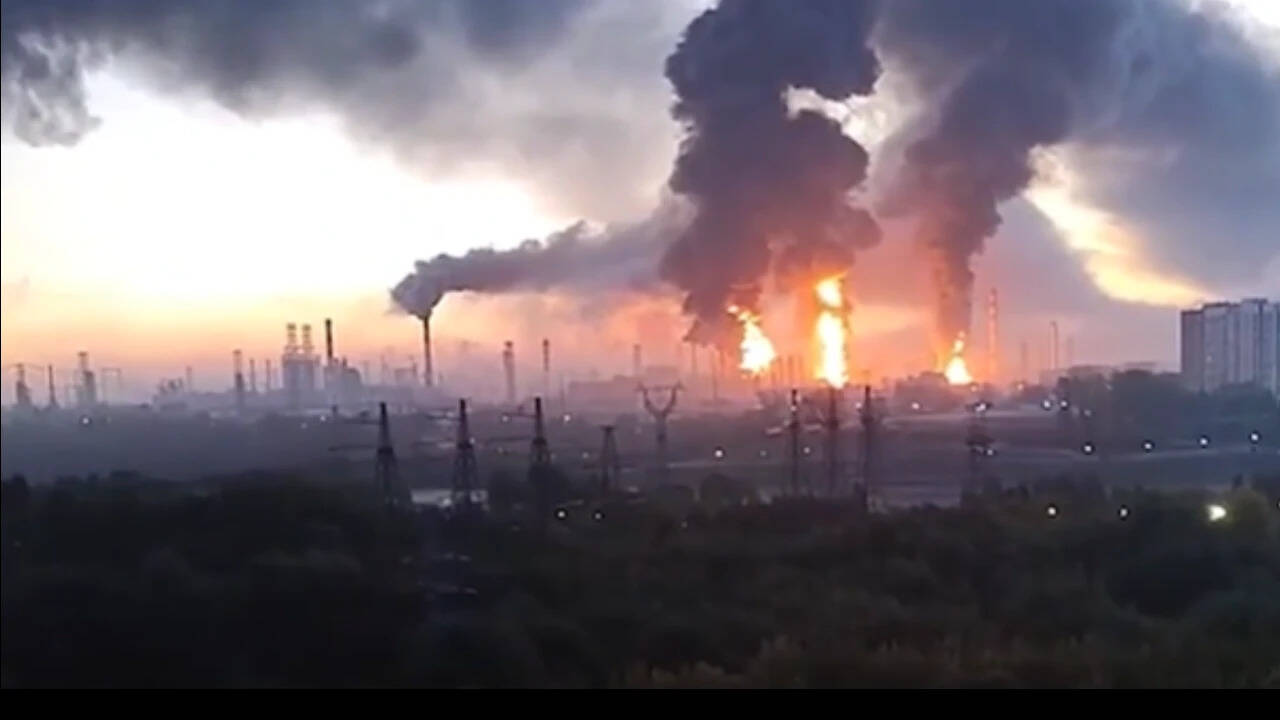
The skies over Eastern Europe look completely different than they did a few years ago. When a barrage of over one thousand drones swarm targets deep inside Russian territory in a single night, nobody is talking about traditional dogfights or trench warfare anymore. This is industrial-scale attrition. Ukraine's strategy of launching massive aerial fleets isn't just about making headlines; it's a calculated effort to hit Moscow where it actually bleeds—its oil and fuel economy.
If you look at the macro picture, the sheer volume of these unmanned aerial vehicles changes everything we thought we knew about air defense. Let's break down why these massive drone raids matter, how they work, and what they mean for the trajectory of the conflict.
The Shift Toward Long-Range Industrial Sabotage
For decades, military planners obsessed over multi-million-dollar stealth jets and precision-guided cruise missiles. Those weapons still matter, but they are scarce and expensive. Ukraine's recent campaigns rely on cheap, locally produced long-range drones that can travel hundreds of miles to reach critical infrastructure like the Omsk and Yaroslavl oil refineries.
When reports surface of Russian air defenses intercepting hundreds of drones over a dozen regions, the sheer scale reveals a staggering logistical burden on Moscow. Even when a high percentage of the swarm gets shot down, the volume guarantees that some get through. And when a drone hits a major refinery, the damage isn't just cosmetic. Fires rage for hours, processing units grind to a halt, and local fuel supplies face immediate strain.
Why Refineries Are the Ultimate Target
Oil is the engine of the entire Russian state apparatus. It funds military operations, keeps heavy industry moving, and supplies fuel directly to frontline troops. By targeting refineries rather than just frontline positions, Kyiv is playing a long game.
Think about it from an economic standpoint. Repairing a specialized cracking unit at a massive oil processing plant requires advanced Western-grade technology and parts that are brutally difficult to source under heavy international sanctions. According to recent energy market assessments, cumulative strikes have disrupted a significant portion of Russia's total refining capacity. Long lines at gas stations in various Russian regions aren't a glitch; they are the direct symptom of a supply chain buckling under sustained, low-cost aerial pressure.
The Technology Driving the Swarms
You can't talk about these attacks without looking at the tech evolution. We've moved past manual, line-of-sight piloting. Modern long-range strikes rely heavily on automated navigation, resilient communications, and swarm tactics designed to overwhelm radar networks.
- Autonomous routing: Drones use pre-programmed GPS and terrain-matching software to bypass electronic jamming.
- Distributed manufacturing: Instead of depending on a single central factory, parts are built across decentralized workshops to survive counter-strikes.
- Cost asymmetry: Building a drone costs a fraction of the surface-to-air missile required to shoot it down. That math favors the attacker every single day of the week.
Moscow has tried to adapt by moving mobile air defense units around major cities and critical industrial zones, but covering a country of Russia's size is practically impossible. You can't put a Pantsir system next to every single oil tank and pipeline valve.
What Happens When the Smoke Clears?
The broader geopolitical fallout of these strikes is messy. International partners watch closely as the energy markets react to every major refinery fire. Prices fluctuate, diplomatic tensions flare over export agreements, and both sides dig in deeper.
Yet, the fundamental reality on the ground remains unchanged. As long as the war persists, the skies will keep filling up. Ukraine has proven that low-cost innovation can successfully bypass traditional air defense architecture, forcing a complete rethink of how modern superpowers protect their domestic rear.
The next phase of this conflict won't be decided solely on the front lines in the east. It will be decided hundreds of miles away in industrial zones, engineering workshops, and fuel depots where every single explosion echoes straight back to the Kremlin's bottom line.
Russia's BIGGEST oil refinery hammered for 8 hours by Ukrainian attack drones
This video provides an up-close look at the massive scale of recent Ukrainian drone strikes targeting Russia's core energy infrastructure.