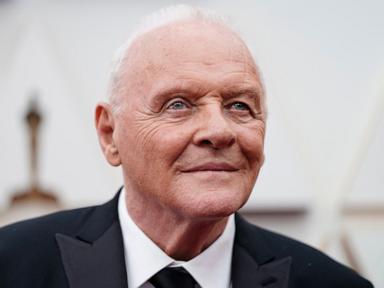
Long before Sir Anthony Hopkins brought Hannibal Lecter to terrifying life or won Academy Awards for dissecting human frailty on screen, he sat at a upright piano in Port Talbot, Wales, trying to make sense of notes on a page. The world knows him as an acting titan, a master of cinematic timing who commands rooms with a single, unblinking stare. Yet, behind the multi-decade filmography lies an unfulfilled obsession. Music was his first desire.
When Decca Classics released his album Life Is a Dream, performed by the Philharmonia Orchestra under the baton of Gustavo Dudamel, media outlets rushed to frame it as a charming retirement hobby. A cute sideline for an octogenarian actor looking for a creative outlet. That framing misses the entire point. Hopkins has spent over sixty years writing classical compositions, drafting melodies on hotel stationery between film shoots, quietly harboring ambitions that predate his first theatrical curtain call. Meanwhile, you can read other stories here: Why Jason Sudeikis Had to Fight to Cast Juno Temple on Ted Lasso.
The Anatomy of a Hidden Catalog
To understand the weight of this musical release, one must look past the glossy PR sheets and examine the timeline. Hopkins did not pick up manuscript paper last Tuesday. Pieces like "Bracken Road"—written originally in 1963 while he was a young repertory actor at the Liverpool Playhouse—reveal a mind that was composing structural harmonies while everyone else was focused on his dramatic delivery.
Most celebrity vanity projects arrive fully formed by committee, ghost-written by hired hands who polish a famous person's mediocre humming into corporate pop. This project operates on an entirely different architectural plane. Hopkins writes classical scores. These are intricate, demanding arrangements requiring serious orchestral interpretation. To see the complete picture, we recommend the detailed analysis by Entertainment Weekly.
When a non-traditional composer approaches an elite institution like the Philharmonia Orchestra, skepticism usually runs high. Orchestral musicians protect their domain fiercely. They have spent decades mastering their instruments; they have little patience for amateurs sliding into classical formatting just because a studio executive owes them a favor.
Yet, Dudamel and the orchestra did not just humor a Hollywood knight. They took his manuscripts seriously because the underlying counterpoint and romantic melancholy of compositions like "Margam" carry legitimate emotional resonance. Hopkins sat in the recording sessions, not as a passive celebrity mascot, but as a composer giving specific notes on tempo, phrasing, and emotional intent.
The Curse of the Monolith
Hollywood loves a monolith. The industry prefers to box its icons into neat categories so marketing departments can sell merchandise and posters without confusing the public. If you win Oscars, you are an actor. If you direct blockbusters, you are a director. Crossing these arbitrary boundaries invites institutional eye-rolling.
Consider how the press historically treated actors who dared step behind a microphone or pick up a paintbrush. They are met with immediate cynicism. Critics look for flaws to validate the assumption that multi-hyphenates are merely dabblers suffering from unchecked ego.
Hopkins has spent a lifetime sidestepping this trap by keeping his music largely private. For decades, his compositions existed mainly in notebooks or performed by proxy on rare occasions—such as André Rieu turning his waltz "And The Waltz Goes On" into a global surprise. By waiting until his late eighties to issue a definitive, major-label classical record, Hopkins bypassed the careerist anxiety that plagues younger artists. He does not need the validation. He does not care if a cynical reviewer dismisses his string arrangements. He is simply cashing in a creative check he wrote to himself sixty years ago.
The Architecture of Welsh Melancholy
The sonic landscape of Life Is a Dream is distinctly shaped by geography and memory. South Wales in the 1930s and 40s was an industrial, hardscrabble place. For a sensitive kid growing up amidst coal smoke and damp sea air, art offered an escape hatch.
Hopkins has frequently spoken about feeling like an outsider, a lonely child who struggled in traditional classrooms before finding solace in the arts. That isolation breeds a specific type of composition. The tracks on the album are heavy with sweeping, cinematic nostalgia, echoing the late-romantic styles of Rachmaninoff or Elgar. They sound like the internal monologue of a man looking backward across an immense ocean of time.
When cellist Gregorio Nieto or pianist Sergio Tiempo tackle these movements, they are interpreting structures built by a self-taught mind that relied on raw instinct rather than conservatory training. That lack of formal early schooling in composition actually works to his advantage. Unburdened by strict academic dogmas of a specific era, Hopkins writes melodically, prioritizing emotional narrative over structural compliance.
Beyond the Novelty Act
The music industry is currently obsessed with cross-platform optimization, pushing actors to release lifestyle brands or TikTok-friendly singles to juice algorithmic metrics. Hopkins’ project stands as an accidental rebellion against that hyper-modern churn.
It is a physical, monumental record meant to be consumed on high-end audio gear or vinyl, featuring physical liner notes and complex orchestral arrangements. It asks listeners to sit down in a quiet room and pay attention for an hour. In our current cultural climate, that demand is almost radical.
We can debate the academic merits of his orchestration or compare his thematic scope to twentieth-century masters. Those are fair critical exercises. But dismissing the work as a rich man's hobby ignores the sheer psychological persistence required to maintain a secret artistic identity for half a century while the world knows you only for wearing a mask or shouting lines on a soundstage.
Anthony Hopkins is not transitioning into a new career. He is finally finishing his first one. The performance on the screen was always just the day job that paid the rent while the notes waited in the dark.