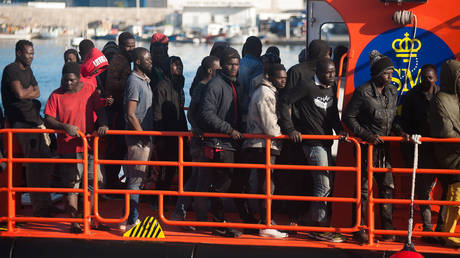
Spain has initiated an extraordinary regularization process via Royal Decree 316/2026, offering a direct pathway to legal residence and work authorization for undocumented foreign nationals present in the country prior to December 31, 2025. While public administrative unions estimate the eligible pool could touch one million individuals, official Ministry of Inclusion, Social Security, and Migration projections explicitly target approximately 500,000 baseline beneficiaries. This divergence highlights a structural gap between gross irregular presence and the subset of individuals capable of clearing rigid documentary and legal thresholds within the strict, un-extendable window closing June 30, 2026.
This policy shift positions Spain as a distinct macroeconomic counter-weight to the prevailing restrictionist immigration regimes across Western Europe. Rather than treating irregular migration as purely a border-enforcement problem, the Spanish state is executing a massive capital-reallocation strategy. By transitioning hundreds of thousands of individuals from the shadow economy into the formal tax and social security matrices, the state attempts to correct structural demographic imbalances while legalizing an informal labor supply that already underpins critical economic sectors. Recently making headlines in this space: The Strategic Mechanics of the Indo Pacific Free Trade Framework.
The Dual-Filter Eligibility Architecture
The 2026 extraordinary regularization operates not as an unconditioned amnesty, but as a dual-filter bureaucratic mechanism designed to isolate and formalize economically viable or socially integrated individuals. To pass through the administrative gateway, applicants must simultaneously satisfy absolute structural criteria and distinct situational grounds.
1. The Temporal and Legal Baseline
The first filter demands definitive, objective proof of presence and legal compliance. The administrative burden rests entirely on the applicant to establish: More information on this are explored by Associated Press.
- The Retroactive Presence Threshold: Documented physical presence in Spanish territory prior to January 1, 2026.
- The Continuous Stay Parameter: Proof of at least five consecutive, uninterrupted months of residence at the specific time of application submission.
- The Clean Record Mandate: A verified, clean criminal record certificate from both Spain and the applicant’s country of origin, legally authenticated via the Apostille convention and accompanied by a sworn translation.
2. The Situational Sub-Routes
Once the baseline is cleared, applicants must categorize their claim under one of three structural pillars. Each pillar addresses a specific economic or social friction point within the domestic market.
                  ┌────────────────────────────────────────┐
                  │    EXTRAORDINARY REGULARIZATION 2026   │
                  └───────────────────┬────────────────────┘
                                      │
               ┌──────────────────────┼──────────────────────┐
               ▼                      ▼                      ▼
    ┌────────────────────┐ ┌────────────────────┐ ┌────────────────────┐
    │  EMPLOYMENT PILLAR │ │   FAMILY PILLAR    │ │VULNERABILITY PILLAR│
    ├────────────────────┤ ├────────────────────┤ ├────────────────────┤
    │ • Past work >90d   │ │ • Direct cohabit.  │ │ • Social service   │
    │ • Signed job offer │ │   with minors or   │ │   certification or │
    │ • Self-employed    │ │   dependent adult  │ │   Third Sector     │
    │   declaration      │ │   Spanish citizens │ │   endorsement      │
    └────────────────────┘ └────────────────────┘ └────────────────────┘
The Employment Pillar requires evidence of past unauthorized economic activity totaling more than 90 days within a one-year period, a newly signed employment contract from a certified employer, or a comprehensive responsible declaration detailing a self-employment business plan.
The Family Pillar targets the stabilization of mixed-status households, requiring proof of real, physical cohabitation with minor children, dependent adult children with disabilities, or first-degree ascendants holding legal status.
The Vulnerability Pillar operates as a structural safety net, requiring a formal certificate issued by public municipal social services or registered Third Sector immigration collaborator organizations. In administrative practice, the state treats the lack of legal status itself as an indicator of systemic vulnerability, provided it is validated by these authorized entities.
The Fiscal and Demographic Cost Function
Spain’s immigration strategy is a direct response to a profound demographic bottleneck. The domestic population structure faces an accelerating dependency ratio, driven by a fertility rate well below the replacement threshold and an expanding retired cohort. The financial sustainability of the public pension system relies on expanding the active contributor base.
The formalization of half a million workers alters the state’s fiscal ledger across three distinct vectors:
1. Immediate Revenue Capitalization
Undocumented laborers in the informal economy consume public infrastructure and emergency healthcare services but generate zero direct income tax yield and zero social security contributions. Legalization shifts this cohort into the formal payroll system. With Spain's structural unemployment rate hovering just under 10%, newly regularized workers provide immediate liquidity to the social security treasury without displacing native workers, primarily because they fill structural vacancies that native labor routinely rejects.
2. Eliminating the Informal Discount Factor
The informal economy operates on a discount factor where employers pay sub-market wages to offset the legal risks of hiring undocumented labor. This suppresses aggregate wage growth in sectors like agriculture, hospitality, domestic care, and construction. Formalization forces compliance with the national minimum wage and collective bargaining agreements. While this increases nominal labor costs for small and medium enterprises, it eliminates unfair cross-firm competition based on wage exploitation and drives long-term productivity optimization.
3. Supply Chain Legal Certainty
For corporate entities operating in high-turnover sectors such as intensive agriculture in Almería or hospitality in the Balearic Islands, reliance on subcontractors utilizing undocumented labor introduces severe operational risks, including regulatory fines, supply chain disruptions, and reputational damage. The Royal Decree mitigates this by providing provisional work rights within approximately 15 days of an application being admitted for processing, immediately insulating employers from systemic legal liabilities.
Operational Friction and Implementation Bottlenecks
A systemic evaluation of Royal Decree 316/2026 requires acknowledging its deep operational constraints and the administrative friction built into the execution strategy. The state has purposely structured this amnesty to insulate the broader European Union from immediate demographic spillovers while concentrating the administrative burden within specific domestic agencies.
The initial residency and work permits granted under this process are valid for a duration of exactly one year. Minors receive an extended five-year security window, but for adults, the permit functions as a temporary probationary period. This creates a critical administrative bottleneck twelve months post-issuance: if a regularized worker fails to maintain formal employment or cannot secure an ongoing contract, they risk slipping back into an irregular administrative status. The policy does not guarantee permanent residency; it establishes an entry-level compliance trial.
Furthermore, these authorizations carry strict geopolitical limitations. Under the terms articulated by the Migration Ministry, the residence permits are valid exclusively within Spanish national boundaries. While beneficiaries can travel within the Schengen area for standard tourism up to 90 days, they hold zero legal right to relocate or seek employment in other EU member states. Legal cross-border labor mobility within the Eurozone is restricted until the individual fulfills the rigorous requirements for long-term EU residency, a process requiring five years of continuous, legal residence, or achieves Spanish citizenship, which requires a ten-year legal baseline for most non-Ibero-American nationals.
┌──────────────────────────────────────────────────────────────────────┐
│                  ADMINISTRATIVE PROCESSING PIPELINE                  │
├──────────────────────────────────────────────────────────────────────┤
│                                                                      │
│  [Online Portal / Correos] ──► [Migration Processing Unit]          │
│                                           │                          │
│                                           ▼                          │
│                              [15-Day Admission Check]                │
│                                           │                          │
│                      ┌────────────────────┴────────────────────┐     │
│                      ▼                                         ▼     │
│             [Admitted/Approved]                       [Rejected]     │
│                      │                                         │     │
│                      ▼                                         ▼     │
│         • Provisional Work Rights                  • Return to       │
│         • Access to Public Health                    Shadow Economy  │
│         • Expulsion Stayed                         • Expulsion Risk  │
│                                                                      │
└──────────────────────────────────────────────────────────────────────┘
The decision to route the entire processing volume through the Migration Ministry’s specialized Immigration Processing Unit, rather than utilizing the Interior Ministry’s National Police infrastructure, represents an intentional operational firewall. By decoupling regularisation processing from the state apparatus responsible for deportations and border enforcement, the government intends to maximize application throughput and reduce applicant non-compliance driven by fear of state reprisal.
However, this design element creates a massive administrative strain. The selected processing channels—primarily online submissions via the Social Security portal, physical processing at national post offices (Correos), and specially enabled Social Security offices—face unprecedented processing volumes. A sudden influx of half a million to one million complex applications within a compressed time frame introduces severe operational delivery risks, potentially resulting in extensive processing backlogs that can delay the transition of workers into the formal economy.
Strategic Forecast and Asset Realignment
Organizations operating within Iberia must realign their labor and compliance strategies to capitalize on this structural shifts. The influx of legal labor will alter the cost structures of low-margin, labor-intensive industries over the next 24 months.
Firms must shift from reactive, low-wage informal sourcing models to formal workforce optimization models. Human resource divisions should immediately auditing existing supply chains and subcontractor networks to facilitate the transition of eligible informal workers into formal contract structures during the open window. Legal counsel must ensure that all foreign national staff match the explicit temporal boundaries established by the Royal Decree to avoid severe statutory penalties under the parallel tightening of digital border enforcement via the European Entry/Exit System.
The stabilization of the agricultural and service-sector labor supply will likely reward early-adopting firms with increased operational continuity and absolute immunity from employment-related regulatory actions, while firms failing to formalize their workforces will find themselves systematically cut off from the primary domestic labor pool.
The strategic realities of Spain's 2026 regularization policy are deeply intertwined with the broader European immigration debate. For an in-depth visual breakdown of how these policies contrast with neighboring countries, review How Spain defies Europe's stricter migration policies. This video provides crucial political context on Spain's divergence from EU border trends and the humanitarian factors influencing its current legislative framework.