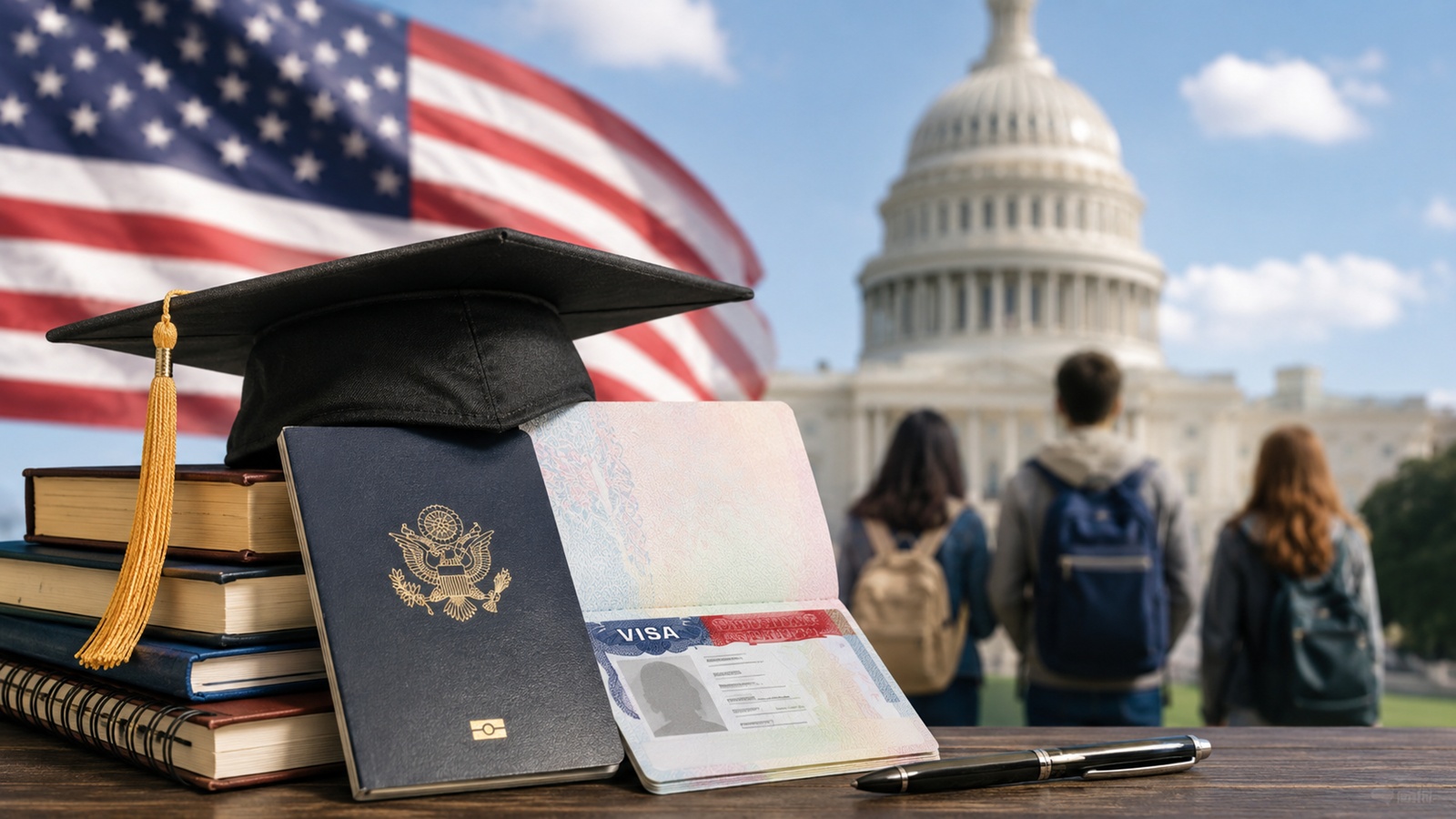
The suitcase has sat zipped shut in the corner of a bedroom in Hyderabad for three months. Inside: three neatly folded sweaters bought for a winter that exists only in textbooks, a framed photograph of a family eating idlis on a Sunday morning, and forty kilograms of unshakeable hope.
Outside that door, the phone rings. It is an automated email notification or a status update on a browser tab that has been refreshed four hundred times today. Administrative processing. Additional documentation required. Or worse, silence. You might also find this similar coverage interesting: The Geopolitical Cost Function of the Kuril Islands Dispute.
This is the anatomy of a student visa delay.
We talk about international education in the language of spreadsheets. We count billions of dollars injected into local economies, tuition fees paid upfront, housing shortages in college towns, and enrollment metrics ticked up or down by decimal points. But numbers do not sweat. Percentages do not stare at ceiling fans at four in the morning, wondering if a three-year plan is unraveling because of a bottleneck three thousand miles away. As extensively documented in recent coverage by The Guardian, the effects are worth noting.
Consider the human cost of waiting.
For months, thousands of bright minds across India have found themselves caught in a bureaucratic holding pattern. They have done everything right. They cleared the standardized tests, wrote personal statements that laid bare their ambitions, and secured coveted admissions from institutions spanning Boston to Berkeley. They earned the right to cross an ocean. Yet, appointments stall. Interview slots vanish. Consular backlogs stretch like elastic bands until they snap.
It is easy to view this through the lens of cold logistics. Consulates are understaffed. Post-pandemic spikes hit hard. Security clearances take time. All true. All valid.
None of it warms the room when an acceptance letter comes with an expiration date.
When a semester starts without you, time changes its texture. Professors begin week three lectures. Group chats form on WhatsApp without your phone number in them. Lease agreements for apartments near campus are broken, forfeiting deposits earned through grueling part-time work or parental sacrifices.
Let us be honest about what is actually being traded here. A visa delay is not merely an administrative inconvenience. It is a suspension of identity. A young woman who spent her entire undergraduate career studying machine learning is suddenly reduced to a case number. A young man who dreamed of designing sustainable architecture is now spending his mornings refreshing a scheduling portal while his peers in Chicago or London are already walking across campus quads.
The irony is sharp. Nations compete fiercely for global talent. They roll out the red carpet in recruitment brochures, painting vivid pictures of multicultural classrooms and boundless innovation. They want the sharpest thinkers, the hardest workers, the most daring risk-takers. But when those individuals pack their bags and stand at the threshold, the door clicks shut halfway.
Why does this happen? The mechanics of modern diplomacy are heavy machinery. Every application is a puzzle piece that must fit into a rigid framework of national security, economic protection, and consular capacity. When the volume of applicants surges past historical norms, the machinery groans. Algorithms flag files for secondary review. Human officers, drowning in a sea of paper and digital records, must exercise caution.
Caution is necessary. But when caution metastasizes into paralysis, it crushes momentum.
Momentum is fragile. If you stall a rocket on the launchpad too long, the mission changes. Opportunities evaporate. Scholarships with strict start dates are rescinded. Family finances, stretched to their absolute limit to show proof of funds for the visa interview, begin to fracture. Loans taken out against ancestral property start accruing interest before a single credit hour has been earned.
Talk to anyone who has lived through this wait, and you will hear a distinct kind of exhaustion. It is not the tiredness of hard work. It is the fatigue of uncertainty.
There was a time when studying abroad felt like a clear trajectory. You applied, you were accepted, you packed, you left. Today, it feels more like navigating a labyrinth where the walls shift every time you take a step. Students become experts in timezone math, forum threads on Reddit, and the subtle art of interpreting consular boilerplate text.
We regret to inform you.
Your application requires further administrative processing.
Please continue to monitor your email.
Words that drain the color from a room.
And yet, the resilience is astonishing. Walk through the neighborhoods of Bengaluru, Delhi, or Pune during visa season, and you see it everywhere. Young people meeting in cafes to practice interview questions, sharing tips on how to handle hypothetical scenarios about post-graduation plans. They coach each other. They share the weight. When one person gets their passport stamped with the foil sticker, a collective cheer goes up in the group chat. It is a win for the tribe.
This fierce determination reveals something vital about the pull of global education. It is not just about the degree at the end of the tunnel. It is about the fundamental human urge to expand horizons, to test oneself against the best in the world, to bring new knowledge back home.
When those doors finally open, the relief is profound. But the scars of the wait remain. You do not forget the months spent in limbo. You do not forget the feeling of your future being held hostage by a queue.
The suitcase in Hyderabad remains zipped for now. But the owner is still refreshing the page. Because in the end, hope is a stubborn thing. It does not pack easily, and it refuses to be left behind.