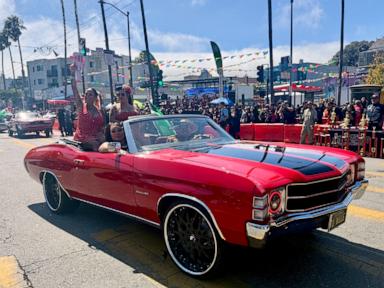
Lowriding culture in San Francisco has finally crossed the threshold from criminalized deviance to officially sanctioned municipal heritage, capping a decades-long struggle for visibility and civil rights. For generations, customized hydraulic Chevrolets and meticulously airbrushed cruisers were treated by city authorities as public nuisances, drawing aggressive police intervention, discriminatory traffic enforcement, and restrictive municipal ordinances designed to push lowriders out of sight. Today, that narrative is undergoing a radical shift. The city is acknowledging lowriding not as a threat to public order, but as a vital pillar of Chicano expression and automotive art. Yet, beneath the political proclamations and ribbon-cutting ceremonies lies a complicated reality of community resilience, generational trauma from targeted policing, and the ongoing fight to keep cultural spaces alive in an increasingly unaffordable urban core.
To understand why this institutional embrace feels both overdue and contentious, one must look at the mechanics of how the city previously governed the streets. During the peak eras of urban renewal and aggressive policing in the late twentieth century, municipal ordinances specifically targeted customized vehicles. Anti-cruising laws gave police officers sweeping discretionary powers to pull over drivers, issue citations, and impound cars under the guise of traffic control and crime prevention. These laws disproportionately affected Latino neighborhoods, turning standard weekend socialization into a high-stakes encounter with law enforcement. Drivers learned to navigate a patchwork of hostile jurisdictions, where dropping a car an inch too low or playing music at a moderate volume could result in hundreds of dollars in fines or the loss of a prized vehicle built over years of meticulous labor.
The shift toward broader recognition did not happen by accident. It was forged through relentless organizing by grassroots collectives, car clubs, and cultural preservationists who refused to let their heritage be legislated out of existence. Groups such as the San Francisco Lowrider Council spent decades attending city council meetings, documenting police harassment, and reframing the conversation around automotive craftsmanship. They argued that lowriding is a sculptural medium on wheels, requiring hundreds of hours of metalwork, upholstery, and custom painting. Each car serves as a rolling canvas that tells the story of family history, political resistance, and neighborhood pride. When city officials finally began walking back old restrictions and welcoming lowriders into official civic events, they were merely catching up to a truth that the community had known all along.
Securing institutional validation brings its own set of anxieties. When a counterculture is adopted by the mainstream, the edges tend to get sanded down for public consumption. Longtime participants worry about commodification, where the grit and political history of the movement are stripped away to make room for sanitized tourism and corporate photo opportunities. Furthermore, San Francisco’s extreme economic displacement poses a massive threat to the infrastructure of lowriding. Building and maintaining a custom car requires garage space, access to specialized parts, and disposable income—all of which are vanishing commodities in a city where working-class communities have been systematically displaced by tech wealth and gentrification. A car club cannot meet in a neighborhood if its members can no longer afford to live within fifty miles of city limits.
The legal and political landscape has evolved, but the economic pressures facing these communities remain fierce. Municipalities can repeal anti-cruising laws and issue ceremonial proclamations, yet they cannot easily reverse the skyrocketing cost of urban real estate that threatens the garages and workshops where the real work happens. Hydraulic pumps, chrome plating, and custom upholstery demand physical spaces where mechanics and artists can spend long hours perfecting their craft. As industrial zones and working-class pockets shrink, the physical architecture of lowrider culture faces an existential squeeze.
The recent wave of official recognition in San Francisco represents a monumental victory for cultural preservation, proving that persistence can reshape hostile municipal policies. Cruisers still roll down Mission Street, but they do so now with the backing of history, civic pride, and legal protection that was unthinkable thirty years ago. The asphalt remains contested ground, shaped by the tension between commercial redevelopment and authentic neighborhood tradition. The hydraulic bounce of a classic Impala is more than just a mechanical display; it is a persistent heartbeat echoing through streets that tried to silence it.