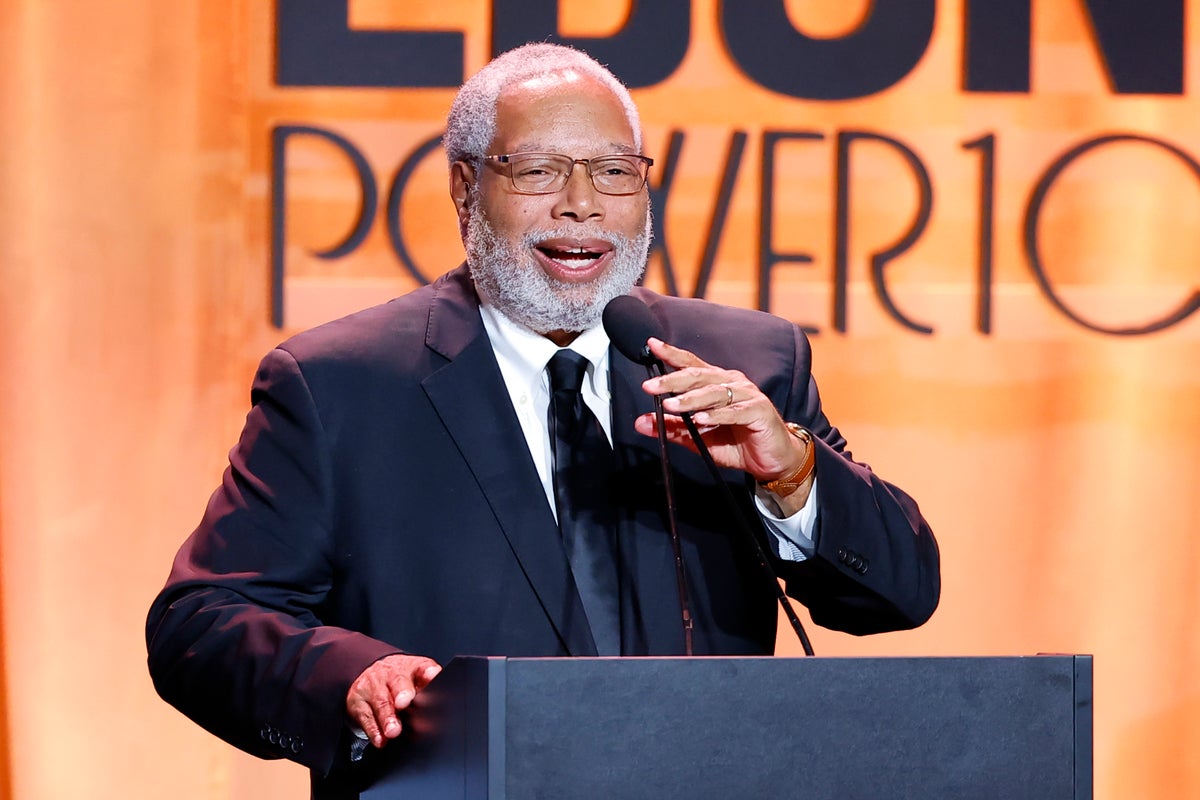
Lonnie Bunch is stepping down. The first Black secretary of the Smithsonian Institution announced his retirement, wrapping up nearly four decades of service amid a relentless political storm.
If you have been following the news, you already know the narrative pushed by certain headlines. Washington politics finally broke the man who built the National Museum of African American History and Culture. But the reality of his departure is far more nuanced, messy, and human than a simple partisan scorecard suggests.
Let us look at what actually happened behind the scenes at America's most famous museum complex.
The Pressure Cooker at the Smithsonian
For over a year, the Trump administration has mounted an aggressive campaign against the Smithsonian Institution. Officials targeted flagship exhibits, issued sharp executive orders, and released a scathing 162-page report from the Domestic Policy Council. This report accused the National Museum of American History of sliding into progressive political activism, arguing that curators spent too much time highlighting racism and oppression while ignoring the foundational achievements of America's founders.
The administration went as far as suggesting warning labels be placed at museum entrances, claiming the exhibits were curated by people who "don't want you to love your country".
Bunch did not stay quiet. He pushed back through internal staff memos, defending the institution's commitment to rigorous scholarship and insisting that the Smithsonian's job is to present history in all its complex, unvarnished truth. He famously stated that he never believed it was his job to make the rough edges of history smooth, even for a sitting president.
Yet, when Bunch announced his retirement to the Board of Regents, he offered a simpler, more personal reason to the press.
"I have to be honest, it has been stressful," Bunch admitted in interviews. "And at a certain point, I'd like to wake up in the morning and not look at my cellphone."
At seventy-three years old, after spending roughly thirty-eight years inside the Smithsonian ecosystem, he wanted time with his children and grandchildren. Work had taken precedence for four and a half decades. Sometimes, burnout is just burnout.
A Legacy Carved in Stone and Memory
You cannot understand the weight of Bunch's retirement without looking at what he built. Back in 2016, he opened the doors of the National Museum of African American History and Culture after years of grueling fundraising, artifact collection, and political maneuvering. That building on the National Mall became an instant cultural landmark. It proved that telling the full story of America draws millions of eager visitors rather than dividing them.
When he became the fourteenth secretary of the Smithsonian in 2019, he broke a color barrier that had stood for 173 years. He steered the entire twenty-one-museum network through a global pandemic, reckoning with looted artifacts, and internal ethical dilemmas—including a public apology regarding human remains housed in historical collections.
His leadership style was deliberate. He favored quiet institutional defense over flashy cable news shouting matches. That approach worked well during quieter political eras. In the current climate of perpetual culture war, holding the middle ground makes you a target from both flanks.
What Happens to National History Now
The departure of Lonnie Bunch leaves a massive vacuum at the top of America's cultural repository. The Smithsonian Board of Regents—chaired by Chief Justice John Roberts—faces a daunting task in finding a successor.
The next leader will step into an active crossfire. The executive branch has made it clear that federal funding and administrative oversight will be leveraged to reshape how national museums frame American identity. Independence is easy to claim on paper, but much harder to protect when budgets and executive orders are flying.
Bunch is staying on through the end of the year to ensure a peaceful transition and to celebrate the tenth anniversary of his signature museum. After that, he walks away from the daily notifications, the congressional inquiries, and the endless debates over heritage.
History will judge how the Smithsonian navigates this next chapter. For now, the man who spent a lifetime collecting America's stories is finally ready to write his own quiet ending.