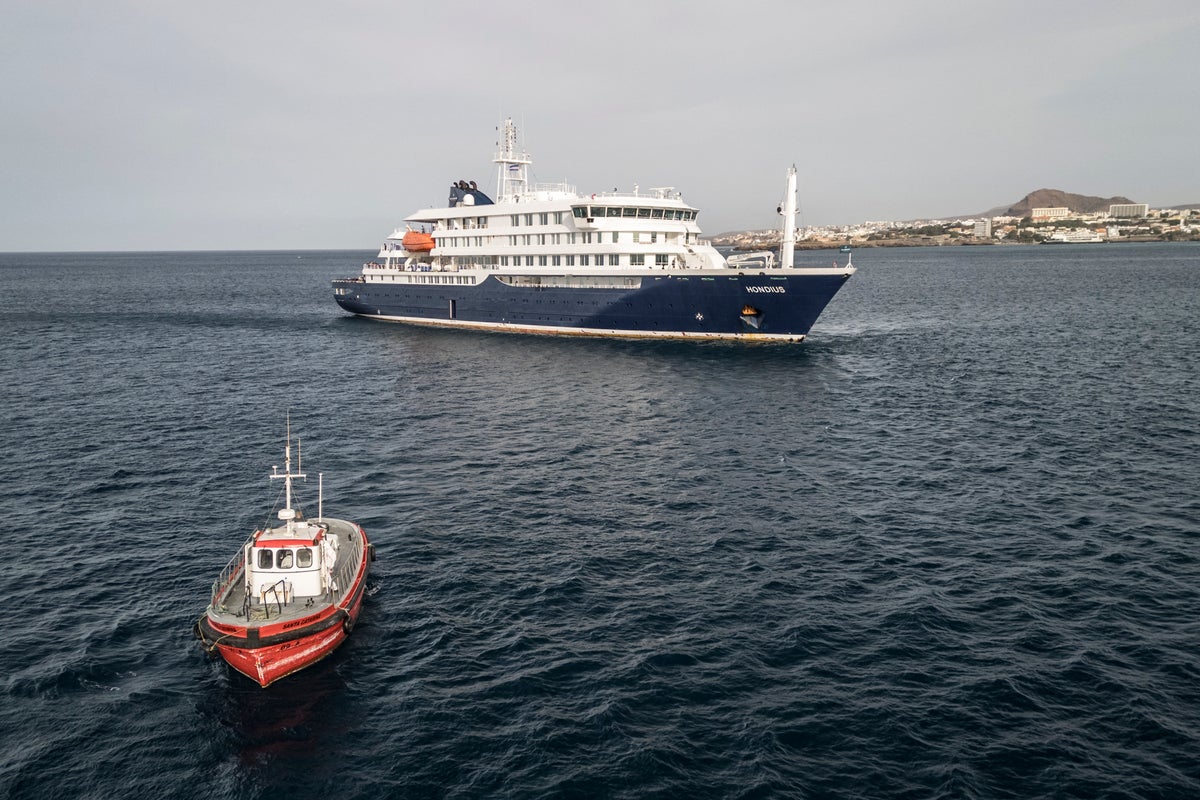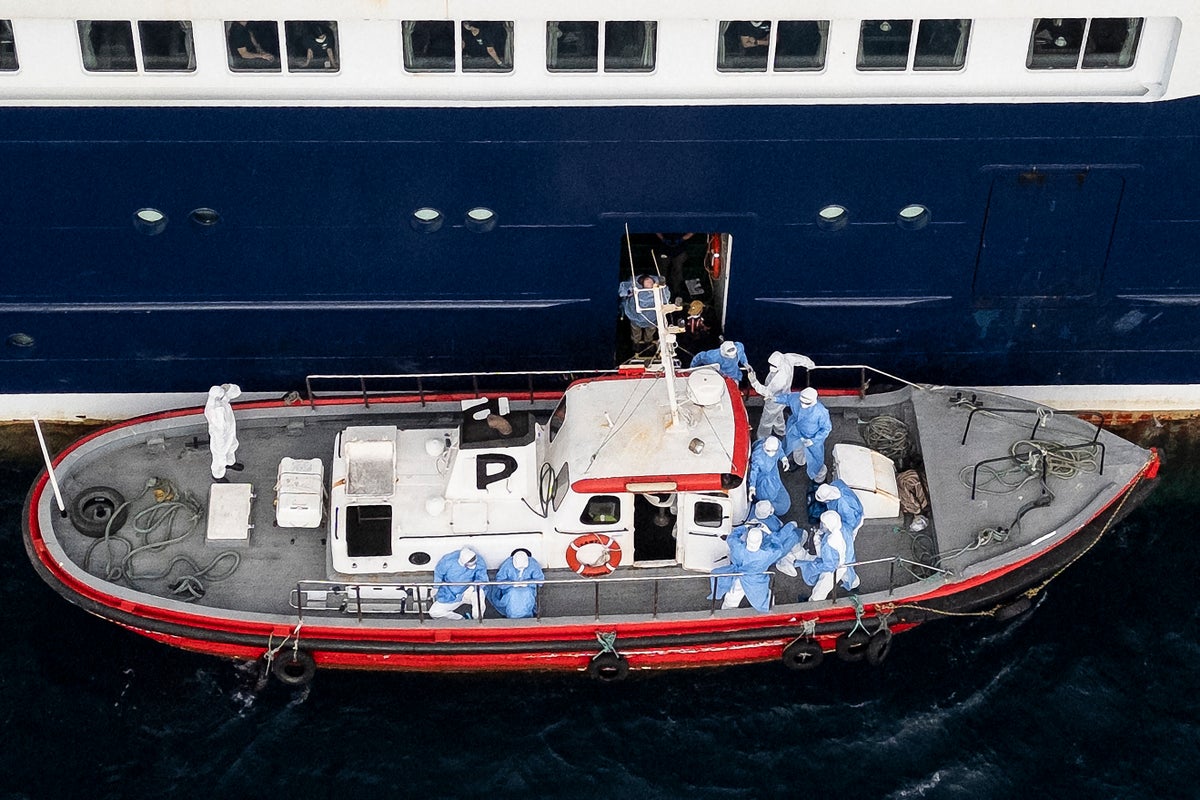
The sea has a way of making the rest of the world feel like a distant, flickering memory. When you are on a cruise ship, the horizon is a clean slate, and the rhythmic pulse of the engine serves as a heartbeat for a temporary city. But for two passengers recently returning to the United Kingdom, that heartbeat skipped. The serenity of the deck was replaced by the sterile, white-tiled reality of self-isolation.
They weren't just bringing back souvenirs or sun-kissed skin. They were carrying the weight of a possibility. In other updates, read about: The Glass Fortress on the Waves.
Hantavirus is not a name that usually dances through the mind of a vacationer. We pack for norovirus; we worry about the common cold or a lingering flu. But Hantavirus belongs to a different class of shadows. It is a zoonotic specter, usually lurking in the rural corners of the world, carried in the dry dust of rodent nests and the quiet corners of abandoned sheds. Seeing it mentioned in the same breath as a luxury cruise liner feels like a glitch in the matrix of modern travel.
The Invisible Stowaway
Imagine the scene: a couple settles into their cabin. They have spent months dreaming of this escape. The linens are crisp. The air conditioning hums. Everything is designed to signal safety and opulence. Yet, somewhere in the logistics of the voyage—perhaps in a port of call or a supply chain touchpoint—the microscopic made its move. The Points Guy has also covered this important subject in great detail.
Hantavirus doesn't need a grand entrance. It is patient. It waits in the aerosolized remnants of deer mice or rats. When a space is disturbed, the virus hitches a ride on dust particles, drifting into the lungs of the unsuspecting. Most people think of viruses as things we catch from a cough or a handshake. Hantavirus is different. It is an environmental ambush.
For the two individuals now isolated in the UK, the stakes are not merely personal. They represent the thin line between a contained incident and a public health nightmare. Health officials are moving with a quiet, practiced urgency, tracing steps and monitoring symptoms. This is because the virus, while rare, is a brutal tenant. It can manifest as Hantavirus Pulmonary Syndrome (HPS), a condition that begins with the deceptive simplicity of fatigue and muscle aches before rapidly escalating into a desperate struggle for breath.
The Mechanics of Fear
To understand why a few cases on a ship spark international headlines, we have to look at the math of biology. While Hantavirus is typically not known to spread from person to person—unlike the respiratory giants that shut down the world in 2020—the severity of its impact makes it a high-priority target for containment.
Consider the "Andes" strain found in South America, which has shown a terrifying ability to jump between humans. While the current concern regarding the cruise ship likely involves more common strains, the mere presence of the virus in a high-density, closed-circuit environment like a ship changes the risk profile.
Modern cruise ships are marvels of engineering, but they are also closed ecosystems. We share the same air, the same buffets, and the same narrow corridors. When a threat enters this ecosystem, the walls feel smaller. The luxury of the ship becomes a gilded cage. The "self-isolation" mandated for these travelers isn't just a suggestion; it is a vital firewall.
A Fragile Peace
We live in an era where we expect total control over our environment. We have filtered water, HEPA-cleaned air, and sanitizers at every doorway. But the incident on this ship serves as a jarring reminder of our proximity to the wild. The barrier between our sanitized lives and the ancient, viral world is more porous than we like to admit.
Think of the health officials currently working this case. They aren't just looking at medical charts. They are looking at a narrative of movement. Where did the ship dock? Who handled the cargo? Was there a breach in the sanitation protocols during a routine stop in a region where rodent populations are high?
Every answer is a stitch in the safety net.
The two passengers in the UK are currently in a state of suspended animation. They are waiting for the window of incubation to close. It is a psychological marathon. Every sneeze, every slight rise in body temperature, is analyzed with a level of scrutiny that borders on the obsessive. In isolation, the silence is loud. You realize how much of your life is built on the assumption of health, and how quickly that foundation can tremble.
The True Cost of Connectivity
We often talk about the "global village" in terms of trade and technology, but the most efficient thing we exchange is our biology. A virus that started in a remote nest can be in a London living room in forty-eight hours.
This isn't a reason to stop traveling, but it is a reason to stop taking the logistics of health for granted. The "dry, standard facts" of a news report tell us that two people are isolated. The human reality is that two people are currently staring at the walls of their homes, wondering if their last vacation was a brush with something far more permanent than a memory.
They are the canary in the coal mine for the cruise industry. As ships grow larger and itineraries more exotic, the intersection between human luxury and the raw, unedited natural world becomes more frequent. We are encroaching on habitats, and the inhabitants are pushing back in ways we cannot see.
Beyond the Headlines
The news cycle will move on. It always does. If these two passengers remain healthy, the story will dissolve into the archives. But the lesson remains.
Health security is not a static achievement; it is a constant, shifting labor. It is the work of the port inspector who checks for signs of infestation. It is the diligence of the ship's doctor who recognizes a symptom that doesn't quite fit the usual profile. It is the cooperation of passengers who agree to lose their freedom for a few weeks to ensure the safety of the many.
We tend to view these events as "outbreaks" or "scares," but they are actually proofs of concept. They prove that our monitoring systems work. They prove that despite our vulnerabilities, we have the tools to catch the microscopic stowaways before they reach the shore in force.
As the sun sets over the Atlantic, far from the UK shores where two people sit in quiet rooms, other ships continue their journey. The music plays on the lido deck, and the buffets are replenished. The passengers laugh, unaware of the silent war being waged in labs and isolation wards to keep their world spinning.
The cabin door is a thin piece of wood and metal, but right now, for two people, it is the most important border in the world. It is the line between the life they knew and the one they are waiting to reclaim. They sit in the quiet, listening to the hum of a world that is suddenly very small, very fragile, and very much alive.