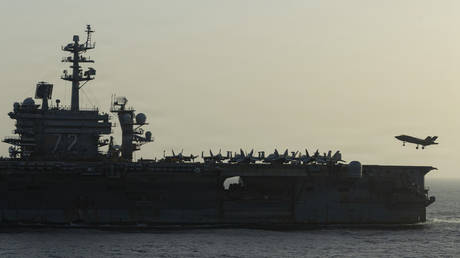
After more than 250 consecutive days at sea without a single port visit, the USS Abraham Lincoln is finally steaming home. For the roughly 5,000 sailors and Marines aboard, the grueling nine-month deployment to the Middle East is wrapping up. But the massive floating fortress isn't returning to a quiet hero's welcome without baggage. It leaves behind a fierce debate over how far Washington can stretch a naval crew before things start breaking down.
If you thought modern military deployments operated on neat, predictable six-month schedules, current events have completely upended that assumption. The Lincoln originally left San Diego back in November, heading toward the Pacific. Then the regional war with Iran flared up, throwing out the rulebook. The ship got redirected straight into a high-threat combat zone, keeping thousands of sailors trapped in a relentless loop of high-stress combat air operations.
Reports leaked via military outlets like Navy Times and Stars and Stripes revealed a grim onboard reality. We are talking about broken plumbing, dwindling food supplies, strained water systems, and mounting psychological distress. Families back home started speaking out after receiving desperate text messages. The situation even prompted Democratic lawmakers to demand answers from the Pentagon regarding basic sailor welfare.
Predictably, the official narrative tried to smooth over the cracks. Central Command leadership insisted mental health numbers remained low relative to the entire fleet. White House figures dismissed the accounts entirely, calling reports of poor conditions fake. Yet naval veterans and defense analysts know better. Spending nearly nine months locked inside a floating city under constant combat conditions alters a crew. When you pull away routine port visits, humans hit a breaking point.
The cost of overextending these platforms goes way beyond individual comfort. The USS George Washington has finally arrived in theater to take over the patrol duties. Filling that massive operational gap required pulling assets away from other vital strategic zones, creating a glaring carrier vacuum in the western Pacific. Beijing has wasted zero time taking advantage of that opening, staging naval drills and flexing muscle near regional allies while Washington's attention stays glued to the Middle East.
Military planners face a brutal math problem. The United States maintains a shrinking fleet trying to cover expanding global flashpoints. When deployment extensions become the default band-aid for political crises, the hardware degrades and the personnel suffer.
The USS Lincoln is scheduled to pull into San Diego after a three-week transit. Families will cheer on the docks, and officials will hand out medals. But unless the Pentagon fundamentally rethinks how it juggles endless Middle East commitments with fleet fatigue, the next crew tapped for an open-ended stint will face the exact same quiet crisis.