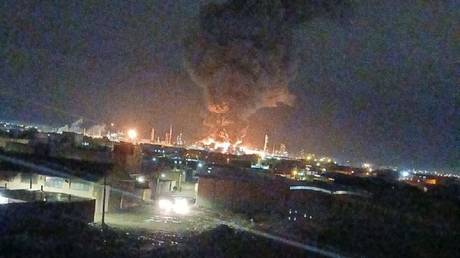
The arrival of a Russian-sourced crude oil tanker into Cuba’s Exclusive Economic Zone (EEZ) is not a singular maritime event; it is a signal of a mature, multi-layered logistical workaround designed to mitigate the impact of G7 price caps and European Union embargos. When an Aframax or Suezmax vessel enters Cuban waters, it represents the final leg of a complex supply chain that prioritizes political alignment and sovereign debt swaps over standard market-clearing prices. To understand the strategic implications of these shipments, one must analyze the intersection of maritime law, energy chemistry, and the "dark fleet" operational model.
The Triad of Maritime Evasion Frameworks
The movement of Russian Urals crude to the Caribbean operates under a specific set of tactical maneuvers. Standard commercial shipping relies on transparency through Automatic Identification Systems (AIS), Western P&I (Protection and Indemnity) insurance, and transparent ownership. Russian-Cuban energy flows systematically bypass these three pillars.
- AIS Manipulation and Dark Fleet Utilization: Vessels carrying Russian crude frequently employ "spoofing" or "going dark." By disabling AIS transponders, a ship hides its exact location during critical windows, such as Ship-to-Ship (STS) transfers. In the Cuban context, this allows for the obfuscation of the oil's origin, potentially mixing Russian grades with other crudes to create a "neutral" blend that is harder to trace for compliance officers.
- Sovereign Insurance Substitution: Because Western insurers are barred from covering vessels carrying Russian oil priced above $60 per barrel, these tankers utilize Russian, Chinese, or "gray market" insurance. This shifts the environmental and financial risk from private markets to the state. If a spill occurs in the Caribbean EEZ, the legal recourse for affected nations is effectively neutralized by the lack of Western re-insurance.
- Jurisdictional Complexity: The tankers often fly flags of convenience—nations like Gabon, Panama, or the Cook Islands. This creates a jurisdictional buffer that complicates enforcement. When a vessel enters the Cuban EEZ, it enters a space where US sanctions are already a baseline reality, making further legal threats from the Office of Foreign Assets Control (OFAC) less effective as a deterrent.
The Chemistry of Dependency and Refinery Constraints
A critical bottleneck in the Russian-Cuban energy trade is the technical specification of Cuba's refining infrastructure. The Cienfuegos refinery, originally a Soviet-era project later upgraded with Venezuelan assistance, is designed for specific API gravity and sulfur content.
Russian Urals is a medium-sour crude. It typically has an API gravity of approximately 31.7 and a sulfur content of 1.35%. This differs significantly from the extra-heavy Venezuelan crudes Cuba has historically relied upon. The pivot to Russian crude requires a recalibration of refinery heat balances and catalyst cycles.
The logic of these shipments is driven by the Refining Margin Function:
$$M = P_{products} - (P_{crude} + C_{op} + C_{trans})$$
Where:
- $M$ is the margin.
- $P_{products}$ is the value of refined output (diesel, gasoline, fuel oil).
- $P_{crude}$ is the cost of the Russian barrel, likely heavily discounted or traded for non-monetary bilateral concessions.
- $C_{op}$ is the operational cost of aging Cuban refineries.
- $C_{trans}$ is the elevated cost of long-haul logistics from Baltic or Black Sea ports.
For Cuba, $P_{crude}$ is the variable that makes the math work. If Russia provides the oil on long-term credit or as part of a debt-for-equity swap involving Cuban infrastructure, the inefficiency of the long-distance transport is absorbed by Russian state interests seeking to maintain a geopolitical foothold in the Western Hemisphere.
Structural Bottlenecks in the Caribbean Supply Chain
The entry of a tanker into the EEZ does not equate to an immediate infusion of energy into the Cuban grid. A series of structural bottlenecks dictate the actual utility of the cargo.
- Draft Limitations: Many of the larger tankers used for transoceanic voyages cannot dock directly at Cuba's primary terminals like Matanzas or Havana due to depth constraints. This necessitates STS transfers onto smaller "shuttle" tankers. Every transfer increases the risk of detection and mechanical failure.
- Storage Degradation: Cuba’s storage capacity was severely compromised by the 2022 Matanzas fuel farm fire. The loss of massive storage tanks means the island lacks a strategic buffer. Incoming tankers essentially act as floating storage, which is an extremely expensive use of maritime assets.
- Grid Instability: The Cuban power grid is heavily dependent on fuel oil for its thermoelectric plants. Russian Urals, while versatile, must be processed into heavy fuel oil (HFO) or diesel to keep these plants running. The conversion rate is limited by the uptime of the refineries, which are frequently offline for "unplanned maintenance" due to a lack of spare parts.
The Geopolitical Cost Function
Russia’s decision to send oil to Cuba is a calculated loss-leader. From a pure P&L perspective, selling Urals to India or China is more efficient. The voyage from Primorsk to Havana is nearly 5,000 nautical miles, significantly longer and more expensive than traditional routes.
Russia accepts this cost because it creates a Strategic Hedge. By maintaining the Cuban energy sector, Russia ensures the survival of a friendly administration in proximity to the United States, providing a counterweight to NATO’s influence in Eastern Europe. This is "Energy Diplomacy" as a form of non-kinetic warfare.
The second limitation of this strategy is the "Sunk Cost of Sovereignty." As Cuba becomes more dependent on Russian molecules, its ability to diversify its energy mix toward renewables or Western-integrated LPG (Liquefied Petroleum Gas) diminishes. The infrastructure becomes "locked in" to Russian technical standards.
Identifying the "Shadow Wealth" in the Transaction
While the headlines focus on the physical movement of the ship, the real value is in the financial engineering. These transactions often bypass the SWIFT banking system, utilizing a ledger-based barter system.
- The Barter Component: Cuba provides medical services, intelligence cooperation, or agricultural exports.
- The Debt Component: Russia provides the oil as a loan, knowing the debt will likely be restructured or forgiven in exchange for long-term leases on Cuban ports or industrial zones.
- The Sanctions Premium: The "dark fleet" operators charge a premium for the risk of carrying sanctioned cargo. This premium is paid by the Russian state, effectively subsidizing the Cuban economy.
This creates a cycle where the tanker's arrival is a temporary fix for a systemic problem. The energy crisis in Cuba is not just a supply problem; it is a liquidity and infrastructure problem. One tanker of Russian crude—roughly 700,000 to 1,000,000 barrels—can provide about a month of breathing room for the island's electricity demand, but it does nothing to repair the thermal plants that are operating at 40% efficiency.
Operational Forecast for Caribbean Maritime Security
Expect an increase in the frequency of "shuttle" operations in the coming months. As US pressure on the Venezuelan oil sector fluctuates, Russia will use the Cuban EEZ as a laboratory for testing the limits of Western maritime monitoring.
The strategic play for analysts is to monitor the Vessel Age vs. Insurance Profile. When 20-year-old tankers with no clear ownership enter these waters, the risk of a catastrophic mechanical failure increases exponentially. This is the primary externalized cost of the Russia-Cuba energy bridge.
The next phase of this logistical evolution will involve the permanent stationing of a Floating Storage and Offloading (FSO) unit in the region. This would allow Russia to dump large volumes of oil into the Caribbean and then distribute it in smaller, harder-to-track parcels to various regional partners, effectively turning Cuba into a "laundering" hub for sanctioned hydrocarbons. Monitor the movement of VLCCs (Very Large Crude Carriers) toward the mid-Atlantic; their interaction with smaller Aframax vessels will reveal the scale of the next Russian energy offensive.