The fluorescent lights of the archive room hummed with a low, institutional threat.
Dust motes danced in the stale air above cardboard boxes that smelled faintly of dry adhesive and forgotten urgency. Somewhere inside those boxes, or tucked away on a server drive humming quietly in a basement miles away, sat the digital paper trail. Emails. Internal memos. Drafted responses to public queries. The messy, unfiltered architecture of how decisions actually get made inside a major institution.
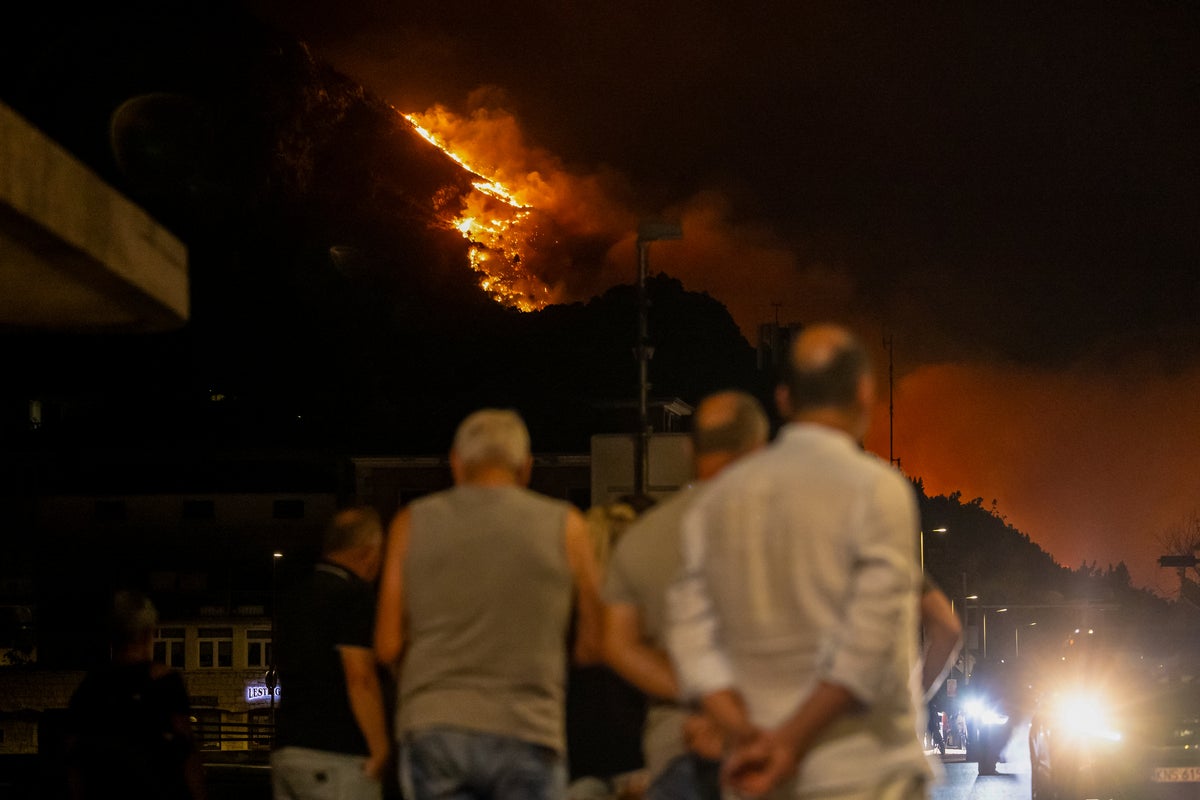
Outside, the real world was burning, flooding, and gasping for breath.
Inside, lawyers were arguing about sentences.
When a court recently slammed the door on a lawsuit demanding the release of University of Michigan emails concerning climate law and policy, it did so with the cold, administrative finality of a judge wielding a heavy stamp. Case dismissed. Public access denied. Move along.
To the casual observer, it was just another legal footnote in a system clogged with motion practice and procedural hurdles. But to anyone who has ever stood in the path of a rising tide or watched a community choke on wildfire smoke, that ruling felt like a physical blow. It wasn't just about email headers or Freedom of Information Act exemptions. It was about who gets to hold the blueprint of our collective survival, and who gets locked out of the room while the foundations are poured.
Consider what happens when the curtains are drawn tightly shut.
In rooms where research meets legislative lobbying, boundaries blur. Academia has long prided itself on being an ivory tower, a sanctuary of pure thought isolated from the grubby compromises of daily politics. Yet, universities are massive corporate entities. They manage billions in endowments. They advise lawmakers. They partner with industries whose historical business models depend on the very carbon extraction destabilizing the planet.
When outsiders ask to see the correspondence between university researchers, administrators, and external energy interests, they are not acting out of idle curiosity. They are trying to map the invisible currents of influence that shape environmental policy.
Imagine a hypothetical researcher, Dr. Aris Thorne. Let us call him a seasoned climate scientist who spent three decades mapping thermal anomalies in Arctic ice sheets. He sits at his desk, staring at a monitor displaying graphs that look like heartbeat monitors flatlining. He knows the data. He knows the danger. He also knows that his university relies on corporate research grants to keep its laboratories funded and its graduate students employed.
When Dr. Thorne drafts an email to a university relations officer about how to frame a controversial upcoming climate bill, that keystroke carries weight. Does he soften the language to appease a major donor? Does he emphasize uncertainty where none exists?
The public never sees that draft. They only see the polished white paper published six months later, scrubbed of its anxieties, sanitized for public consumption.
Lawsuits like the one dismissed in Michigan attempt to pry open those digital drawers. They argue that public institutions funded by taxpayers owe a duty of transparency, especially when public welfare hangs in the balance. The courts, however, frequently lean on statutory exemptions designed to protect academic freedom and the confidential deliberative process of public employees. The judges worry that if every internal email is subject to public subpoena, professors will stop talking honestly. They will self-censor. They will pick up the phone instead of writing a memo.
There is a twisted logic to that judicial fear. Academia thrives on trial and error, on half-baked hypotheses that turn out to be wrong, on the freedom to be spectacularly mistaken behind closed doors before presenting a polished truth to the world.
Yet, applying that principle to climate legislation is a dangerous game.
Climate change is not a theoretical exercise confined to a faculty lounge. It is an active emergency. When public universities engage in the policy arena—influencing environmental laws that dictate whether a coal plant stays open or a pipeline gets approved—they cease to be mere ivory towers. They become active political combatants.
And political combatants do not deserve the cloak of academic secrecy.
The recent court ruling protecting the University of Michigan from releasing those contested climate law emails represents a profound tension between the right to know and the right to think without a hostile audience peering over your shoulder. But let us be entirely honest about the emotional core of this friction: it hurts because trust is already shattered.
We live in an era of profound institutional exhaustion. People do not trust corporations because they have lied about emissions for half a century. People do not trust politicians because legislative texts are routinely written by lobbyists sitting in the shadows. And increasingly, people struggle to trust universities when higher education dances too closely with the financial engines driving ecological collapse.
When a judge rules that transparency must take a backseat to institutional privacy, it deepens a cynical public suspicion. It feeds the gnawing fear that the people steering the ship know we are heading toward an iceberg, but they are too busy negotiating their compensation packages to change course.
We need to talk about what gets lost when information is legally withheld.
It is not just about catching someone in a lie. It is about understanding the mechanics of delay. The greatest weapon against effective climate action has never been outright denialism; delay has always been the preferred instrument. If you can stall a regulation for five years through endless committee reviews, quiet lobbying, and bureaucratic red tape, you have effectively killed it.
Emails reveal the architecture of that delay. They show who suggested watering down a standard. They show which administrator flagged a phrase as too politically risky. They expose the subtle, insidious ways urgency is drained out of policy until nothing is left but an empty shell of good intentions.
When those records remain locked away, the public is forced to fight a shadow war. We argue about the weather while the architecture of our laws remains invisible, protected by legal doctrines that treat public accountability as a secondary concern to administrative convenience.
The judge has spoken. The case is closed. The servers in Michigan keep humming, undisturbed by the ruling, guarding their digital secrets in the dark.
Outside, the wind picks up. The seasonal storms grow heavier, erratic, and fierce. The temperature ticks upward, decimal by decimal, defying every legal brief and judicial standard of review. Nature does not care about statutory exemptions. It keeps its own records, etched directly into the melting ice and the scorched earth, impossible to delete, waiting for no one to sign off on their release.