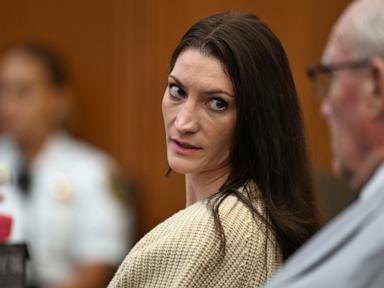
One person stopped eleven others from reaching a verdict in the Lindsay Clancy murder trial. That single vote—cast by juror Michael Desronvil—turned a tense Massachusetts courtroom proceeding into a national flashpoint over mental illness, intent, and what "methodical" actually means when a tragedy happens behind closed doors.
When Desronvil stepped forward in October 2026 to explain why he refused to go along with an acquittal based on lack of criminal responsibility, he didn't offer a dry legal lecture. He talked about feeling struck by how methodical Lindsay Clancy's actions appeared, about his own feelings as a father, and about believing the spotlight had to stay on Cora, Dawson, and Callan. Eleven fellow jurors saw a mother overwhelmed by postpartum psychosis and medication struggles. Desronvil saw deliberateness.
Honestly, that clash is why this case refuses to sit neatly inside standard true-crime boxes. It isn't just a story about a hung jury or a dramatic post-trial interview. It's a collision between how laypeople read behavior in hindsight and how Massachusetts law actually defines criminal responsibility.
How a Methodical Impression Clashed With the Insanity Defense
In everyday conversation, calling someone "methodical" sounds like a slam dunk for premeditation. If a person takes sequential steps, uses specific objects, or follows a chain of actions, it feels like proof of a clear, calculating mind.
Juror Michael Desronvil leaned heavily on that impression after the September 4, 2026 mistrial in Plymouth Superior Court. Following seven days of deliberations and roughly 38 hours of deadlocked debate, Superior Court Judge William Sullivan declared a mistrial when unanimity proved impossible. While eleven jurors were prepared to find Clancy not criminally responsible due to severe mental illness, Desronvil stood firm in his view that she knew what she was doing.
Here's where things get complicated, though. Clinical and legal experts frequently push back on the idea that organized or sequential behavior rules out severe psychosis. People experiencing acute psychiatric crises can still carry out multi-step actions, sometimes driven by fixed delusions, racing fears, or distorted beliefs about protecting others—a concept forensic psychiatrists have discussed in testimony surrounding altruistic filicide.
At the same time, prosecutors weren't inventing their argument out of thin air. The state argued that Clancy acted deliberately, understood the wrongfulness of her actions, and planned the January 2023 killings at the family's Duxbury home. Watching those two interpretations collide in the jury room shows how slippery "intent" can be when psychiatric testimony meets raw human grief.
The Massachusetts Rule That Trips Up Almost Everyone
If you follow high-profile trials on cable news or social media, you probably assume a defendant claiming mental illness has to prove they were insane. In Massachusetts, that assumption is backwards.
Under Massachusetts law, once the issue of criminal responsibility is properly raised, the burden rests on the prosecution—not the defense—to prove beyond a reasonable doubt that the defendant was criminally responsible at the time of the act. That legal standard shapes every single minute of how evidence gets weighed.
Let's break down what that actually means in practice:
- Reasonable doubt cuts differently: If a juror genuinely believes there is reasonable doubt about whether a severe mental illness deprived the defendant of substantial capacity to appreciate the wrongfulness of her conduct or conform her behavior to the requirements of law, the prosecution hasn't met its burden.
- A mistrial isn't an acquittal: When the jury deadlocked 11-1, the result wasn't a win or a loss on the merits. A mistrial leaves the charges unresolved and allows prosecutors to decide whether to retry the case.
- Double jeopardy didn't block a second try: After the mistrial, Clancy's defense sought dismissal of the charges, arguing against dragging the case back before another jury. In November 2026, Judge Sullivan denied the motion to dismiss, ruling that a retrial would not violate double jeopardy protections, and set a retrial date for March 29, 2027.
I've watched plenty of legal debates get derailed because people argue moral blame instead of statutory elements. Moral outrage is real, and nobody in that courtroom was debating the horror of losing three children. Yet a trial court isn't a moral tribunal—it's a structured legal test governed by specific burdens of proof.
Why the Holdout Juror's Interview Hit Such a Raw Nerve
When Desronvil spoke publicly in October 2026, his words didn't land in a vacuum. Other jurors had already gone on television describing emotional deliberations, crying over testimony, and feeling that the holdout wouldn't budge even after intense discussion.
Desronvil's side of the story added a very different layer. He said he felt compelled to speak out after feeling attacked and accused of not following the law, stressed that his focus remained on the children, and described real-world fallout—including unwanted attention around his home and strain on his family—after becoming an unwilling public figure. Reports also noted prior scrutiny of his background, including a 2021 domestic assault charge that was later dismissed, which he addressed during his media appearance.
Look at how quickly public reaction polarized around him:
- Supporters of his stance viewed him as a lone citizen willing to withstand intense pressure from eleven peers because he believed the evidence pointed to deliberate acts rather than a total inability to understand right from wrong.
- Critics of his stance argued that he discounted extensive psychiatric testimony about postpartum psychosis and medication side effects, or questioned whether he applied the legal standard properly.
One thing is pretty clear: jury secrecy protects candid deliberation for a reason. Once jurors start trading competing accounts in press interviews, the public gets snapshots of a private room without the full context of every instruction, exhibit, and side conversation.
What People Misread About Postpartum Psychosis and Criminal Trials
Whenever a case like this dominates headlines, two big misconceptions tend to take over. First, people often blur everyday baby blues or postpartum depression with postpartum psychosis. They aren't the same thing. Postpartum psychosis is a rare, severe psychiatric emergency that can involve hallucinations, delusions, rapid mood swings, and a break from reality.
Second, people assume a diagnosis automatically answers the legal question. It doesn't. Two forensic experts can examine the same medical records, medication history, and timeline and reach sharply different conclusions about how much control or awareness a person had in a given moment.
That's why the Lindsay Clancy case remains so agonizingly divided. Her defense pointed to documented mental health struggles, medication adjustments, and expert testimony on severe illness. Prosecutors pointed to evidence they said showed planning and awareness. And a single juror's reaction to how methodical the acts seemed was enough to halt the entire proceeding.
Practical Ways to Follow the Case Without Getting Baited by Headlines
With a retrial scheduled for March 29, 2027 and pre-trial logistics hearings coming up, you're going to see plenty of hot takes, viral clips, and selective quotes over the next few months. If you want to actually understand what happens next rather than getting pulled into noise, a few habits help a lot.
- Read primary court updates and wire reports over viral clips. Short clips stripped of context rarely capture jury instructions, evidentiary rulings, or nuances in witness cross-examination. Outlets like AP News and PBS News provide steady, fact-checked reporting on court filings and rulings.
- Separate "methodical behavior" from "legal proof." Notice when commentary uses words like calculated, methodical, or deliberate as shorthand for guilt, and check how those terms connect to Massachusetts's actual standard for criminal responsibility.
- Keep an eye on pre-trial motions and charge decisions. Watch whether prosecutors proceed strictly on the existing murder indictments as the March retrial approaches, and pay attention to rulings on evidence, expert testimony, and media or security rules.
If you or someone near you is dealing with overwhelming distress after childbirth or thoughts of self-harm, help is available right now—in the U.S., you can call or text 988 to reach the Suicide & Crisis Lifeline, or connect with maternal mental health support through Postpartum Support International.