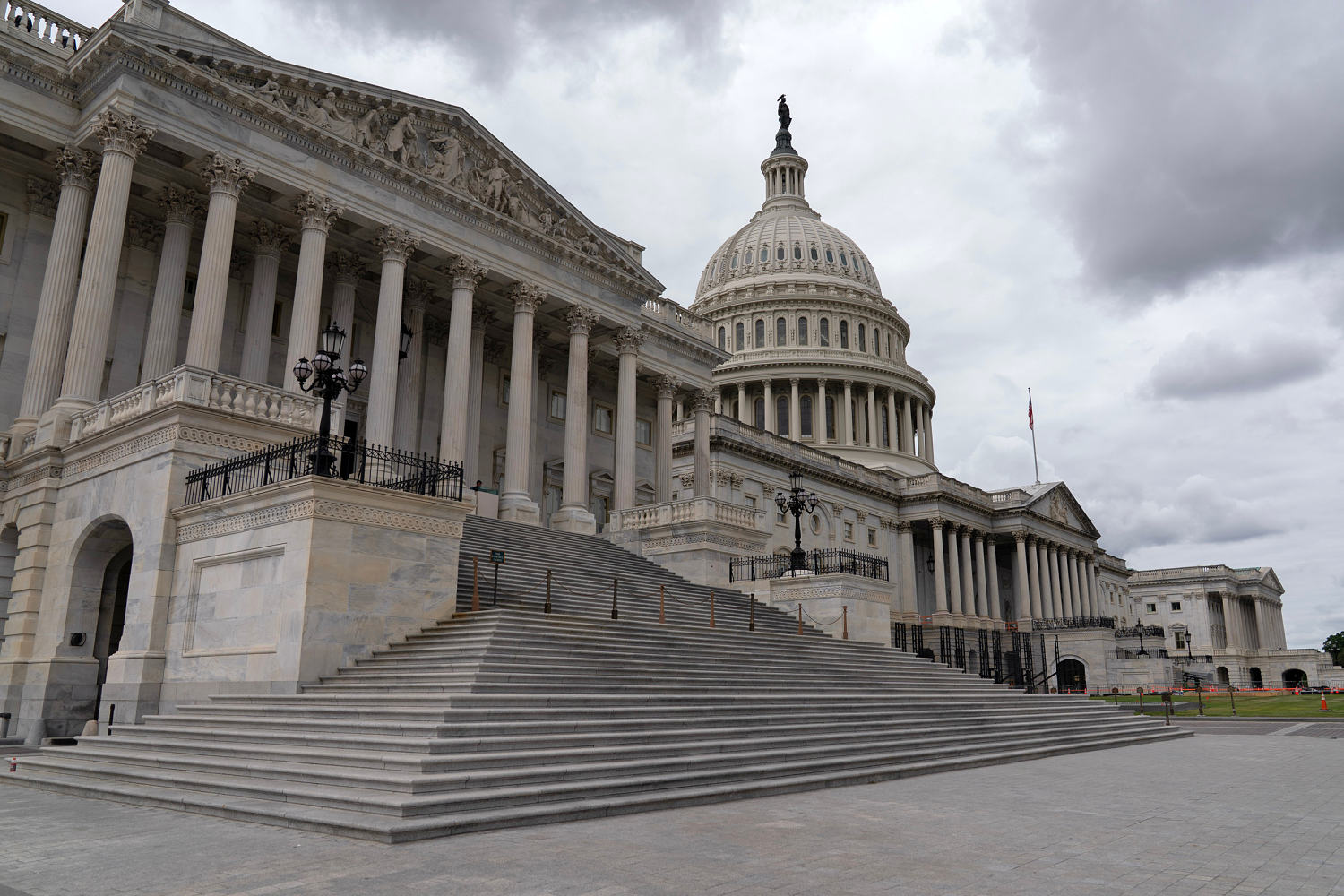
Washington just dropped sanctions on a top Venezuelan legislator, and the diplomatic press corps predictably broke out into their usual chorus about "incentivizing democratic behavior" and "building diplomatic bridges."
They are missing the entire point.
Removing individual targeted sanctions isn't a gesture of goodwill or a reward for political reform. It is a calculated, transactional maneuver that exposes the complete collapse of the Western sanction framework as an enforcement tool. Foreign policy commentators treat sanctions like a moral scoreboard—you do bad things, you get penalized; you show up to a negotiation table, you get relief.
Realpolitik doesn't work on a gold-star system.
When the U.S. Department of the Treasury's Office of Foreign Assets Control (OFAC) pulls a high-ranking official off the Specially Designated Nationals (SDN) list, it isn't signaling success. It's admitting that a decade of financial isolation failed to achieve its primary objective: regime change.
The Sanction Paradox: How Bureaucratic Penalties Built an Indestructible Regime
To understand why standard analysis fails, you have to look at the mechanics of targeted individual sanctions.
The mainstream narrative assumes that freezing a foreign official's access to U.S. correspondent banks and property holdings creates internal friction. The theory goes like this: squeeze the inner circle, make their personal assets illiquid, and they will turn on the leadership to save their own balance sheets.
I’ve watched policy teams push this exact model for fifteen years across multiple administrations. It sounds clean in a briefing paper. In practice, it produces the exact opposite result.
When you designate a senior powerbroker, you don't isolate them from the regime; you isolate them to the regime. The moment an official lands on the SDN list, their options vanish. They can no longer move capital through Western clearing systems, buy property in Miami, or send their children to European universities. Their financial survival becomes 100% dependent on maintaining the state's internal revenue streams—whether that means state oil company allocations, informal gold trading, or illicit trade routes.
By sanctioning top legislators and military heads, Washington accidentally created the ultimate retention mechanism. The elites had nowhere else to go.
Lifting sanctions now isn't a reward for good behavior. It's an attempt to manually restore financial optionality to figures who had already adapted to total isolation.
The Misleading Consensus on Energy and Diplomacy
Every major media coverage loop on Venezuela insists that sanction adjustments are tightly linked to democratic milestones—specifically electoral guarantees and opposition participation.
That is an elegant fiction designed for press briefings.
The real driver isn't electoral idealism; it's global commodities flows and supply-chain realities.
Consider the macro environment:
- Heavy crude oil refiners along the U.S. Gulf Coast are built specifically to run complex, sulfur-heavy blends.
- Global disruptions and ongoing geopolitical friction have artificially constrained the supply of heavy crude.
- Alternative heavy sources face logistically complex trade routes, driving up freight costs and refining crack spreads.
Washington doesn't adjust sanctions because a legislative leader signed a piece of paper promising fair elections next year. Washington adjusts sanctions when the opportunity cost of keeping millions of barrels of heavy crude off the market exceeds the political fallout of looking soft on an adversary.
The mainstream press evaluates these moves through an ethical lens. The market evaluates them through a freight rate and refinery throughput lens. If you want to predict the next sanction rollback, stop reading political manifestos and start tracking tank storage levels and Gulf Coast refining margins.
The Hidden Cost of Tactical De-escalation
Let's address the counter-arguments directly, because the contrarian position isn't without risk.
Proponents of sanctions relief argue that targeted removals create leverage. If an official sees a peer regain access to the global financial system, that peer might be incentivized to make real concessions to earn their own removal. It turns sanctions into a dynamic ladder rather than a permanent trap door.
That argument holds water in a vacuum. In reality, it introduces two fatal vulnerabilities:
- Credibility Decay: When sanctions are applied under the banner of defending human rights and democratic institutions, but removed during quiet bilateral negotiations over economic access, the enforcement mechanism loses moral authority. Sanctions stop looking like law enforcement and start looking like a variable tariff.
- Adaptation Advantage: Over the past decade, sanctioned states have built robust parallel financial systems. Between non-SWIFT messaging rails, local currency settlement mechanisms, and regional commodity swaps, the pain of OFAC designation decreases every year. Squeezing an elite in 2014 was crippling. Squeezing an elite today is a minor operational inconvenience that costs a few extra percentage points in transaction fees through intermediary banks in neutral jurisdictions.
If you remove a sanction today, you aren't offering a return to the global economy—you're competing with the alternative economy the target already learned to use.
The Anatomy of Real Financial Sanctions
If targeted designations don't trigger political transitions, how do individual sanction removals actually function behind closed doors?
Imagine a scenario where a foreign official controls critical voting blocks or security apparatus assets. The goal of removing sanctions isn't to convert that official into a liberal democrat. The goal is to lower their cost of capital just enough that dealing with Western entities becomes slightly more profitable than dealing with non-Western shadow networks.
It is a price war over elite loyalty.
| Metric | Official Sanctions Strategy | Realpolitik Reality |
|---|---|---|
| Primary Goal | Restore Democratic Institutions | Manage Regional Commodity & Migration Flows |
| Target Audience | General Public & International Media | Key Regime Insiders & Financial Intermediaries |
| Enforcement Mechanism | SWIFT Lockout & Asset Freezes | Transaction Cost Competition |
| Success Metric | Free Elections Held | Economic Stabilization & Supply Chain Access |
The mainstream media focuses entirely on column one. Institutional traders and statecraft realists operate exclusively in column two.
Stop Asking if Sanctions "Work"
The question cluttering every policy debate is fundamentally broken: "Are sanctions working?"
Asking if sanctions work is like asking if a tariff works. It depends entirely on who is paying for it and what outcome you are actually measuring.
If the goal of sanctioning Venezuela's political apparatus was to force a return to constitutional norms, the strategy failed years ago. If the goal was to create a flexible, high-leverage dial that can be turned up or down to manage domestic energy costs and migration pressures, then the system is working exactly as intended.
Lifting sanctions on a top legislator isn't a turning point for democracy in Latin America. It is a transactional ledger entry in a long-running geopolitical commodities trade.
Stop reading the press releases. Watch where the tankers clear customs.