The smell of burning copper doesn't leave your clothes for months. It clings to the wool of your jacket, a bitter, metallic reminder of a sky that turned inside out.
We talk about conflict in the language of accounting. We count the drones. We tally the barrels of crude. We flash charts on cable news showing the shifting borders of the Middle East, treating ancient landscapes like pieces on a Risk board. When the tension between Washington, Tehran, and the surrounding capitals boils over into open warfare, the spreadsheets come out.
But spreadsheets are a lie. They are a comforting fiction we construct to convince ourselves that catastrophe can be budgeted.
If you want to understand the true cost of an Iran war, you have to look past the macroeconomics. You have to look at the kitchen tables.
Consider a hypothetical family in Shiraz. Let’s call the father Omid. He is not a politician. He does not care about regional hegemony or uranium enrichment percentages. He cares about the price of tomatoes and whether his daughter’s asthma medication will be available at the pharmacy next Tuesday.
When the first cruise missiles strike the air defense batteries outside the city, Omid’s world shrinks to the width of a mattress. He throws his body over his children. The house shakes. Glass shatters in the hallway.
In that single, breathless moment, the cost of war isn't measured in billions of dollars. It is measured in the sudden, violent acceleration of a child’s heartbeat.
The Fiction of the Surgical Strike
Modern military doctrine loves a clean phrase. "Targeted degradation." "Kinetic interventions." These terms are designed to make us believe that war can be a scalpel.
It is always a sledgehammer.
Iran is a nation of nearly 90 million people, bounded by jagged mountains and vast deserts. It is not an isolated enclave; it is the geographical pivot of Eurasia. A full-scale military campaign to dismantle its strategic infrastructure would require an air campaign of unprecedented scale.
The immediate financial ledger is staggering. Pentagon analysts know that a sustained bombing campaign, combined with the inevitable naval clashes in the Strait of Hormuz, burns through capital at an terrifying rate. Stealth bombers cost over $130,000 per hour just to keep in the air. A single Tomahawk cruise missile carries a price tag of roughly $2 million.
During the first week of a conflict, thousands of these munitions would fly.
But the real problem lies elsewhere. The true economic ruin isn't the cost of the weapons we fire; it is the destruction of the things they hit.
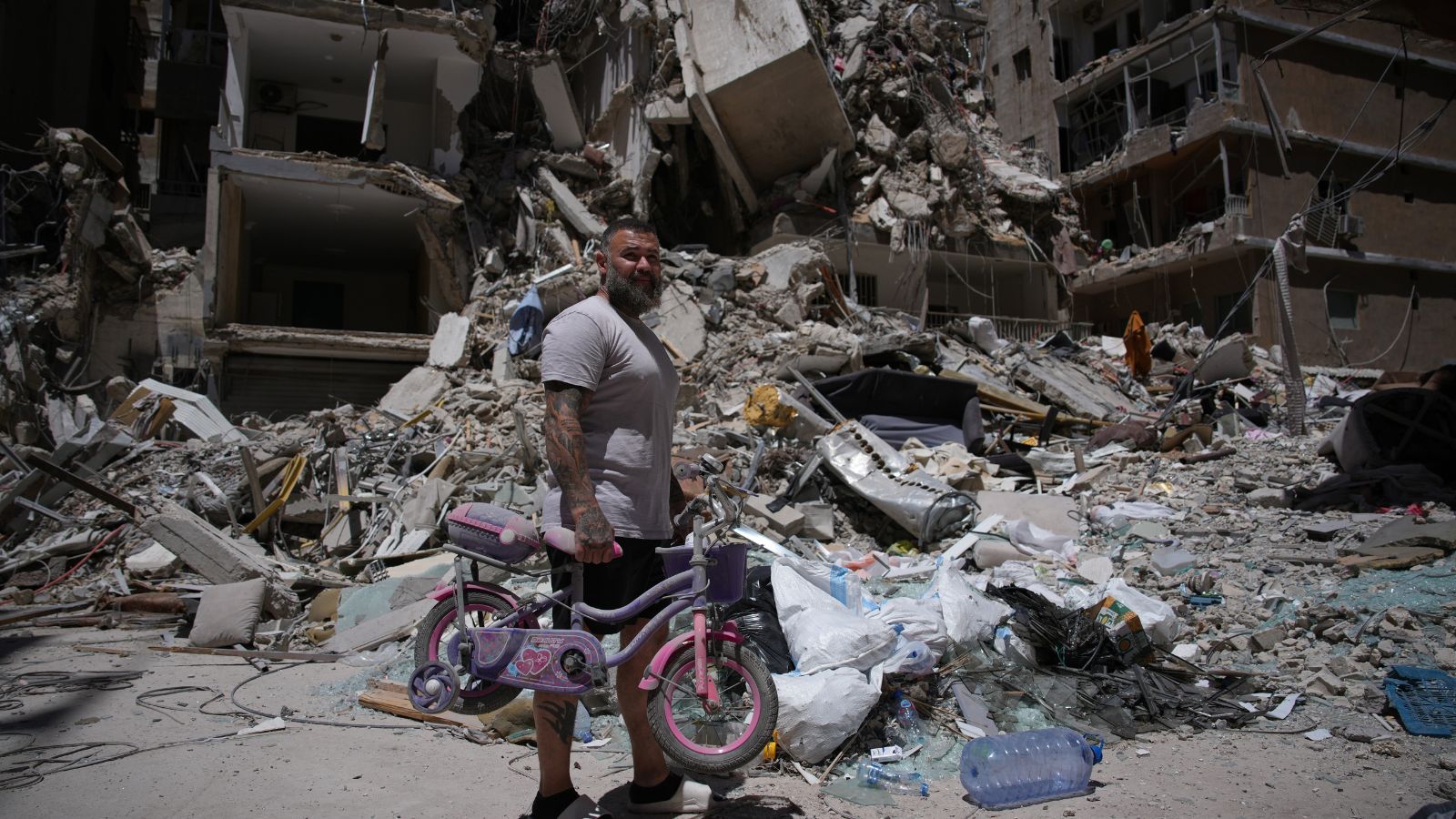
When a missile strikes a power grid or a logistics hub, a ripple effect begins. Imagine the cold chain breaking. Refrigerators in hospitals go dark. Insulin spoils. Water treatment plants lose power, and suddenly, typhoid and cholera become active combatants.
The human toll compounds exponentially. For every individual caught in a blast radius, dozens more succumb to the quiet, invisible collapse of civil society. The elderly freeze in their apartments. The newborns die of preventable infections because the supply chains have been vaporized.
The Chokehold on the World’s Arteries
We like to think we are insulated from the violence by oceans and distance. We are not.
The global economy is a fragile web, and Iran sits right across its main artery: the Strait of Hormuz. It is a narrow stretch of water, only 21 miles wide at its narrowest point. Yet, through this maritime bottleneck flows one-fifth of the world’s petroleum consumption.
If war breaks out, the Strait closes. It doesn't require a massive naval armada to shut it down; a handful of sea mines, some anti-ship missiles hidden in the coastal cliffs, and a few scuttled tankers will do the trick.
Consider what happens next:
The global supply of oil drops instantly. Insurance rates for commercial shipping skyrocket overnight, turning every cargo vessel into an existential gamble.
The shockwave hits a commuter in Ohio who suddenly watches the gas pump tick past six, seven, eight dollars a gallon. It hits a manufacturing plant in Germany that relies on natural gas, forcing layoffs. It hits a small farmer in Bangladesh who can no longer afford the petroleum-based fertilizer needed to feed his village.
This is the geometry of modern conflict. A fire started in the Persian Gulf burns down a livelihood in Omaha.
The Invisible Ledger
Years ago, I stood in a military rehabilitation center and watched a young man learn to walk again. His prosthetic legs clicked rhythmically against the linoleum floor. Click. Thump. Click. Thump.
He had survived an improvised explosive device in a previous Middle Eastern campaign. He was alive, which meant he was counted as a success story in the official statistics. But his mother sat in the corner of the room, her face etched with a fatigue that no amount of sleep could cure. She had quit her job to become his full-time caregiver. His younger sister had put off college to help pay the mortgage.
When we calculate the cost of veterans' care, we look at the government appropriations. We look at the VA budgets.
We do not look at the stolen futures of the families who absorb the trauma.
An open war with Iran would generate a new generation of broken bodies and fractured minds. The country’s asymmetric warfare capabilities mean that the conflict would not stay contained within its borders. Cyberattacks would target financial institutions and electrical grids at home. Retaliatory strikes would hit regional allies.
The psychological weight of living under constant, unseen threat shifts the chemistry of a society. It breeds paranoia. It erodes trust. It makes us smaller, meaner, and more afraid.
How do you put a price tag on the loss of national optimism? What is the monetary value of a generation raised in the shadow of permanent anxiety?
The Weight of the Unlived Life
There is a cemetery in Tehran called Behesht-e Zahra. It is vast, a city of the dead stretching across the arid plain. One section is dedicated to the martyrs of the Iran-Iraq war of the 1980s. Row after row of glass cases contain the faded photographs of young men, their eyes staring out across the decades.
If you walk those rows, the silence is heavy. It is the silence of unlived lives.
Those men were supposed to be engineers, poets, teachers, and fathers. Instead, they became statistics in a war that solved nothing and settled less.
An Iran war today would build new rows in that cemetery. It would also build new rows in Arlington, and in small town graveyards across Europe and the Middle East.
We are tempted by the illusion that we can control the narrative of violence. We believe we can enter a conflict, achieve a specific objective, and exit cleanly. But war is an autonomous beast. Once let off its leash, it devours whatever it wants, indifferent to the strategic plans laid out in air-conditioned briefing rooms.
The billions of dollars spent are just paper. The infrastructure can eventually be rebuilt with steel and concrete, even if it takes a century.
But the boy who loses his arm to a shrapnel fragment will never grow it back. The mother who waits for a knock on the door will never sleep soundly again. The Omid of our world will look at the ruins of their homes and wonder why their lives were traded for a line item in a foreign policy manifesto.
The ledger remains open. It is a record written in blood, tears, and broken promises, and the ink never quite dries.