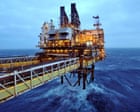
Salt gets into everything up there. It coats the railings of the platform in a crusty, white rime. It stings your eyes when the northwesterly gale whips spray forty feet above the swell.
I remember standing on the deck of a production platform three hundred miles northeast of Aberdeen, clutching a steaming cup of coffee that tasted mostly of diesel and salt. The steel beneath my boots vibrated with a deep, bass thrum. That vibration was the heartbeat of a region. For decades, it was the sound of certainty.
That heartbeat is slowing down.
BP has made up its mind. The corporate machinery in London has shifted gears, quietly signaling a retreat from the very waters that fueled a nation's postwar industrial ambition. The North Sea oil and gas business is up for sale.
To the spreadsheet clerks in high-rise offices thousands of miles away, this is merely a portfolio adjustment. It is a neat line item. A rational divestment. They look at maturing fields, declining reservoir pressure, and tightening regulatory margins, and they see numbers that no longer align with their grand green transition. They see an asset shedding its utility.
They do not smell the crude. They do not watch the gray North Sea swells rise like liquid mountains against the legs of a jacket structure. They do not know the men and women who trace their family trees through the shifts on these iron islands.
Consider what happens when a titan steps back.
The North Sea is not a blank canvas. It is a crowded, aging metropolis of steel and pipe built over half a century. When a major player like BP decides to pack its bags and auction off its remaining acreage, it triggers a cascade of anxiety through local supply chains, engineering firms, and coastal towns like Peterhead and Great Yarmouth.
Local economies are tethered to these decisions. Whole communities grew up around the logistics of offshore extraction. When the giant leaves, the smaller contractors hold their breath. Who buys the aging infrastructure? Who shoulders the colossal financial burden of eventual decommissioning?
Let me be clear about what decommissioning actually means, because corporate press releases love to sanitize the process. It is not just turning off a valve and sailing away. It is an engineering odyssey of removing thousands of tons of steel from the ocean floor, plugging wells with dense cement caps, and restoring a marine environment that has been heavily industrialized since the nineteen-seventies. It costs billions. It takes years.
And that is the real ghost haunting this sale. The assets are old. Some might call them mature. Others call them exhausted.
To understand why this matters beyond the stock ticker, you have to look at how energy transitions actually happen in the real world. They do not happen overnight. You cannot simply flip a switch and replace the kinetic, reliable output of a heavy-duty platform with pure aspiration.
For years, the oil and gas extracted from these turbulent waters provided a crucial buffer of domestic energy security. It kept lights on. It warmed homes during brutal winters when imported gas pipelines flickered under geopolitical strain. When a company sells its North Sea portfolio, it is not just transferring ownership of steel pipes and separator vessels. It is shifting responsibility.
Often, these mature assets are bought by smaller, private equity-backed operators. These new owners can sometimes squeeze remaining drops of efficiency out of older fields that major corporations find too costly to manage. But they operate under razor-thin margins. They do not possess the bottomless balance sheets of a global supermajor if something goes catastrophic.
That is the tension nobody wants to talk about in the boardroom. Who guards the twilight years of an oilfield?
Standing on that rig years ago, watching the horizon blur into the leaden sky, I asked an old instrument technician how much longer he thought the basin had left in it. He looked out over the grey expanse, wiping grease from his knuckles with a rag, and smiled.
"As long as the world needs energy and hates paying for the transition, boy," he told me. "The oil is down there. The question is who wants to pay the price to get it out without breaking the ocean or themselves."
BP has decided it no longer wants to pay that price.
The sale is moving forward. The data rooms are open. Prospective buyers are pouring over seismic surveys, maintenance logs, and corrosion reports. Somewhere in an air-conditioned room in London, a team of analysts is pricing out the remnants of an era.
Out on the water, though, the wind still howls. The salt still cakes the railings. And the rig keeps vibrating, waiting to see who answers the next shift.