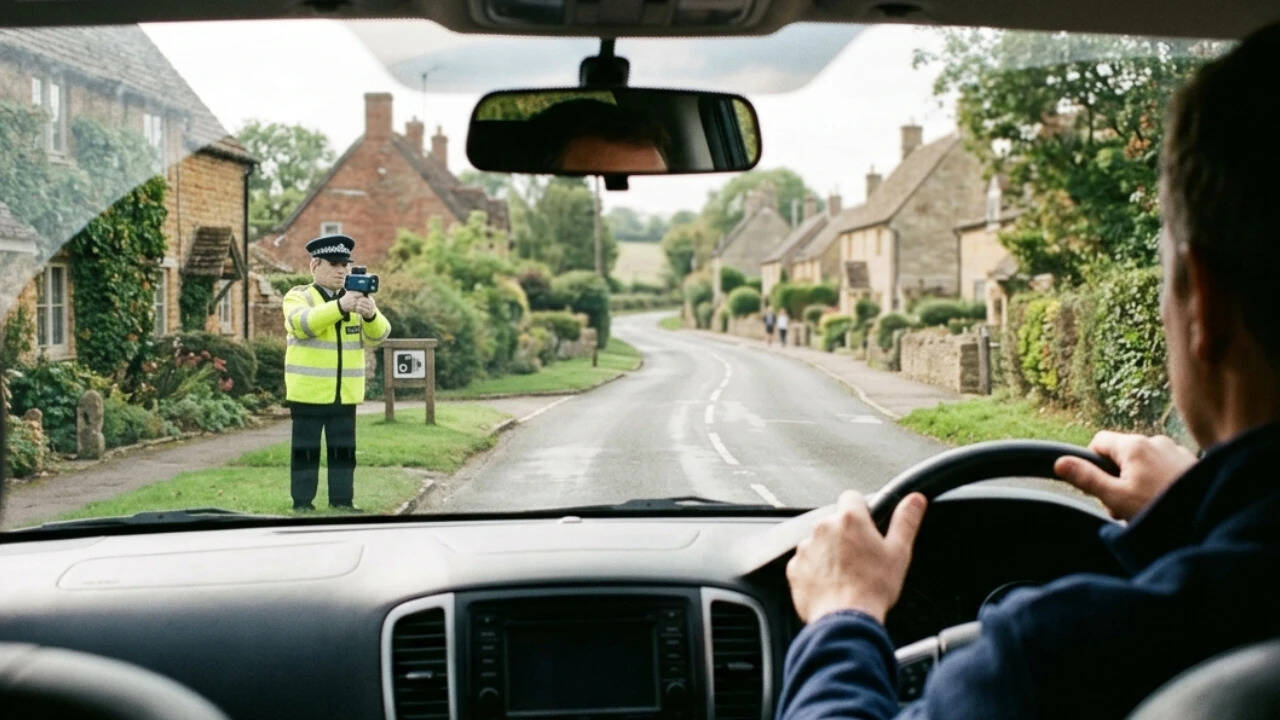
Knitted police officers on a country lane sound like a punchline. Until you're the person living behind a bend where cars keep sliding into hedgerows.
When a rural English village turns to yarn and high-vis crochet after a string of crashes, it looks whimsical on social media. Honestly, it's desperation wrapped in wool. Local councils have tight budgets, speed cameras face strict rules, and policing hours are stretched thin across miles of winding lanes. So residents make a figure that catches your eye from fifty yards away and forces your brain to pause for half a second.
That half-second matters. Speeding isn't just about lead feet. Often it's autopilot.
Why Villagers Turn to Knitted Police Officers
Rural roads in Britain have a distinct personality problem. Many started out as cart tracks or parish lanes connecting small clusters of houses, long before modern hatchbacks and SUVs existed. They twist without warning, have blind crests, and lack wide pavements. Drivers treat a straight stretch between corners like a sprint, then hit a tight bend carrying too much momentum.
After repeated crashes—eleven collisions in a single stretch is enough to rattle an entire parish—residents get tired of waiting for big infrastructure fixes. Speed humps cost money and face pushback from bus operators and emergency services. Chicanes require land or road closures. A knitted officer takes weeks of evening crafting, costs very little, and signals community watchfulness right away.
From a traffic-safety standpoint, I'm skeptical that yarn alone cures chronic speeding. Drivers aren't stupid. Once you pass a figure three times a week, your brain files it under "garden ornament" or "local quirk" and you go right back to cruising at fifty. Still, novelty works early on. A bright vest, a human silhouette, and a shape holding something that looks like a speed gun or sign breaks through visual boredom.
There's also a civic side people miss. Making a life-sized figure brings neighbors into the same hall with needles, spare wool, and shared frustration. Instead of grumbling alone behind net curtains, people turn anger into a visible warning.
What Actually Slows Drivers Down on Country Roads
If you care about keeping rural roads safe over years rather than weeks, you have to look at driver psychology and road design. Traffic engineers talk a lot about "self-explaining roads"—streets whose layout naturally tells you how fast to go without needing a sign every hundred feet.
On wide, smooth tarmac with clear sightlines, people speed even when the limit says thirty. Narrow the visual corridor with hedge trimmings, add textured surfacing near entry points, or place gateway features right where the village starts, and speeds drop more reliably. The Department for Transport publishes extensive guidance on speed management and rural road safety, showing how engineering, enforcement, and education fit together rather than acting as magic bullets on their own.
- Visual cues at entry points: Gateway signs, rumble strips, or painted roundels alert drivers that they're entering a settlement rather than open country.
- Physical narrowing: Even perceived narrowing from parked cars, bollards, or planters makes drivers ease off the throttle.
- Consistent enforcement: Occasional checks or community speed-watch groups work best when paired with clear limits people view as fair.
- Better sightlines and maintenance: Clearing overgrown junctions and fixing worn road markings removes surprises before they turn into crashes.
Notice what's missing from that list. A yarn figure isn't a legal authority, can't issue a ticket, and won't stop a drunk or reckless driver. Calling it a cure-all oversells a clever community stunt.
Legal Risks and Practical Snags Nobody Mentions
Cute roadside projects run into real-world friction fast. Highway authorities own the verge and road furniture, and putting objects too close to the carriageway can create sightline hazards or distract drivers at awkward moments. If a motorist swerves around a display and hits a wall, arguments over placement and liability start immediately.
Weather is another unglamorous factor. Rain soaks wool, wind tears stitches, and sun fades bright yellow into dingy cream within a season. Someone has to maintain the display, repair loose parts, and take it down if it becomes an eyesore or a distraction.
Local councils sometimes walk a fine line between supporting community spirit and enforcing safety rules. A blanket ban makes officials look humorless; ignoring bad placement can create a genuine hazard. Practical compromise usually wins out when groups coordinate with parish councils and local police beforehand rather than improvising on a blind bend.
How Communities Can Turn Attention Into Safer Streets
If your street or village has seen too many near-misses or crashes, treat a novelty display as a conversation starter, not the whole plan. Use the attention it brings to gather hard facts that decision-makers can't brush aside.
- Log every incident and near-miss. Keep dates, times, weather conditions, and exact locations so complaints rest on patterns rather than vague impressions.
- Ask for speed and volume data. Request traffic counts from your local council or highway authority to see whether speeding happens at specific hours, like school runs or commuter peaks.
- Check community speed-watch options. Many areas run volunteer speed-monitoring schemes in partnership with local police, which give drivers real feedback without relying on permanent cameras.
- Push for targeted engineering fixes. Focus requests on high-risk spots—tight bends, crossings, and village gateways—where small physical changes have the clearest payoff.
A knitted officer won't rewrite highway law or fix decades of underinvestment in rural lanes. What it can do is make drivers look up from their dashboards and remember real people live just past the verge.