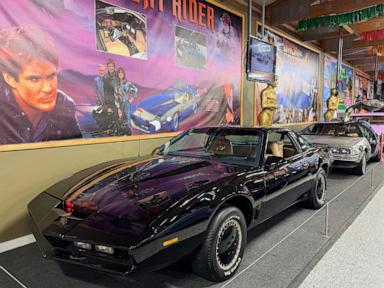
A black Pontiac Trans Am—better known to 80s kids as KITT from Knight Rider—recently clocked 70 mph in a 35 mph zone. There’s just one problem. The car hasn't moved in years. It’s currently sitting behind a velvet rope at the Volo Auto Museum in Illinois. It literally doesn't have an engine.
You might think this is a funny glitch or a ghost in the machine. It’s actually a frustrating look at how automated traffic enforcement is failing. When Brian Grams, the director of the museum, received the citation in the mail, he didn't laugh. He looked at the photo and saw a mess. The ticket came from an automated camera in a different state, hundreds of miles away. It’s a classic case of "trust the tech" going completely sideways.
Why Automated Cameras Keep Getting It Wrong
Most people assume traffic cameras are foolproof. They aren't. These systems rely on Optical Character Recognition (OCR) to read license plates. If a plate is dirty, bent, or features a unique font, the software makes a guess. In this case, the camera captured a plate that looked close enough to the museum’s promotional plate to trigger a fine.
The tech failed at step one. Then, the human review process—which is supposed to catch these errors—failed at step two. Someone, or some algorithm, looked at a blurry photo of a car speeding down a road and decided it was the same vehicle currently parked in a climate-controlled showroom in Volo.
The museum’s KITT replica is a static display piece. It’s a shell. It’s a piece of television history, not a street-legal vehicle. This isn't just about a "smart car" getting a "dumb ticket." It shows that the burden of proof has shifted. You’re guilty until you spend three hours on the phone proving your car lacks a powertrain.
The Problem With Out Of State Tickets
The ticket didn't even come from Illinois. It originated from a completely different jurisdiction. This creates a massive headache for owners. Most people just pay these fines because fighting them is a logistical nightmare. You have to file paperwork, provide evidence, and sometimes show up in a court three states away.
Museums deal with this more often than you'd think. They own dozens of famous cars. Many of these vehicles have "vanity" plates or movie-accurate replicas that aren't actually registered for road use. When a random commuter with a similar plate number hits a speed trap, the system pings the most famous version of that plate in its database.
Grams had to provide photos of the car’s engine bay. Or rather, the lack of one. He had to prove the car was physically incapable of hitting 5 mph, let alone 70. It’s a ridiculous waste of resources.
Reality Check on KITT and Movie Replicas
The Knight Rider car is an icon. In the show, KITT could drive itself, jump over obstacles, and crack jokes. In reality, most of the "stunt" cars used in filming were beaters. The museum’s version is kept in pristine condition for fans to admire. It stays put.
If you own a replica car or a vehicle with a unique plate, you're a target for these errors. The system is designed for volume, not accuracy. Municipalities often outsource these camera programs to private companies. These companies get a cut of every ticket paid. They have zero incentive to make the software more discerning. They want the check.
When these companies face a challenge, they usually back down quickly. Why? Because they know the tech is shaky. They rely on the fact that 90% of people will just pay the $100 to avoid the stress. Grams went public with the story to highlight exactly how broken the "automated" part of the law really is.
Fighting Back Against Ghost Tickets
If you get a ticket for a car that was sitting in your garage, don't just reach for your wallet. You have more leverage than you think.
Start by gathering time-stamped evidence. If you have a security camera at home showing the car stayed put, save that footage immediately. If the car is in a shop, get a signed work order with the date. In the museum’s case, the evidence was literally the car's construction. You can't speed without a motor.
Check the photo on the citation carefully. Look at the make and model. Often, the OCR software reads a "B" as an "8" or a "D" as an "0." If the car in the photo is a Toyota Camry and you own a Pontiac, the case is over. Send a certified letter to the clerk of the court. Don't just call. Get a paper trail.
We’re moving toward a world where algorithms govern our movement. This Knight Rider glitch is a warning. If a car in a museum can get a speeding ticket, anyone can. Stand your ground and force the humans behind the cameras to actually do their jobs. Verify the details, document the location of your vehicle, and refuse to pay for the computer's imagination.