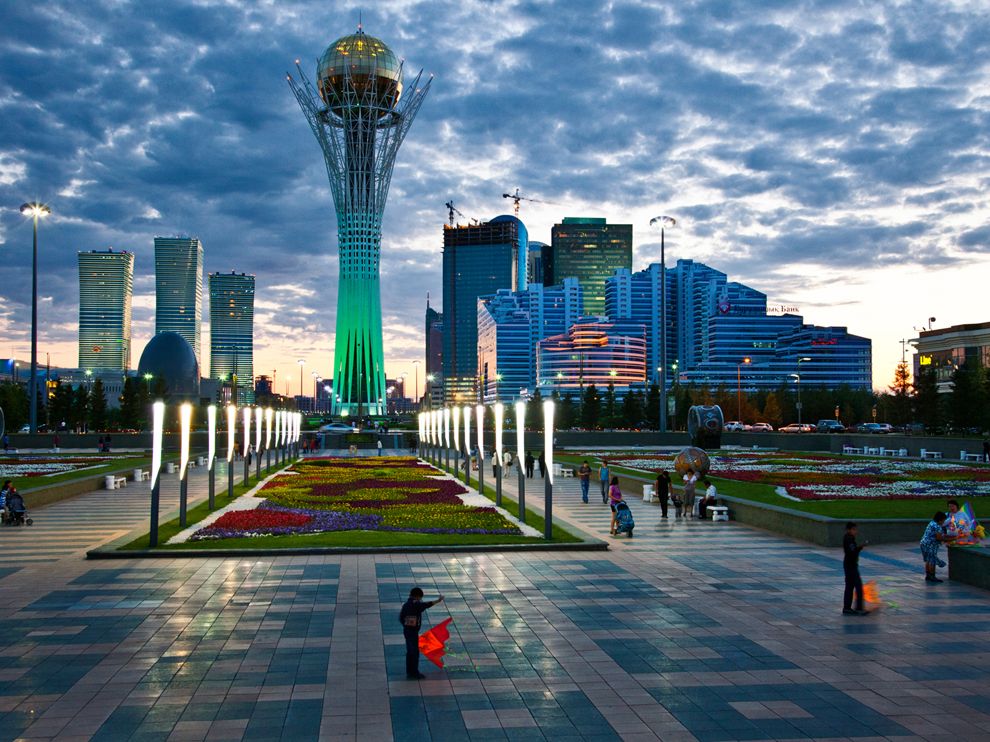
Most tech commentary focuses entirely on Silicon Valley, Beijing, or London when discussing artificial intelligence. Central Asia rarely enters the conversation. Yet Kazakhstan is executing an aggressive, capital-heavy strategy to transform itself into a regional intelligence hub, shifting its economic identity from a raw material exporter to a computational powerhouse.
If you look past the geopolitical noise, the numbers tell a clear story. The government established a dedicated Ministry of Artificial Intelligence and Digital Development, commissioned high-performance supercomputing clusters like Alem.cloud, and attracted major industry heavyweights including NVIDIA CEO Jensen Huang to Astana. For a deeper dive into this area, we recommend: this related article.
This isn't just about throwing money at state-of-the-art GPUs. It's a calculated bet on infrastructure, energy conversion, and talent acquisition designed to anchor Central Asia's digital future.
Moving Beyond Oil with Supercomputing Infrastructure
Countries rich in hydrocarbons face a recurring trap: relying entirely on extracted commodities leaves them vulnerable to global market swings. Kazakhstan wants to bypass that trap by converting raw energy directly into compute power. For further information on this issue, extensive analysis can also be found on The Next Web.
The physical backbone of this strategy rests on heavy investments in domestic data centers and hardware. National supercomputers like Alem.cloud and Al-Farabium run on advanced NVIDIA H200 processors, putting regional compute capacity on the global TOP500 map. Meanwhile, large private entities are stepping up. Freedom Holding Corp is pushing forward with a multi-billion dollar sovereign AI hub, planning massive GPU clusters and dedicated data center capacity designed to service thousands of local and international businesses.
This build-out faces real bottlenecks. Securing a stable, low-carbon power supply for gigawatt-scale data center valleys in places like Ekibastuz requires immense engineering coordination. But the state's willingness to clear regulatory hurdles and partner with global players separates this initiative from typical bureaucratic tech programs.
Cultivating Domestic Talent and Startup Ecosystems
Building hardware is the easy part. Training the people to use it effectively is where most national tech strategies stumble. Kazakhstan is tackling this through an aggressive pipeline overhaul that spans from primary schools to specialized research universities.
Programs like Astana Hub already bundle thousands of tech companies, creating localized gravity for software developers, fintech disruptors, and AI engineers. Instead of watching top engineering talent instantly migrate to Western firms, local initiatives provide tax incentives, digital nomad visas, and venture backing that encourage builders to stay.
When international technical figures like Jensen Huang visit Astana to discuss physical AI—artificial intelligence controlling industrial machinery, supply chains, and robotics—they aren't just visiting a passive market. They are engaging with a growing ecosystem of engineers who understand how to apply machine learning to heavy industries like mining, logistics, and agriculture.
Real Integration Versus Political Theater
Skeptics often write off state-backed tech initiatives as expensive vanity projects. But Kazakhstan's implementation avoids many common traps by focusing on immediate, practical public-sector integration.
More than seventy percent of local commercial banks already integrate artificial intelligence tools into their operations, driven by a pragmatic regulatory environment. Government services use localized language models for public interaction, and the country ranks near the top of regional digital security indices.
The strategy is straightforward: build reliable infrastructure, secure high-end silicon, foster a local developer base, and apply machine learning where the country already has strong economic leverage.
Watch how these infrastructure projects scale over the next year. If the planned public GPU clouds and data center expansions hit their milestones, Kazakhstan will prove that regional tech hubs can emerge far outside traditional Western tech corridors.