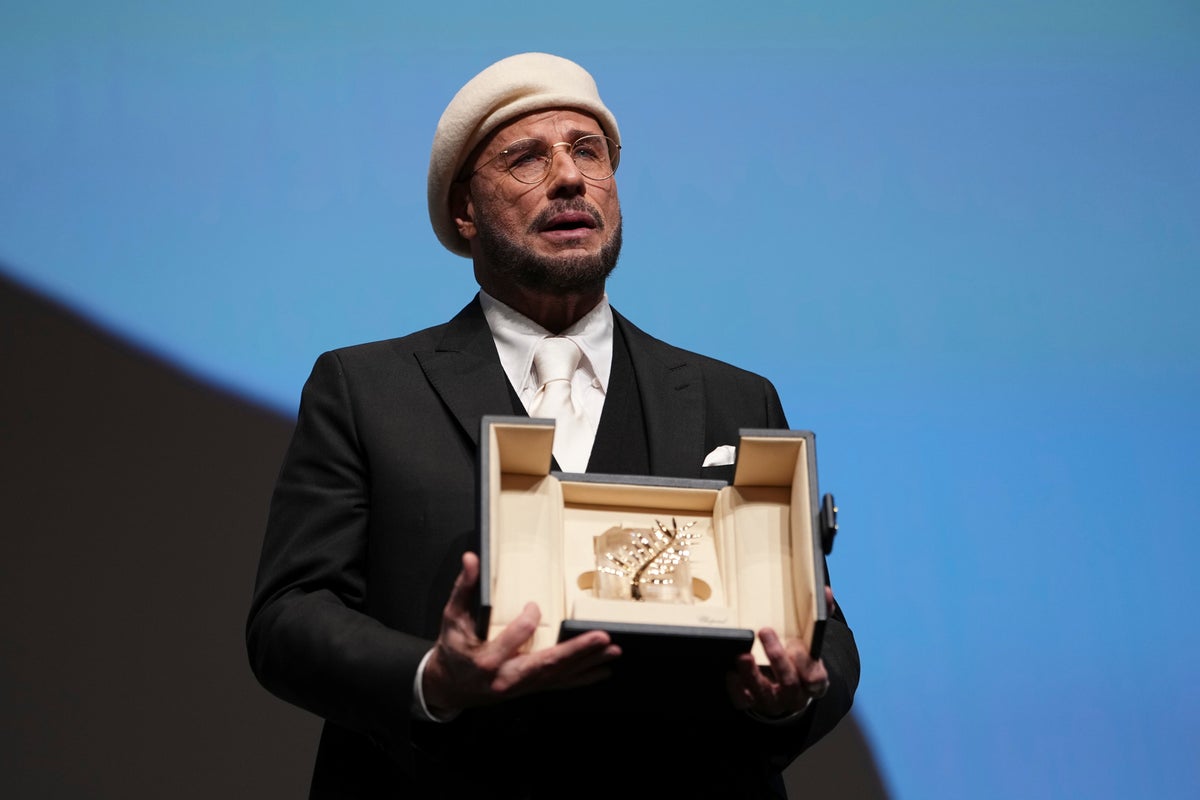
The press corps at Cannes has a memory shorter than a TikTok transition.
They are currently salivating over the "directorial debut" of John Travolta, painting a picture of a veteran actor finally stepping behind the lens to find his true voice. It is a charming narrative. It is also completely wrong. To call this a "debut" is to ignore the mechanics of Hollywood survival and the brutal reality of the festival circuit. Travolta isn’t "starting" a directing career; he is executing a sophisticated pivot to maintain relevance in an industry that eats aging leading men for breakfast.
The lazy consensus suggests that an actor directing a film is a pursuit of "artistic growth." In reality, it’s a defensive maneuver.
The Myth of the Virgin Director
Let’s dismantle the premise immediately. Travolta has been "directing" his career for decades, often with mixed results. To treat his arrival behind the camera as a sudden epiphany ignores the sheer amount of creative control he has wielded on sets since the late 1970s. When you reach the level of a global icon, you aren't just an actor; you are a de facto producer and a shadow director on every frame you inhabit.
The industry treats these debuts as if the talent just discovered what a 50mm lens does. I’ve seen stars spend $20 million of a studio's money just to realize they don't actually like the editing room. For Travolta, this isn't about learning a new craft. It’s about owning the means of production because the traditional scripts—the ones where he gets to be the cool, dancing, gun-toting lead—are drying up.
Cannes loves a comeback story. The festival thrives on the "rebirth" trope. But we need to look at the data of actor-turned-director projects. Most of them are vanity projects that disappear into the "Featured" section of a streaming service within six months. The rare successes, like those of Clint Eastwood or Greta Gerwig, succeeded because they abandoned their persona. Travolta’s challenge isn't technical; it's whether he can stop being "John Travolta" long enough to let a story breathe.
Why Cannes is the Ultimate Smoke Machine
The choice of Cannes as the launchpad is purely transactional.
Cannes provides a veneer of intellectual legitimacy that domestic festivals cannot match. If you premiere a film in the South of France, you aren't just a celebrity; you are an auteur. This is the prestige play. The "insider" secret is that many of these screenings are less about the quality of the film and more about the quality of the red carpet photography.
The trades will report on the standing ovation. Do not be fooled. At Cannes, people give standing ovations to the catering. A ten-minute applause is the baseline for not being booed. The real metric of success for a directorial debut isn't the length of the clap—it's the distribution deal signed in a hotel suite three hours later.
The Nuance of the Late-Stage Pivot
The mainstream media misses the desperation behind the "debut."
In Hollywood, there is a "dead zone" for male actors between the ages of 60 and 75. You are too old to play the romantic lead against a 25-year-old (usually), and you aren't yet old enough to be the "wise grandfather" who wins a supporting Oscar. Directing is the bridge over that chasm.
By positioning himself as a director, Travolta is essentially saying he is no longer for hire; he is the employer. It’s a power move. But it’s a risky one. If the film fails, he isn't just an actor who gave a bad performance—he's the captain who sank the entire ship.
The Cost of Creative Control
Most critics won't tell you the downside of the actor-director hybrid.
- The Echo Chamber: When an icon directs, who tells them "no"? I have watched sets descend into chaos because the crew is too intimidated by the star's legacy to point out a fundamental flaw in the blocking or the script.
- The Budget Bloat: Actor-directors often struggle with the "kill your darlings" phase of filmmaking. They want every performance to shine, leading to bloated runtimes and pacing issues.
- The Identity Crisis: Is the audience watching the movie, or are they watching "John Travolta's Movie"? If the celebrity overshadows the story, the film is dead on arrival.
Stop Asking if He Can Direct
The "People Also Ask" sections of the internet are flooded with questions like "Is John Travolta a good director?" This is the wrong question.
The right question is: "Does John Travolta need to be a good director to succeed?"
The answer is no. In the modern ecosystem, the film itself is often secondary to the event of the film. If this project secures international sales and keeps his name in the trades as a "creative force," the mission is accomplished. He doesn't need to be Scorsese; he just needs to be bankable in a different category.
I have sat in rooms where "artistic" debuts were planned with the clinical precision of a hostile takeover. We didn't talk about the script; we talked about the optics of the premiere. We talked about which journalists would buy the "transformation" narrative without checking the credits. Travolta is playing the game better than most, but let’s stop pretending this is a humble beginning. It is a calculated expansion of an empire.
The Reality Check
If you want to understand what is actually happening at Cannes, ignore the fluff pieces about "new chapters."
Look at the financing. Look at which production companies are attached. Often, these debuts are "packaged" deals where the actor agrees to star in two mediocre action movies in exchange for the studio funding their "dream project." It is a "one for them, one for me" trade-off that has been the backbone of the industry since the studio system began.
The "insider" take is that Travolta’s move is a blueprint for every other star of his generation. We are about to see a wave of 90s icons hitting the director’s chair because the Marvel-fied cinema landscape has no room for the mid-budget star vehicle. They are building their own lifeboats.
The Verdict on the "Debut"
Calling this a debut is an insult to the twenty-year-old kid who saved up for three years to shoot a short film on a DSLR. Travolta isn't entering the arena; he owns the arena, and he’s just decided to try a different seat.
Success for him won't be a Palme d'Or. It will be the ability to stay in the conversation without having to dye his hair and pretend he can still do a roundhouse kick. It is a survival strategy masked as a creative milestone.
Watch the film, sure. But watch the business move behind it with more intensity. The "debut" is the headline, but the "pivot" is the story.
If this film is even remotely competent, expect every aging A-lister to follow suit. The director's chair is the new retirement plan for the Hollywood elite. Travolta isn't a beginner; he's the canary in the coal mine for the death of the pure movie star.
Get used to it. The era of the "Actor-Director" isn't a trend; it's an evacuation.