Imagine standing in front of a camera with millions of people waiting for you to deliver the biggest political news of the decade. Your career is on the line. The eyes of the world are fixed on Washington.
Now imagine doing all of that while completely sloshed.
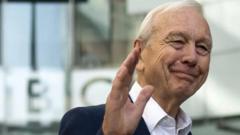
That's exactly what happened to veteran broadcaster John Humphrys in August 1974. Long before he became the terrifying interrogator on Radio 4's Today programme or the stern face of Mastermind, he was a young foreign correspondent for the BBC. He was the man on the ground when Richard Nixon became the first US president to resign.
It should have been the crowning achievement of his early career. Instead, it became the night he nearly threw it all away because of a ridiculously heavy lunch. The 82-year-old broadcasting legend recently opened up about the incident, admitting he was drunk on air during one of the most significant moments in modern history.
The Lunch That Almost Ruined Everything
Journalists in the 1970s weren't exactly famous for their temperate lifestyles. Liquid lunches were part of the corporate culture. But even by the standards of the era, the meal Humphrys consumed on August 9, 1974, was excessive.
Knowing that Nixon was about to step down after the grueling, two-year agony of the Watergate scandal, Humphrys went out for what he described as a very lavish lunch.
The menu didn't just involve food. It started with a couple of glasses of red wine. Then came a martini or two. That was followed by more wine during the meal, and finished off with brandy.
By any reasonable metric, that's a staggering amount of alcohol to consume right before anchoring a historic live broadcast via satellite.
When he stumbled back to the BBC news bureau, the atmosphere was chaotic. The world was waiting. The technical crew was sweating. And the network's star reporter could barely see straight.
His broadcast assistant took one look at him and asked a blunt question. "Are you sober?"
Humphrys, in his own words, gave a predictably stupid, arrogant response. "What do you think, darling?"
Painfully Obvious on Air
Live television doesn't give you a second chance. When the red light went on, Humphrys had to deliver. He was broadcasting by satellite directly back to London, anchoring the coverage of a constitutional crisis that had transfixed the globe.
He didn't fall off his chair. He didn't forget his name. But he didn't fool anyone either.
"I got through it. Just. But only just," Humphrys admitted.
While he managed to articulate the facts of Nixon's departure, his condition was clear to anyone watching closely. He described his appearance as painfully obvious that he was pissed. The adrenaline of the moment might have kept him upright, but it couldn't hide the slurred edges of his delivery and the bleary look in his eyes.
The reckoning came the next morning.
The same broadcast assistant who had questioned his sobriety before the cameras rolled walked up to him with a message from the higher-ups in London. The BBC executives at Television Centre weren't going to fire him, but the warning was explicit.
"London probably won't say anything to you, but they've said it to me," she told him. "You can't do that again."
Facing the Reality of Sobriety
That terrifying close call changed the trajectory of his life. It was a moment of profound embarrassment that forced him to look in the mirror.
"I think I was an alcoholic," Humphrys confessed recently. It's a heavy label, and one he wrestles with. He noted that you don't always know whether you actually need a drink or if it's just habit and environment. But the panic of almost destroying his professional reputation on international television cured him of the desire to find out.
That night in Washington was the last time he ever got drunk. He went cold turkey, walking away from the heavy-drinking media culture that defined Fleet Street and broadcasting in the seventies.
Decades later, he has softened the edges of that absolute sobriety, but only slightly. He admits to having half a pint of beer with his supper when he's by himself, though he quickly points out that half of that glass is actually non-alcoholic beer. Basically, he doesn't drink.
The Mistakes Modern Professionals Can Learn From
It's easy to look at a story from 1974 and view it as a relic of a bygone era. We live in a world of wellness corporate policies, human resources guidelines, and intense public scrutiny. A modern anchor wouldn't last five minutes if they showed up to a breaking news desk smelling of brandy and martinis.
But the core lessons of his near-fatal career mistake still apply to anyone managing high-stakes projects today.
First, arrogance is the ultimate career killer. Humphrys assumed his talent and experience could override the physical reality of what he'd consumed. Under pressure, overconfidence turns into vulnerability.
Second, you need people around you who tell the truth. The broadcast assistant who confronted him before the show, and delivered the brutal feedback the next morning, wasn't trying to be cruel. She saved his career. If you surround yourself with yes-men who ignore your slipping standards, you're heading for a fall.
If you're facing a high-pressure milestone in your own career, don't rely on raw talent to bail out poor preparation or bad choices. Assess your habits honestly. Set strict boundaries before major events. Most importantly, listen to the colleagues who care enough to tell you when you're messing up. Humphrys used his luckiest escape to build a fifty-year legacy at the top of British journalism. Most people don't get a second chance when they fail that spectacularly on the world stage.