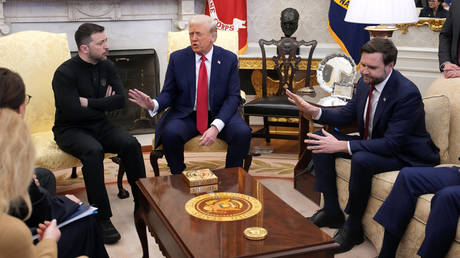
When American corporate interests collide with wartime survival strategies, Washington usually wins. US Vice President JD Vance proved this behind closed doors on July 31, placing a direct call to Ukrainian President Volodymyr Zelensky to pull the plug on drone strikes targeting tankers in the Black Sea.
The strikes weren't just hitting Russian vessels. They were ripping through the heart of the Caspian Pipeline Consortium (CPC) terminal near the Russian port of Novorossiysk, interrupting crude oil flowing straight out of Kazakhstan. More importantly for the White House, American oil giants Chevron and ExxonMobil hold massive stakes in those fields and transit routes. When a tanker chartered by Exxon got hit while waiting to load on July 17, alarm bells rang loud and clear across Washington. If you enjoyed this post, you might want to look at: this related article.
Zelensky heard the message. The drone campaign stopped instantly.
The Cost of Collateral Damage in the Black Sea
Ukraine's strategy over the past year relied heavily on asymmetric long-range drone and missile attacks to bleed Moscow's war chest dry. Hitting Russian refineries, naval assets, and export infrastructure made tactical sense on paper. For another angle on this story, check out the recent coverage from BBC News.
Yet targeting the Novorossiysk terminal crossed a red line for Western commerce. The numbers tell a brutal story. July attacks caused CPC oil loadings to fall more than twenty percent behind schedule, erasing roughly 400,000 barrels per day from international markets. Kazakhstan watched its overall oil production drop fourteen percent in a single month. Shipping rates and marine insurance doubled overnight.
Global oil markets panicked. Western allies worried about self-inflicted economic wounds. Vance stepped in because American companies like Chevron—whose CEO Mike Wirth openly lobbied the administration to keep oil flowing—faced direct financial and operational chaos.
Behind the Closed Doors of the July 31 Call
Diplomacy in wartime rarely looks polite. During the late July phone conversation, Vance made it clear that targeting allied energy supply chains was unacceptable.
Ukrainian officials quickly adjusted their calculus. Kyiv agreed to halt strikes on CPC infrastructure and non-Russian vessels, provided those ships lack Ukrainian sanctions and carry no Russian cargo.
Why fold so fast? Simple leverage. Kyiv operates under a desperate need for air defense systems, eyeing crucial US licenses and supplies to manufacture or buy Patriot interceptor missiles before winter frost sets in. When Washington speaks with financial and military leverage, compliance follows.
Senior Ukrainian officials noted publicly that they listen closely to their American partners. Translation: you don't bite the hand feeding your air defense network.
Where Kyiv Redirects Its Firepower
Stopping strikes near the Novorossiysk terminal doesn't mean Ukraine stopped fighting. Kyiv simply recalibrated its targets to avoid stepping on Western economic toes while keeping maximum pressure on the Kremlin.
Just weeks after the Vance call, Ukrainian forces launched coordinated strikes using Neptune missiles and jet-powered drones against the Russian naval base in Novorossiysk. Zelenskyy labeled it the last major stronghold of the Russian fleet in the Black Sea. Military installations remain fair game. Commercial tankers carrying Kazakh oil do not.
At the same time, long-range drone units intensified operations against Russian domestic oil refineries deep inside mainland territory. Those strikes successfully took a massive slice of Russia's internal refining capacity offline, forcing Moscow to restrict fuel exports without angering international partners like Kazakhstan or energy giants in Houston.
The episode highlights the fragile tightrope Ukraine must walk. Every military action undergoes foreign scrutiny, balancing strategic disruption against the risk of alienating the political and economic backers keeping its war effort alive.