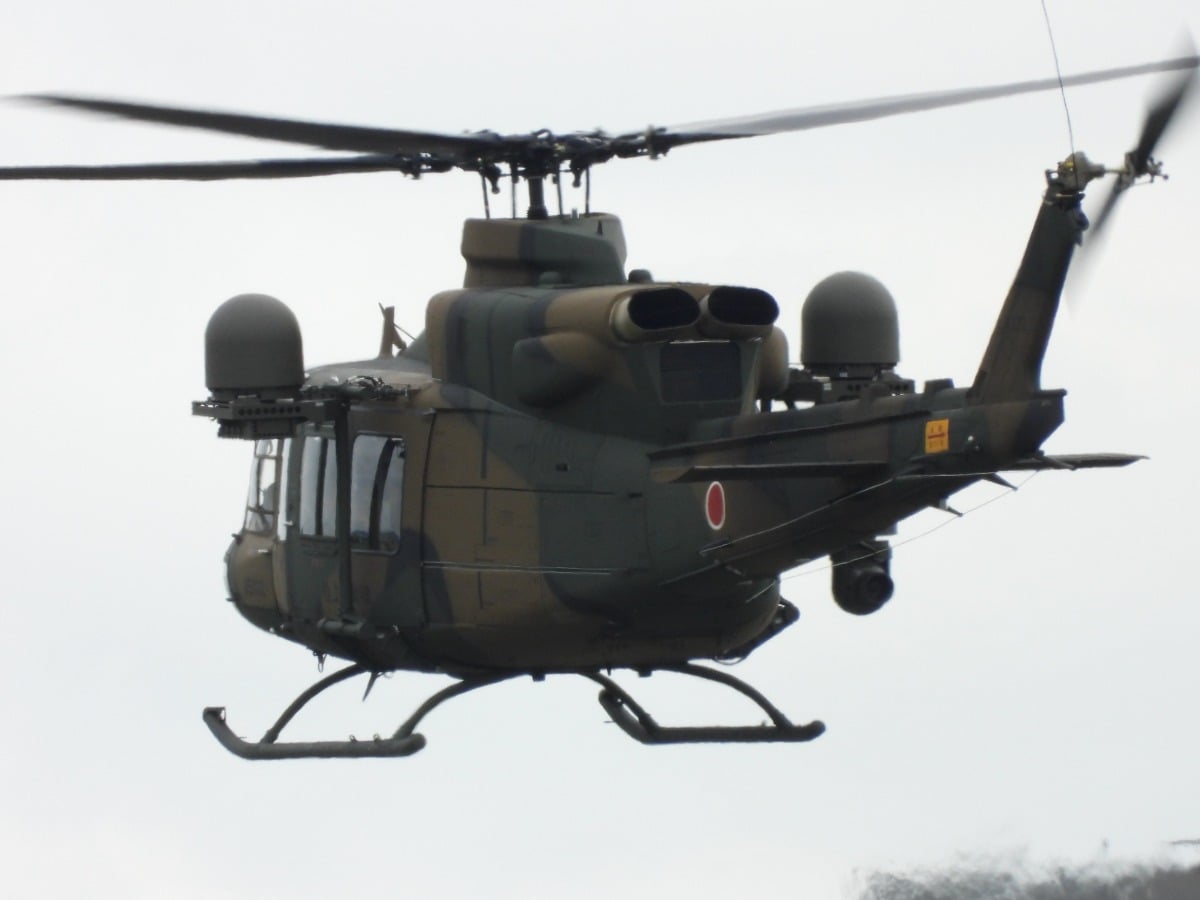
Aviation spotters standing outside the fences of Japan Ground Self-Defense Force bases see things long before official public relations channels want anyone to know about them. It happens all the time. A seasoned photographer points a telephoto lens at a Subaru UH-2 or a Mitsubishi UH-60JA coming in for a landing at Akeno or Kisarazu, snaps a few high-resolution frames, and notices something odd. A new antenna fairing. An unusual sensor turret under the nose. A set of black boxes bolted onto the tail boom that weren't there last week.
These spotting incidents aren't just hobbyists geeking out over aircraft hardware. They offer a direct window into how Japan is quietly overhauling its rotary-wing fleet to survive a much dangerous regional environment. Military procurement bureaucracy takes years to publish official reports. The spotters give us the reality in real-time.
When a mystery upgrade appears on a Japanese military helicopter, it almost always points to a specific, urgent tactical need. Japan is shifting its defense posture toward the southwestern islands, the Nansei chain. Operating helicopters over open water and isolated islands changes everything. It means these airframes need better electronic eyes, stronger defenses against shoulder-fired missiles, and the ability to talk to naval vessels without getting their signals jammed.
The Secret Modifications Spotters Keep Catching
You can learn a lot by looking at the specific placement of new hardware on these airframes. When aviation watchers upload close-up shots of JGSDF helicopters, the speculation online usually focuses on three main areas. Electronic warfare, missile warning systems, and satellite communication bumps.
Look at the recent spottings on the UH-60JA fleet. Several airframes have been seen carrying modified nose sections and extra sensor mounts along the fuselage. For a long time, the standard JGSDF utility helicopters relied on relatively basic radar warning receivers and flare dispensers. That doesn't cut it anymore. If you're flying low over an island where an adversary might have sneaked in man-portable air-defense systems, you need automated protection.
The mystery boxes spotted by aviation watchers are frequently identified by experts as components of advanced Direct Infrared Countermeasures systems or updated Missile Approach Warning Systems. These systems use ultraviolet or infrared sensors to detect the thermal signature of an incoming missile launch. The system then automatically directs a blinding laser beam into the missile's seeker head to throw it off course. It happens in milliseconds. For a crew flying a slow transport helicopter, it's the difference between coming home and eating a surface-to-air missile.
Then there are the mysterious dome-shaped fairings appearing on top of the main rotor doghouses or on the tail booms of transport helicopters like the CH-47JA Chinook. These aren't just aerodynamic decorations. They are directional satellite communication antennas. Traditionally, military helicopters used line-of-sight radio systems. If a mountain got between the helicopter and the command post, communications died. With the Nansei island chain stretching over hundreds of miles of open ocean, line-of-sight radio is useless. These new satellite domes allow JGSDF crews to maintain secure, high-bandwidth data links directly with central command in Tokyo or fleet command ships out at sea, no matter how remote the location.
Why the JGSDF Keeps Technical Details Under Wraps
People often wonder why the Japanese Ministry of Defense doesn't just issue a press release when they upgrade a helicopter. Why the secrecy over a few antennas? The answer comes down to electronic warfare and electronic signals intelligence.
Every electronic sensor, radar warning receiver, or radio system emits or receives specific frequencies. If an adversary knows the exact model of the missile warning system installed on a Japanese UH-2, they can analyze its vulnerabilities. They can figure out the exact wavelength its sensors look for. They can design countermeasures to blind the helicopter's defenses. By keeping the exact specifications of these upgrades vague, the JGSDF maintains an element of tactical surprise.
Common Helicopter Modifications Spotted by OSINT Observers:
- Nose-mounted FLIR (Forward-Looking Infrared) turrets for night operations over water
- Fuselage-mounted missile warning sensors providing 360-degree coverage
- Tail and rotor-top satellite communication domes for over-the-horizon data links
- Extended chaff and flare dispensers mounted at aggressive angles for better coverage
This creates a fascinating cat-and-mouse game between the ministry and the open-source intelligence community. Spotters post photos because they love the machinery. Analysts then study the photos to deduce the supplier, the capability, and the strategic intent. The Ministry of Defense knows this happens. Sometimes they intentionally let modified aircraft fly during public base festivals to signal capability to regional rivals without making an official diplomatic statement. It's deterrence through photography.
What These Upgrades Tell Us About Island Defense Strategy
You have to look at the bigger picture to understand why these modifications matter so much right now. The JGSDF is drastically changing how it plans to fight. The old Cold War doctrine assumed a massive Soviet invasion from the north, requiring heavy tanks and massed artillery in Hokkaido. That era is completely over.
The current threat model involves rapid, gray-zone contingencies or outright amphibious assaults on Japan's remote southern islands. Helicopters are the primary way to move troops, supplies, and casualties quickly across these scattered landmasses. But islands offer very little cover. Unlike the mountainous terrain of mainland Japan, where a helicopter can hide in a valley to avoid radar, flying over the ocean makes an aircraft stand out like a sore thumb on radar screens.
To survive, JGSDF helicopters must integrate into a larger, multi-domain network. The mystery upgrades are the physical manifestation of this integration. A modified UH-2 isn't just a flying truck anymore. It serves as a sensor node. The new data links allow it to receive targeting data from a nearby maritime patrol aircraft or a naval destroyer, letting the helicopter crew see threats long before they enter visual range.
This network-centric approach also explains the appearance of new, unidentified electro-optical and infrared sensor turrets on these utility fleets. These sensors allow crews to scout coastlines, detect small boats used by special operations forces, and conduct search-and-rescue operations in pitch-black conditions without turning on searchlights that would give away their position.
How to Spot and Analyze Military Helicopter Modifications Yourself
If you want to track these changes yourself, you don't need a top-secret security clearance. You just need to know what to look for when browsing aviation photography forums or tracking open-source defense news.
First, look for asymmetry. Military aircraft are usually designed with symmetry in mind for aerodynamic balance. If you see a pod or an antenna mounted on the left side of the fuselage but not the right, it's almost certainly a specialized piece of mission equipment, like a specialized camera, an electronic intelligence receiver, or an offset defense system.
Second, check the paint and rivets. Brand new upgrades often have slightly different paint finishes compared to the weathered skin of the rest of the helicopter. You can often see the distinct lines where a new panel was riveted onto the existing structure. This tells you the modification was done during a recent depot-level maintenance cycle rather than during the original factory build.
Third, compare the airframe serial numbers. Japanese military aircraft carry clear serial numbers on their tails. By cross-referencing these numbers with older photos of the exact same airframe, you can isolate exactly when a new piece of hardware was installed. If an airframe went into a maintenance facility in Nagoya or Utsunomiya looking standard and came out six months later with three new bumps on the belly, you've found a fleet upgrade testbed.
Keep an eye on the major aviation hubs and public social media feeds originating from spots near JGSDF bases like Tachikawa, Kasumigaura, and Akeno. The spotters there are incredibly precise. They document minor variations that even professional defense analysts sometimes miss. Track the serial numbers they flag, watch for unusual antenna configurations during seasonal base open houses, and compare those physical changes against the broad procurement goals outlined in Japan's annual defense white papers. The hardware always reveals the strategy long before the politicians talk about it.