Everybody in the defense sector is clapping for Tokyo right now. The headlines are uniform, lazy, and completely detached from the physics of modern conflict. They tell you that Japan rushing counter unmanned aerial systems to counter Chinese military expansion is a masterclass in strategic foresight.
They are wrong.
I have spent the last fifteen years watching defense ministries throw good money after bad, buying expensive band-aids for structural hemorrhages. What Tokyo is doing right now is not a bold defense strategy. It is an expensive panic reaction to yesterday's war.
Let us look past the press releases and dismantle the lazy consensus.
The Economics of the Trap
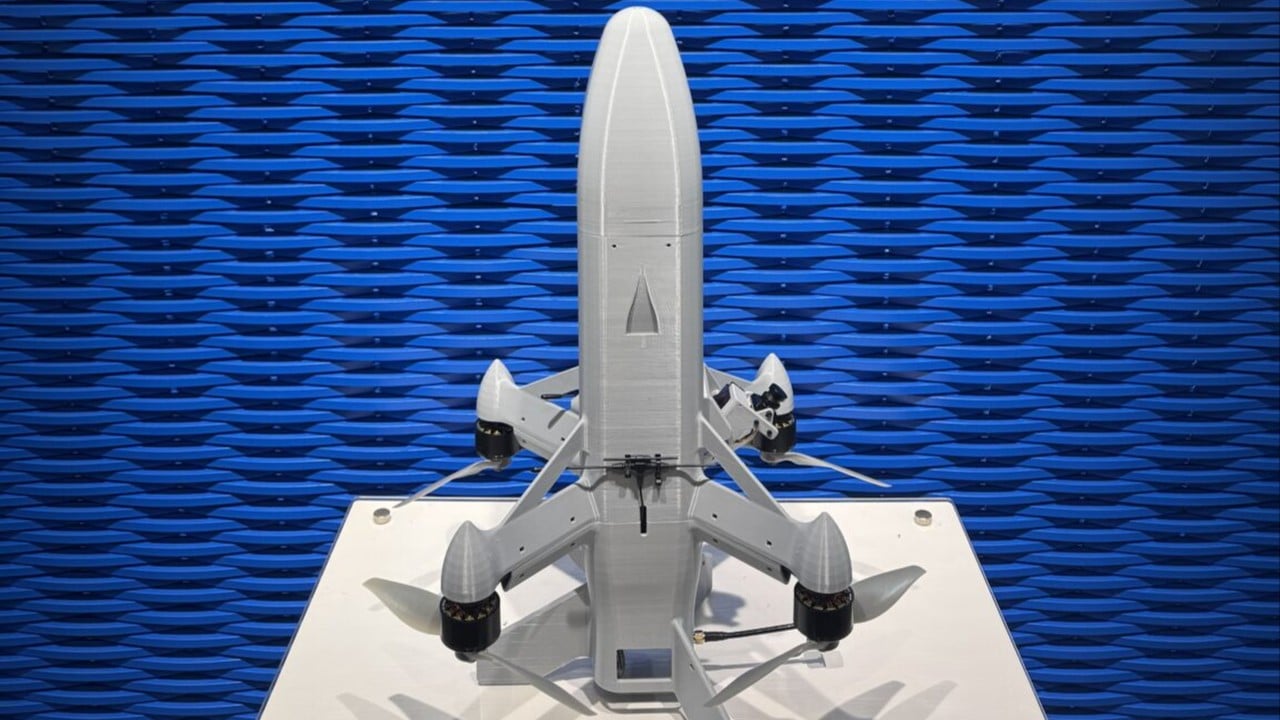
Here is the fundamental error driving this entire policy shift. Defense planners are looking at cheap quadcopters and commercial surveillance drones hovering near territorial waters and thinking they need exquisite, multi-million-dollar interceptors to swat them out of the sky.
That is math illiteracy on a national scale.
If a state actor or proxy launches a swarm of low-cost, off-the-shelf drones costing five thousand dollars apiece, and your countermeasure relies on a specialized radar-guided effector or an advanced missile system costing half a million dollars, you have already lost the economic war. You are going bankrupt while your opponent scales production in a strip mall.
Japan’s current procurement obsession focuses heavily on heavy-duty radar integration and kinetic or high-end electronic jamming designed for high-end military platforms. But the threat vector has shifted downward and outward. The real challenge in the East China Sea is not a lack of detection hardware. It is the staggering asymmetry of cost-per-engagement.
The Geography Fallacy
Tokyo operates under a unique geographic delusion. The Japanese archipelago is an endless chain of coastline, islands, and high-density urban corridors.
The defense establishment assumes that counter-drone installations can be neatly peppered along the perimeter like digital fence posts. Anyone who has spent a week looking at actual spectrum management in dense electromagnetic environments knows this is a fantasy.
Commercial cellular traffic, maritime radar, civilian aviation frequencies, and television broadcasts create a soup of interference that renders standard localized electronic countermeasures nearly useless without blinding friendly forces.
When you jam a frequency near a major port or densely populated coastal prefecture, you do not just disrupt hostile eyes in the sky. You take out local logistics, port communications, and civilian infrastructure. The collateral friction of trying to shield a coastline with active radio-frequency suppression is higher than the threat of the drones themselves.
What They Should Be Doing Instead
If you want to survive the next decade of autonomous aerospace pressure, stop buying more radars. Stop pretending you can shoot down every cheap sensor floating across the air-sea boundary.
Instead, focus on three unglamorous shifts:
- Decentralized passive acoustic and optical arrays: Active radar is a beacon. Turn it off. Rely on low-signature, edge-computed optical and acoustic triangulation that cannot be easily jammed, spoofed, or targeted by anti-radiation missiles.
- Denial of spectrum rather than destruction: Instead of trying to blow up every drone, make the local airspace digitally unnavigable through localized low-power sector spoofing that forces drones off course into safe containment zones rather than requiring a kinetic kill.
- Deep infrastructure hardening: Most surveillance drones are looking for exposed command nodes, parked assets, and fuel depots. Bury the logistics. Camouflage the signatures. If they cannot see anything worth hitting, the drone is just an expensive piece of plastic wasting battery life.
Tokyo wants to look decisive. They want to show a restless public and nervous allies that they are locking down the perimeter. But building a wall of high-priced countermeasures against a flood of cheap, disposable hardware is a losing game.
Stop funding the contractors selling the problem solver. Fix the vulnerability instead.