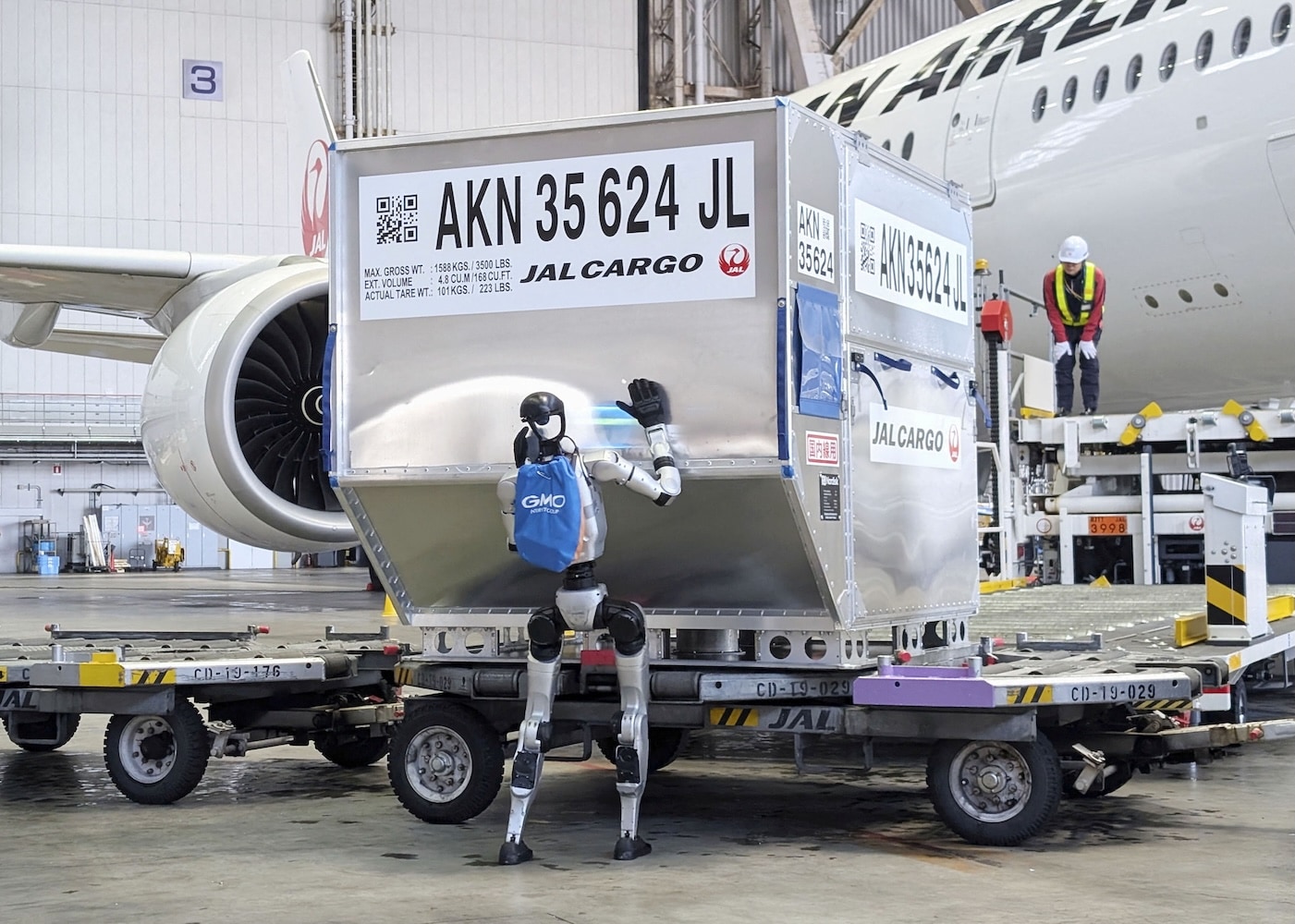
The press release cycle for May 2026 is already predictable. You’ll see glossy photos of sleek, bipedal "humanoids" gliding through Haneda and Narita. You’ll read breathless quotes about "omotenashi" (Japanese hospitality) meeting automation. You might even see a video of a robot handing a bottle of water to a tired traveler.
It’s a lie.
Not a technical lie—the robots are physically there—but a functional one. Most industry analysts are falling over themselves to praise this as the dawn of the autonomous age. They’re missing the point. Deploying expensive, fragile, bipedal hardware to do the job of a $500 tablet is not progress. It’s "innovation theater" of the highest order.
I’ve spent a decade watching firms burn eight-figure budgets on robotics projects that look great in a boardroom and fail on the floor. If you think a humanoid robot at an airport gate is there to help you, you’re the mark.
The Humanoid Tax
Why are we obsessed with making robots look like us? In the world of robotics, the human form is a catastrophic design choice for an airport.
A human body is an unstable pillar. It requires immense processing power and battery life just to keep from falling over. To make a robot walk through a crowded terminal, you have to solve the "N-body problem" of navigation in a chaotic environment. You’re fighting physics every second.
If the goal was actually efficiency, the "robot" would be a series of integrated kiosks and smart signage. If the goal was baggage handling, the "robot" would be an automated conveyor system or a low-center-of-gravity rover on wheels.
Instead, Japan is betting on machines with arms and legs. Here is the reality of the "humanoid tax":
- Maintenance Bloat: Every joint in a bipedal robot is a point of failure. Salt air, dust, and human interference will sideline these machines within weeks.
- The Velocity Cap: A humanoid cannot move faster than a brisk walk without becoming a safety liability. A motorized cart or a digital screen is infinitely more efficient at moving information or goods.
- Energy Waste: A significant portion of the robot's battery is spent fighting gravity.
We are literally building machines that are less capable than the sum of their parts just so they can look "friendly."
The Labor Shortage Myth
The prevailing argument for the May 2026 rollout is Japan’s shrinking workforce. The logic goes: "We don't have enough people, so we need robots."
This premise is flawed. These robots don't replace workers; they create a new, more expensive class of worker. For every humanoid robot deployed at a gate, you need a specialized technician on standby, a software engineer for edge-case navigation failures, and a cleaning crew that knows how to handle sensitive sensors.
I’ve seen this play out in logistics. A company replaces five low-wage manual sorters with a multi-million dollar robotic arm. Suddenly, they aren't saving money. They’ve just traded five flexible, multi-purpose human beings for one rigid machine and three high-priced consultants.
In an airport, "edge cases" are the norm. A flight is canceled. An angry passenger spills coffee. A child runs into the path of the sensors. A human worker can pivot between these tasks instantly. A humanoid robot calibrated to "provide directions" becomes a literal roadblock the moment the script changes.
Security Through Obscurity
There is a darker, more pragmatic reason for this rollout that nobody wants to admit: crowd control through psychological manipulation.
Humans react differently to a 6-foot tall humanoid than they do to a digital kiosk. We are hardwired to give social cues to things that look like us. By placing these machines in terminals, airports are experimenting with "behavioral friction."
If a robot tells you that your gate has changed, you are statistically more likely to follow the instruction without arguing than if a text message appears on your phone. It’s not about service; it’s about managing the flow of the "herd" using anthropomorphic authority. It’s social engineering wrapped in a shiny plastic shell.
The Real Bottleneck
If Japan actually wanted to fix the airport experience, they wouldn't spend a yen on humanoids. They would fix the data silos.
The "broken" part of travel isn't that you can't find the bathroom. It’s that the airline's database doesn't talk to the airport's security system, which doesn't talk to the ground handling crew.
Imagine a scenario where your digital identity and flight data are so well-integrated that the airport infrastructure adjusts to you. Biometric gates open as you approach. Your bag is routed to your specific Uber before you even step off the plane. No "helpers" required—human or robotic.
Instead, we get a robot that can bow.
The Cost of Looking Cool
Japan is a world leader in robotics, but they are currently suffering from "Galapagos Syndrome"—developing highly advanced technology that is completely unsuited for the global market.
By prioritizing the humanoid form factor, they are ignoring the massive strides made in "Invisible AI" and ambient computing. The most successful robot in the world isn't a metal person; it's the algorithm that optimizes flight paths or the automated tram that moves thousands of people without a single "arm" or "leg."
The 2026 rollout is a marketing stunt designed to project an image of a high-tech future while the underlying infrastructure remains trapped in the 1990s.
Stop Asking if They Can Help
When you see these machines in May 2026, don't ask, "What can it do?" Ask, "What is it preventing?"
It’s preventing the airport from investing in real structural changes. It’s preventing the industry from admitting that the current model of air travel is fundamentally broken and cannot be fixed by adding a mechanical mascot.
The future of travel isn't a robot that looks like you. It's an airport that doesn't need you to talk to anyone at all.
Until we stop fetishizing the humanoid form, these "workers" will remain nothing more than glorified, walking tablets—high-maintenance distractions in a world that just wants to get from Point A to Point B without a headache.
The circus is coming to Haneda. Don't forget to tip the software engineers when the robot falls over a suitcase.