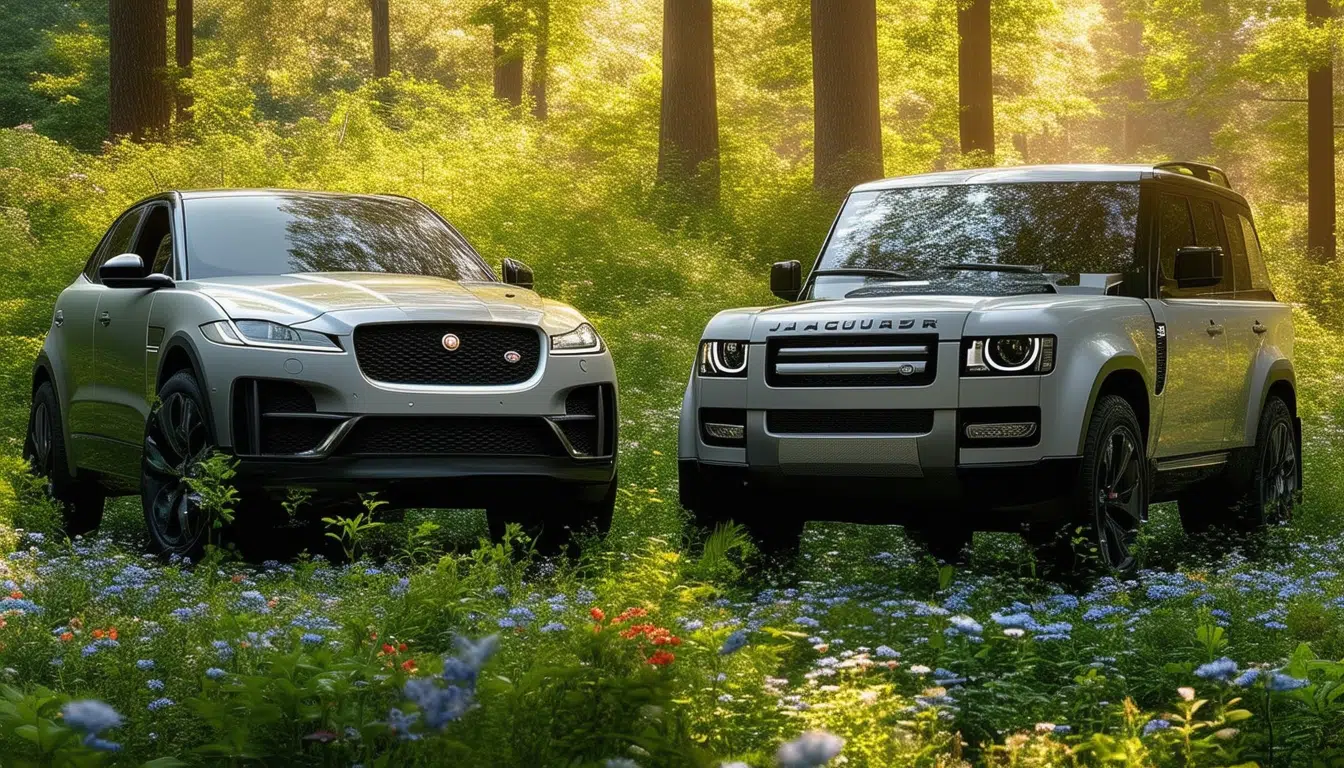
Traditional luxury carmakers don't usually look to the battlefield when consumer demand slows down. Yet, Jaguar Land Rover is doing precisely that. As European defense spending surges amidst shifting geopolitical realities, the iconic British automotive manufacturer is actively courting NATO ministries and chasing lucrative military procurement deals.
At the center of this strategy is a modern reimagining of a military classic. JLR wants to cash in on a continent-wide rearmament drive by transforming its revamped consumer off-roader into a frontline tactical vehicle. But shifting from building luxury SUVs for urban driveways to heavy-duty military transports is a massive operational gamble.
The Strategy Behind the Wolf Series II
The vehicle anchoring JLR's military ambitions is the Wolf Series II. Unveiled at industry showcases, this militarised iteration targets the UK Ministry of Defence's multi-million-pound Light Mobility Vehicle tender, alongside broader export opportunities across NATO allies.
The original Land Rover Defender—and its military sibling, the Wolf—served armed forces reliably for decades. Soldiers trusted them because they were simple to repair and mechanical enough to fix in the field. However, the new Wolf Series II abandons the traditional ladder-frame setup of its predecessor. It relies instead on the D7x monocoque aluminium architecture found in consumer showrooms.
That choice raises legitimate eyebrows among defense analysts. A bonded aluminium monocoque handles school runs and highway cruising brilliantly, but military logistically-minded buyers traditionally prefer heavy steel frames that can withstand brutal battlefield abuse and field welding. JLR counters this criticism by pointing to extreme testing metrics, claiming the platform underwent tens of thousands of validation cycles across punishing desert heat, sub-zero Arctic cold, and high-altitude terrain.
Why JLR Needs Government Contracts Now
The timing of this defense pivot is far from accidental. Consumer automotive markets are under severe strain. Carmakers everywhere are grappling with slowing electric vehicle adoption curves, aggressive price competition from Chinese manufacturers, and costly supply chain snarls.
JLR has faced an exceptionally bruising financial stretch, marked by major restructuring efforts, workforce reductions, and operational disruptions. Against that volatile consumer backdrop, government defense budgets look remarkably stable. NATO nations are committing billions to re-equip their armed forces. Securing institutional, multi-year military procurement contracts provides an insulated revenue stream that cushions the erratic swings of the luxury car market.
The Competition and the Hurdles Ahead
JLR isn't alone in recognizing this golden opportunity. Other heavyweights, including General Motors and Ineos Automotive, are circling the same defense contracts. General Motors has explored consortium bids leveraging US-built truck platforms, while domestic competitors pitch rugged alternatives designed from the ground up for utility.
Winning a major light mobility contract means playing a long game. Military procurement timelines are notoriously bureaucratic and slow, moving at a glacial pace compared to commercial car launches. Furthermore, adapting a luxury-derived platform to military specifications requires strict management of electronic architecture. Modern Defenders feature dozens of sensors and complex digital systems. Armed forces often demand stripped-down, cyber-secure simplicity rather than redundant consumer tech that could fail or compromise operational security in combat zones.
If JLR successfully threads this needle, the Wolf Series II could secure a long-term institutional lifeline. Transforming a civilian favorite back into a military workhorse proves that heritage still carries weight when survival is on the line.