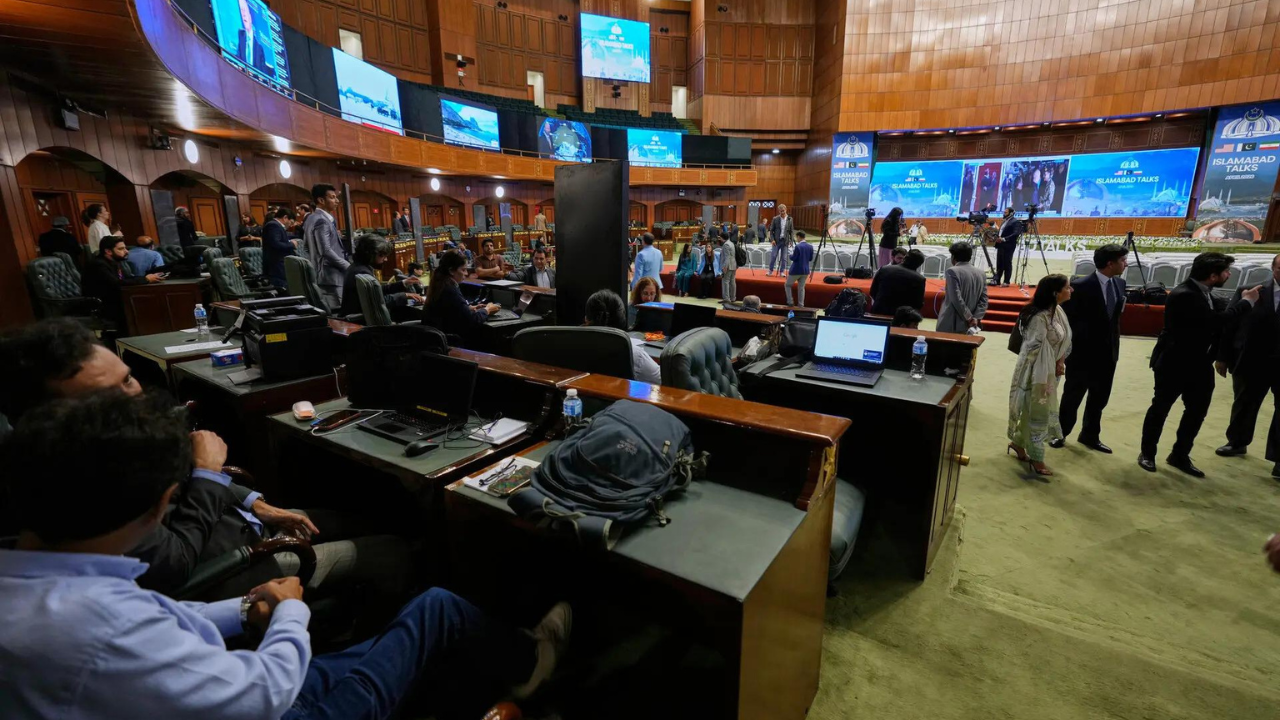
The physical proximity of Vice President JD Vance and Iranian Parliament Speaker Mohammad-Bagher Ghalibaf in a heavily fortified Islamabad compound marks the first time in decades that Washington and Tehran have traded the sterile safety of "shuttle diplomacy" for the volatile friction of a single room. This is no mere check-in. The primary objective is to dismantle a six-week-old war that has crippled global energy flows and turned the Strait of Hormuz into a graveyard for commercial shipping.
While the world watches the heavy security cordons in Pakistan’s capital, the real action is happening over a 10-point Iranian demand and a 15-point American counter-proposal. Tehran wants the immediate unfreezing of assets and a halt to Israeli strikes on Hezbollah in Lebanon. Washington wants a permanent seal on Iran’s nuclear ambitions and a guaranteed opening of the Strait of Hormuz. The tension isn't just about the terms; it is about the fundamental reality that both sides are now negotiating from a position of exhaustion rather than strength.
The Geography of Desperation
Pakistan was not chosen for its neutrality. It was chosen because it cannot afford for this war to continue. Sharing a 900-kilometer border with Iran, Islamabad is terrified of a fragmented neighbor that could fuel Baloch militancy or send millions of refugees streaming eastward. By hosting these talks, Pakistan is attempting to protect its own internal stability as much as it is trying to play the global peacemaker.
The American delegation, which includes Special Envoy Steve Witkoff and Jared Kushner, is operating under a directive from President Trump to secure a "win" that looks nothing like the 2015 nuclear deal. The administration is banking on the "madman theory," threatening to open the Strait of Hormuz by force if negotiations fail. However, the Iranian side knows that clearing mines and protecting tankers in the world’s most vital chokepoint is a logistical nightmare that the U.S. Navy would rather avoid.
The Lebanon Fault Line
Tehran has made it clear that any settlement in Islamabad is dead on arrival if it does not include a ceasefire in Lebanon. This is the ultimate sticking point. The U.S. maintains that Israeli operations against Hezbollah are a separate security issue, but for Iran, Hezbollah is the crown jewel of its "Axis of Resistance." Giving up Lebanon without a fight would be seen as a domestic surrender for the regime in Tehran.
Foreign Minister Abbas Araghchi, a veteran of previous nuclear marathons, arrived in Islamabad voicing "deep distrust." This is not just diplomatic posturing. The Iranians are acutely aware that while Vance and Ghalibaf are talking, U.S. Navy ships are already crossing the Strait to test Iranian resolve. One wrong move by a Revolutionary Guard speedboat could turn the Islamabad summit into a footnote in a much larger escalation.
The Nuclear Elephant
While the immediate focus is on the war and the waterways, the shadow of the centrifuge remains. The Trump administration wants a deal that covers not just enrichment levels, but ballistic missiles and regional proxies. This "comprehensive" approach is exactly what the Iranians have resisted for years.
The current strategy involves using the economic strangulation of renewed sanctions as a lever to force Iran into a "JCPOA-minus" agreement—a deal with more restrictions and fewer rewards. The problem with this approach is that Iran has already proven it can survive under extreme pressure, and its recent military actions have shown it can inflict significant pain on global markets in return.
The Shadow Players
China is watching these talks with a nervous eye on its energy security. President Trump has already warned that Beijing will face "big problems" if it continues to ship arms to Tehran. This adds a layer of Great Power competition to what is already a complex regional dispute. If the talks fail, the shift toward a China-Iran-Russia axis will likely accelerate, making any future diplomatic efforts even more difficult.
Israel, though not at the table, is the invisible third party. Prime Minister Netanyahu’s government has shown zero interest in a deal that allows Iran to keep any of its nuclear infrastructure or its influence in Lebanon. Every concession Vance makes in Islamabad will be scrutinized by Jerusalem, and any perceived weakness could trigger unilateral Israeli action that would blow the Pakistan negotiations apart.
The Stakes of Failure
If the marathon sessions in Islamabad end without a signed framework, the transition from "limited war" to "total regional conflict" becomes almost inevitable. The U.S. has signaled it will use "mine sweepers" and kinetic force to open the Strait of Hormuz regardless of Iranian cooperation. Such a move would likely lead to direct clashes between the U.S. 5th Fleet and the IRGC, ending the era of proxy wars and starting a direct confrontation that neither side is truly prepared to finish.
The 15 hours of talks that ended early Sunday morning are just the beginning of a high-stakes gamble. The participants are tired, the rhetoric is sharp, and the margin for error is non-existent.
Success in Islamabad requires both sides to accept a version of reality that they have spent years denying. Washington must accept that Iran cannot be fully contained through sanctions alone, and Tehran must accept that its regional expansion has reached its breaking point. Without those two admissions, the documents being traded in Pakistan are nothing more than expensive scrap paper.