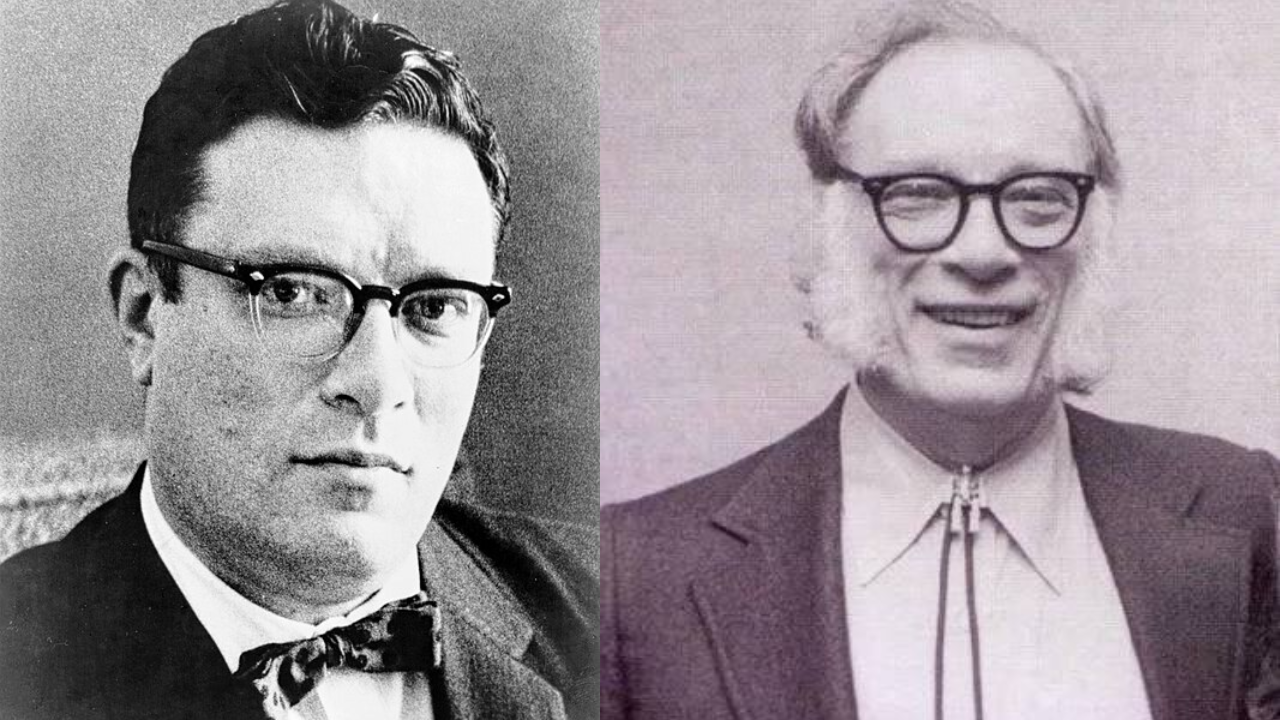
Isaac Asimov watched the world speed up, and he hated what it did to our heads. Decades ago, the famous science fiction author and biochemist pointed out a bitter truth about human progress. We built machines to gather knowledge instantly, yet we use that speed to drown ourselves in trivia. The exact quote goes like this: "The saddest aspect of life right now is that science gathers knowledge faster than society gathers wisdom."
It sounds bleak. It feels even worse today. If you enjoyed this post, you might want to check out: this related article.
You wake up, grab your phone, and mainline notifications about global crises, celebrity gossip, and algorithmic outrage before your coffee even cools down. We have more computing power in our pockets than NASA used to land on the moon. We can query an AI model and get answers to complex quantum mechanics questions in under two seconds.
So why do we feel dumber, more anxious, and profoundly less equipped to handle reality? For another perspective on this event, refer to the latest coverage from ELLE.
Asimov spotted the core malfunction. Knowledge is just raw data piled high in a warehouse. Wisdom is knowing what to do with that pile without setting fire to the building. When society fails to bridge that gap, you get a culture that knows how to edit genes but can't agree on basic facts, or a population that can access the sum of human history while falling prey to primitive online scams.
The Trap of Instant Information
We treat data accumulation like personal growth. It is not. Reading five hundred hot takes on a trending news story doesn't make you informed. It makes you exhausted.
Think about how you spend your average Tuesday. You probably bounce between email, Slack, news feeds, and social media apps. Each ping delivers a micro-dose of information. Your brain registers this as productivity. You are learning things! You are staying current!
Except you aren't. You are accumulating noise.
Asimov wrote across multiple genres, publishing nearly 500 books because he respected the discipline of deep thought. He understood that science and technology move on an exponential curve. Human institutions, human philosophy, and human emotional maturity move on a linear one.
When technology moves at lightspeed while human wisdom crawls, tension is inevitable. We hand powerful tools to societies that haven't figured out how to talk to their neighbors without screaming. We invent algorithms designed to monetize outrage, and then we act shocked when people hate each other.
Moving From Data Collectors to Thinkers
Fixing this isn't about throwing your phone in the river or moving to a cabin in the woods. That is escapism, not wisdom. Real wisdom requires engagement combined with radical filtering.
You have to starve the noise machine.
Most people consume content the way a starving dog eats trash—anything within reach, regardless of quality. If you want to cultivate actual wisdom in an age of hyper-information, you need to change your inputs.
- Trade real-time feeds for long-form books. Read things that were written at least a decade ago. If a book is still being read ten years after publication, it has survived a basic filter of quality that internet trends never pass.
- Build friction into your day. Force yourself to sit with a problem for twenty minutes before you Google the answer. Let your brain struggle. That struggle is where critical thinking lives.
- Audit your information diet ruthlessly. Ask yourself if knowing a specific piece of breaking news will matter to your life next year. If the answer is no, you just wasted finite mental bandwidth on garbage.
Asimov understood that science gives us power, but philosophy and self-awareness give us direction. Without that direction, we are just very smart people driving a sports car blindfolded down a crowded highway.
Put down the feed. Pick up a hard problem. Think for yourself.