The air inside a modern data center does
The Architects in the Room When the Machine Learned to Think
technology, news
The air inside the briefing room smelled of stale coffee and expensive wool. It was late afternoon in Washington, though the digital clocks on the wall ticked with a cold, synchronized indifference that made time feel entirely weightless. Around a mahogany table carved during an older, simpler century sat men and women who held the levers of national power, looking down at a series of documents that outlined a completely new architecture for human capability.
They were not looking at a weapon, strictly speaking. Not a missile. Not a warhead. They were looking at an administrative blueprint for a sovereign intelligence force.
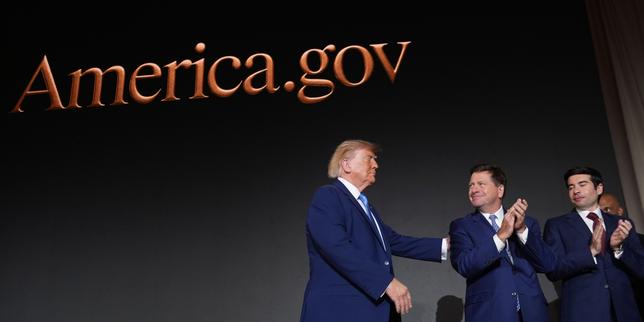
When Donald Trump announced the formation of this initiative alongside top United States officials, the mainstream news cycle treated it like another administrative box checked in the frantic geopolitical race for digital supremacy. Headlines flashed across monitors from New York to Tokyo. Analysts muttered about budgets, executive orders, and public-private partnerships. But numbers on a spreadsheet miss the human tremor at the center of this transformation.
Consider what happens when a government decides to institutionalize cognition.
For decades, technological evolution felt external. It lived on screens. It sat in server racks humming in the desert. We treated code as a tool—something you pick up, use to write an email or balance a ledger, and then put down. But that era is finished. We have crossed a threshold where software no longer just executes instructions; it evaluates variables, weighs probabilities, and proposes pathways that human minds can barely audit in real time.
The creation of a specialized government intelligence unit changes the gravity of the room. It brings together the titans of Silicon Valley and the solemn operators of national security behind closed doors, merging commercial ambition with statecraft.
To understand why this matters, you have to look past the press releases and step into the shoes of a mid-level strategist working inside the national security apparatus. Imagine sitting at a terminal at three in the morning, watching streams of global data flow in—supply chain disruptions, cyber probes, energy grid fluctuations, and geopolitical posturing—all moving at a velocity that defies human comprehension.
A human brain is a magnificent, flawed instrument. It evolved to track predators across tall grass, to remember faces, to fear the dark. It did not evolve to synthesize millions of concurrent telemetry streams from four continents simultaneously.
So, operators resort to filters. They miss things. They misread signals. A crisis brews in the blind spots of human fatigue.
Now, introduce a specialized task force designed to inject advanced machine intelligence directly into the connective tissue of federal decision-making. The stated goal is dominance, speed, and security. The unstated reality is something far more profound: a fundamental renegotiation of who—or what—actually steers the ship of state.
When the highest levels of government commit to an aggressive push for artificial intelligence, they are acknowledging a terrifying truth. They know that if the state moves too slowly, private capital or foreign adversaries will dictate the boundaries of the future. They know that speed is survival.
Yet, speed has a heavy tax.
When you hand complex predictive modeling and operational planning over to systems that process information without empathy, history, or moral intuition, you invite a specific kind of blindness. The machine gives you the optimal path, but it cannot tell you why mercy matters more than efficiency. It can calculate the probability of conflict, but it cannot feel the weight of a generation sent to the field.
This is the tension hiding beneath the polished announcements. It is the friction between the cold perfection of algorithms and the messy, beautiful stubbornness of human governance.
History shows us that every time humanity builds a new engine of power, we spend the first few years pretending we can control it with the rules of the old world. We drafted traffic laws for automobiles that mirrored horse-and-buggy ordinances. We applied copyright law to the internet as if digital files were physical books.
We are making the exact same error with cognitive infrastructure.
The architects of this new initiative believe they are building a shield. They see a world where national security is preserved through predictive superiority, where bureaucratic inertia is shattered by neural nets that can draft policy in seconds and optimize logistics before a bottleneck even forms.
They are likely right about the utility. But they are underestimating the psychological shift.
When decisions are no longer made by sweating through an argument in a smoky back room, but are instead suggested by a system trained on the sum total of human text, the nature of leadership changes. Responsibility drifts. If the machine recommends a course of action that averts a crisis, who gets the praise? And when the machine hallucinates a phantom threat that leads to a catastrophic miscalculation, who takes the blame?
We are entering a period where the most consequential choices affecting human lives will be mediated by entities that have never known what it means to be alive.
The announcement in Washington was not just a policy shift. It was a milestone marker on a road we cannot un-walk. The race is no longer about who has the most steel or the most oil. It is about who can harness synthetic cognition without losing their soul in the process.
As the briefing room lights flickered and the officials packed their folders, the terminal screens in the corner kept scrolling. Green text on black glass. Silent. Untiring. Waiting for the next instruction from a world that is accelerating faster than its creators can comprehend.
The future is being written in code, and the ink is drying far too quickly.