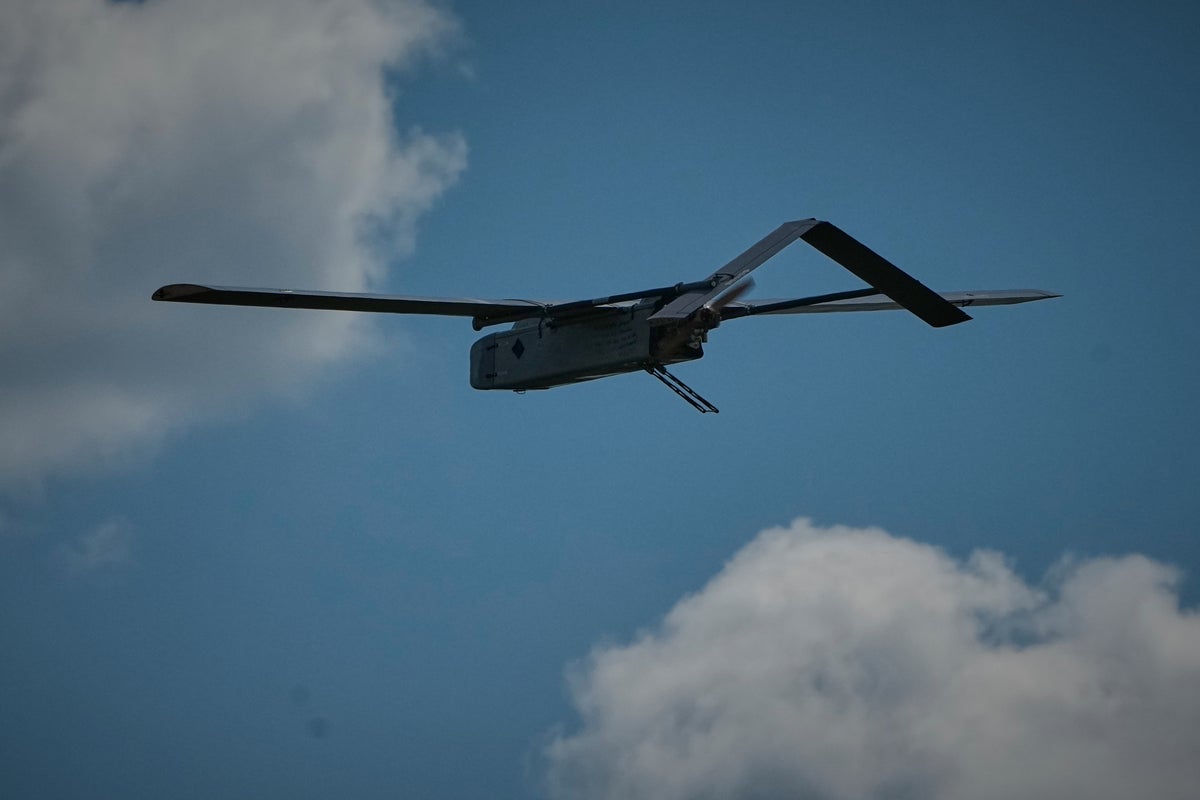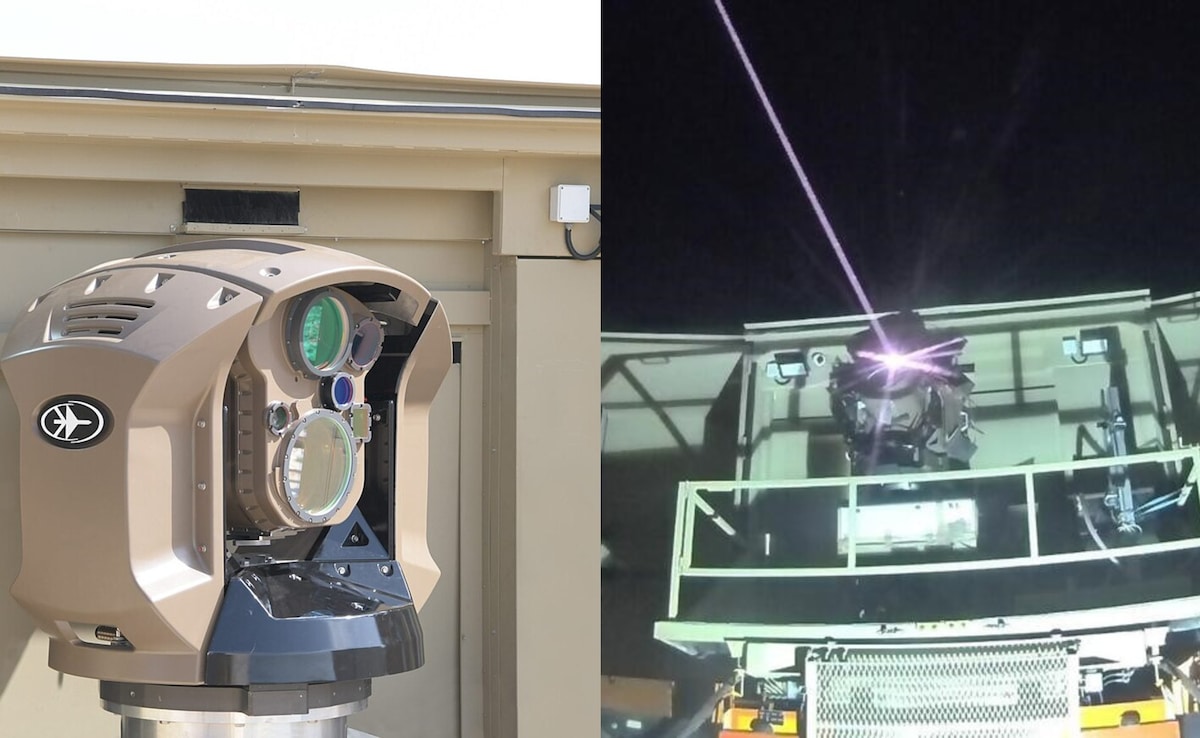
The headlines are breathless. They speak of "vaporizing" drones with "beams of light" as if we have finally entered the age of Star Wars. The narrative is seductive: Israel sends the Iron Beam to the UAE, a flick of a switch occurs, and the Iranian drone threat becomes a collection of expensive smoke clouds.
It is a fantasy.
If you believe a laser is a magic wand that solves the complex geometry of modern saturation attacks, you aren't paying attention to physics. The Iron Beam is a remarkable feat of engineering, but it is not the silver bullet the media wants it to be. In fact, relying on it too heavily might be the precise mistake that lets a low-tech adversary through the door.
The Myth of the "Free" Shot
The most repeated "lazy consensus" in defense tech circles is the cost-per-kill argument. You’ve heard it: "Iron Dome interceptors cost $50,000, but a laser shot costs $2."
This math is amateur hour.
It ignores the massive, upfront capital expenditure (CAPEX) required to build, deploy, and maintain these high-energy liquid or fiber laser systems. It ignores the cost of the massive power generation infrastructure required to keep these units mobile and ready. When you factor in the research and development, the limited lifespan of high-end optical components, and the cooling requirements, that "$2 shot" starts looking like a $20,000 logistical nightmare.
The real cost of a weapon isn't the ammunition; it’s the reliability.
Physics Doesn't Care About Your Press Release
Here is the dirty secret about Directed Energy Weapons (DEW) that proponents keep quiet: lasers hate the real world.
A laser is a coherent beam of light that needs to stay focused on a single point of a moving target for several seconds to "dwell" long enough to melt through carbon fiber or ignite fuel. Now, introduce the Middle East.
- Dust and Sand: The UAE and Israel are not laboratories. They are environments filled with suspended particulate matter. Dust scatters the beam.
- Thermal Blooming: As the laser passes through the air, it heats the atmosphere, which then acts as a lens, defocusing the beam. The harder you fire, the more the air fights you.
- Atmospheric Turbulence: Humidity and heat shimmer distort the path.
In a perfect vacuum, the Iron Beam is terrifying. In a sandstorm over the Persian Gulf, it is an expensive flashlight. If an adversary launches a swarm of fifty $20,000 Shahed-style drones during a period of high humidity or heavy dust, the laser’s effective range drops off a cliff.
The Saturation Problem
The "People Also Ask" sections of the internet want to know: "Can Iron Beam stop a drone swarm?"
The honest, brutal answer is: No.
Kinetic interceptors—missiles—can be launched in rapid succession. You can have twenty Tamir missiles in the air at once, each tracking a different target. A laser is a serial killer, not a parallel one. It must lock onto Target A, dwell for 2 to 5 seconds until destruction is confirmed, then slew its heavy turret to Target B, lock on, and dwell again.
Against a synchronized swarm of 100 drones, the math fails. By the time the laser has "vaporized" its fifth target, the other ninety-five have reached their coordinates. The Iron Beam is an augment, not a replacement. Anyone telling you otherwise is selling stock, not security.
The Counter-Measure Arms Race
We assume the enemy will keep sending "dumb" drones. They won't.
I’ve seen military contractors spend a decade perfecting a sensor, only to have a high-schooler with a bucket of reflective paint render it blind. If you know you are flying into a laser-defended zone, you don't send a black plastic drone. You send a drone coated in a highly reflective, heat-ablative material.
If the drone rotates as it flies, the laser cannot maintain a "dwell" point. It spreads the heat across the entire circumference of the fuselage. You aren't melting a hole; you're just giving the drone a warm bath.
The UAE Strategic Calculus
Why would Israel send this tech to the UAE now? It isn't because the system is a finished, flawless product. It’s because the UAE is the world’s most expensive testing ground.
By deploying the Iron Beam in the Gulf, Israel gets real-world data on how the system handles the unique maritime humidity and heat of the region without risking their own primary defense layers first. It’s a live-fire beta test funded by a partner.
The UAE gets the prestige of being "first," but they are also buying into a system that currently lacks the "depth of magazine" to handle a serious, multi-vector Iranian escalation.
The False Security of Silence
There is a psychological trap in "silent" weaponry. When an Iron Dome battery fires, everyone knows. The boom is a signal of protection. A laser is silent.
From a civilian morale perspective, this is a double-edged sword. You don't know the defense is working until the drone falls out of the sky. But more importantly, from a tactical perspective, the lack of a "hard kill" visual can lead to command-and-control hesitation.
Did we hit it? Is the sensor damaged, or is the drone just tough?
In the high-stress environment of a saturation attack, ambiguity is a killer. Kinetic systems provide the certainty of an explosion. Lasers provide the uncertainty of a thermal signature.
Forget the Vaporization
Stop asking if the Iron Beam can "vaporize" drones. It’s the wrong question.
The right question is: "How many seconds of clear line-of-sight do we have before the thermal blooming renders the system useless?"
The Iron Beam is a niche tool for specific, low-capacity threats. It is excellent for taking out mortar rounds or single, slow-moving reconnaissance UAVs. It is a cost-saver for the "nuisance" attacks that bleed a kinetic defense dry.
But as a shield against a modern, coordinated drone swarm? It’s a sieve.
Don't let the high-tech luster fool you. In the world of high-stakes defense, if it sounds too good to be true, it’s probably just a laser being fired through a smoke screen.
Build more missiles.