The global energy market is facing its biggest test in modern history, and the rules of oil logistics are rewriting themselves in real time. If you think the massive deals signed between Washington and Baghdad are just typical corporate handshakes, you are missing the bigger picture. This is a frantic, multi-billion-dollar race against geography.
A massive series of partnerships worth roughly $60 billion emerged from the U.S. Chamber of Commerce on July 17, 2026. At the center of these agreements is a radical plan to build alternative export paths for Iraqi crude. The goal is simple. The West needs to completely circumvent the Strait of Hormuz.
For decades, the Strait of Hormuz was the undisputed windpipe of the global energy trade. One-fifth of the world's oil flowed through that narrow chokepoint. That era is over for now. Since the conflict between the United States and Iran erupted on February 28, the strait has faced a near-total blockade. Oil prices are swinging wildly. Middle Eastern economies are bleeding cash. Iraq, which was OPEC’s second-largest producer pumping over 4 million barrels a day at the start of the year, saw its production collapse to a ten-year low of 1.5 million barrels per day in April. The country had no choice but to slash output because its primary export route was choked off.
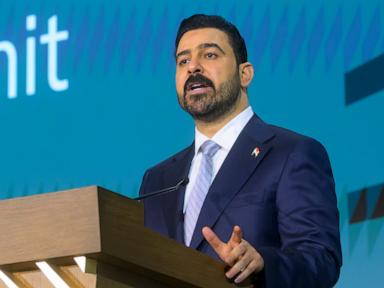
That is why Iraqi Prime Minister Ali Falah al-Zaidi flew to Houston and Washington. He did not come to hire short-term contractors. He came to sign survival pacts with American energy giants.
The Frantic Shift Away From the Persian Gulf
Iraq has always suffered from a fundamental geographic curse. Most of its massive oil wealth is trapped in the southern fields around Basra, which empty directly into the Persian Gulf. When the Gulf is blocked, Iraq suffocates.
The new agreements aim to change that reality permanently. Chevron signed three major agreements with the Iraqi government. While two of these deals focus on ramping up production in the south, the third involves heavy investment in an export pipeline that sends oil in the exact opposite direction—west toward the Mediterranean Sea.
This isn't a minor tweak to a shipping route. It is a complete inversion of how Middle Eastern oil has moved for half a century. To make this work, the U.S. State Department is backing a highly controversial plan to rehabilitate and rebuild the long-defunct Iraq-Syria crude oil pipeline.
The plan sounds wild on paper. It involves connecting Basra in the south to Haditha in western Iraq. From there, the network will run across the border through Syria to the Mediterranean port of Baniyas, with an option to branch northward to the Ceyhan port in Turkey. The ultimate target is to move 2 million barrels of crude oil per day through this western corridor.
Inside the Energy Accords
Let's look at who is actually putting up the money and doing the heavy lifting. Chevron is not working alone here. The U.S. oil major is forming a consortium that includes Los Angeles-based investment firm TI Capital and Power International Holding, an entity owned by the Syrian-Qatari billionaire Al-Khayyat brothers.
Chevron is also aggressively taking over major assets. The company is in advanced negotiations to assume control of West Qurna 2, one of Iraq’s absolute largest oilfields. That field became vacant after Russia's Lukoil found itself completely paralyzed by strict U.S. sanctions imposed in 2025.
Other American firms are already on the ground. Houston-based engineering firm KBR Inc. has been officially brought in by the state-owned Basra Oil Company to serve as the lead technical advisor on these export pipeline options. In Syria, Texas-based HKN Energy has taken over operations at the Rmeilan oilfields under a 25-year contract, while ConocoPhillips signed deals to develop Syrian gas fields.
The sheer volume of capital moving into this corridor proves that Western energy firms see this as a long-term play. They are betting billions that the Persian Gulf will remain highly volatile for years to come.
The Logistic and Security Nightmares of the Syrian Route
Rebuilding a pipeline through Syria is not a walk in the park. It is a massive gamble.
The primary target for rehabilitation is the old Kirkuk-to-Baniyas pipeline system. It is a 500-mile artery that has been completely offline since it was heavily damaged during the U.S. invasion of Iraq in 2003. Pieces of the infrastructure were further destroyed during the decade-long conflict with ISIS.
The physical terrain is brutally dangerous. The planned pipeline routes must cut straight through Iraq's western Anbar province and eastern Syria. These are remote desert regions where active ISIS cells still operate and conduct guerrilla attacks. Protecting hundreds of miles of steel pipe in the middle of a desert from sabotage is almost impossible without significant military security.
Syria itself is just emerging from fourteen years of devastating civil war. Damascus is trying hard to pitch the country as a stable transit hub for global energy. They want the transit fees, and they want the political legitimacy that comes with hosting Western infrastructure. Right now, a tiny amount of Iraqi crude is actually being trucked across the border in tankers to the Baniyas refinery. It is slow, incredibly expensive, and highly inefficient. Converting this primitive overland trucking route into a high-capacity 2 million barrel per day pipeline system will require unprecedented geopolitical cooperation.
The Reality of the Construction Timeline
Do not expect these deals to lower your fuel bills next week. Building cross-border infrastructure takes a long time.
Data from Goldman Sachs indicates that constructing a major pipeline within a single country takes at least two and a half years under ideal conditions. When a project spans two or three nations with complex diplomatic baggage, that timeline stretches significantly.
However, the long-term outlook is shifting fast. Goldman Sachs estimates that there are currently seven different pipeline projects under development across the broader Middle East. If these projects stay on schedule, they could carry roughly 14 million barrels of oil per day by the end of 2028. That means these combined alternative routes could handle about 60% of the total volume that used to squeeze through the Strait of Hormuz before the war.
Other regional players are working on their own escape hatches too. The United Arab Emirates is building a second pipeline to the port of Fujairah to boost its exports outside the Persian Gulf. Saudi Arabia is actively looking to expand its East-West crude pipeline capacity by another 2 million barrels per day to reach the Red Sea.
What Energy Sectors Must Focus on Now
If you manage logistics, trade energy commodities, or track global supply chains, you cannot afford to ignore this shift. You need to prepare for a multi-year transition period where oil prices will remain highly sensitive to regional updates.
First, keep a close eye on the technical assessments being conducted by KBR and Chevron over the next six months. The initial engineering reports will reveal whether the old Kirkuk-Baniyas line can truly be repaired, or if the consortium will have to spend billions more building a completely fresh pipeline from scratch.
Second, monitor the security environment in western Anbar and eastern Syria. Any spike in regional insurgent activity will directly delay the construction timeline, forcing Iraq to rely even longer on expensive, temporary trucking alternatives.
The traditional map of global oil transit is breaking. The Persian Gulf is losing its absolute monopoly on Middle Eastern exports. The Western push into the Mediterranean corridors will alter shipping patterns, insurance costs, and port dynamics permanently. Get ready for a long, bumpy realignment.


:max_bytes(150000):strip_icc():focal(999x0:1001x2)/taylor-swift-albums-1-93026ca98408417097660e117a10a6a9.jpg)