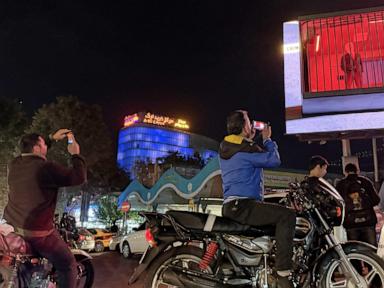
Ordinary Iranians are stockpiling cash, hoarding staple foods, and watching the skies with a quiet, practiced dread because history has taught them that American and Israeli election cycles turn Tehran into a convenient political target. For millions living between the Caspian Sea and the Persian Gulf, the convergence of high-stakes political campaigns in Washington and Jerusalem does not look like a distant diplomatic spectacle. It looks like a countdown to sirens, supply chain collapses, and the terrifying possibility of direct military strikes on Iranian soil.
The anxiety on the streets of Tehran, Isfahan, and Shiraz is not rooted in abstract geopolitical theory. It comes from lived memory. Every time domestic politics in the United States or Israel tilt toward populist security posturing, the shadow war between these nations edges closer to open conflict. When politicians compete to prove who is toughest on the Islamic Republic, the people who absorb the immediate economic and psychological shockwaves are not the clerics or the commanders in reinforced bunkers, but the teachers, shopkeepers, and parents trying to calculate how far a collapsing rial will stretch before the next missile exchange begins.
The Anatomy of an Election Year Pressure Cooker
Politicians in democracies rarely win votes by preaching patience toward an adversary. In both Washington and Jerusalem, campaign seasons create a structural incentive for escalation. Leaders facing skeptical voters and fractured coalitions reach for visible, decisive displays of strength, and few targets offer the immediate political optics of confronting Iran.
For Israeli leaders, particularly during periods of coalition fragility or scheduled national ballots, military posture is inseparable from political survival. Demonstrating deterrence against Tehran and its regional network of allies—Hezbollah in Lebanon, the Houthis in Yemen, and militias across Iraq and Syria—becomes a primary metric of competence. A preemptive strike, an assassination of a senior commander, or a major cyber operation can temporarily rally a divided electorate around the flag. Yet inside Iran, every one of those tactical moves is read as a deliberate attempt to provoke a response that justifies a broader war.
Across the Atlantic, the American electoral calendar exerts a different but equally dangerous gravity. U.S. candidates face relentless pressure from donors, media ecosystems, and hawkish foreign policy lobbies to draw hard red lines against Iran's nuclear program and regional influence. Nuance dies early in a primary or general election campaign. Offering diplomatic off-ramps or sanction relief gets framed as weakness, while threatening military action or tightening economic chokeholds plays well on debate stages.
This dynamic traps decision-makers in a feedback loop. Iranian officials watch these campaign speeches and assume that neither Washington nor Jerusalem has the political room to negotiate in good faith until the ballots are counted. Consequently, Tehran doubles down on its own deterrence strategy—advancing uranium enrichment, hardening underground facilities, and signaling that any attack will trigger a regional conflagration. To an Iranian citizen watching state television and scrolling through encrypted messaging apps, the logic feels inescapable. Both sides are backing themselves into corners where backing down carries a higher political price than starting a war.
How the Shadow War Reaches the Kitchen Table
Long before a single bomb drops, the fear of war reshapes daily economic survival in Iran. The Iranian economy operates on a hair-trigger, hyper-sensitive to every rumor of troop deployments, naval incidents in the Strait of Hormuz, or stalled nuclear talks.
The first casualty is always the national currency. Whenever tensions spike ahead of foreign elections, wealthy Iranians and nervous middle-class families rush to convert their rials into U.S. dollars, euros, or gold coins. This sudden flight to safety sends the open-market exchange rate plummeting within hours. Because Iran relies heavily on imported raw materials, industrial parts, and pharmaceuticals, a drop in the rial translates almost immediately into higher prices at the neighborhood grocery store and pharmacy.
Consider a hypothetical scenario that plays out regularly in Tehran's Grand Bazaar during moments of heightened military alert. A wholesale importer of cooking oil and grain sees the dollar jump ten percent overnight after a fiery speech by a foreign leader or a strike on a regional proxy. Unsure whether he will be able to replace his inventory next month—or whether maritime insurance rates in the Persian Gulf will skyrocket—he freezes his sales or raises his prices to hedge against total ruin. Within forty-eight hours, retail shelves thin out, and families find that their monthly wages buy a fraction of what they did the week before.
The Quiet Panic of Everyday Preparation
Unlike citizens in stable economies who might view foreign elections as background noise, Iranians have developed an informal survival playbook for periods of heightened tension.
- Liquidating bank accounts to hold physical foreign currency or small gold pieces at home, driven by the fear that wartime cyberattacks or emergency capital controls could freeze digital banking systems.
- Stockpiling non-perishable goods such as rice, lentils, canned proteins, and bottled water, alongside essential medications like insulin and blood pressure pills that routinely vanish during sanctions surges.
- Securing travel documents and maintaining valid passports, even for families with no immediate plans to leave, just in case land borders with Turkey or Armenia become the only exit routes.
- Monitoring alternative news networks via virtual private networks and satellite dishes, cross-referencing official state broadcasts with foreign Persian-language media to gauge how close the military actually is to a full-scale mobilization.
This constant state of low-grade emergency takes a measurable toll on public mental health. Psychologists and sociologists inside the country have long noted spikes in chronic anxiety, sleep disorders, and fatalism whenever regional rhetoric heats up. People postpone major life decisions. Couples delay getting married or having children, small business owners refuse to invest in new equipment, and young professionals accelerate their plans to emigrate. War does not need to officially begin to hollow out a society; the credible threat of it is enough to put an entire generation on pause.
Tehran's Strategic Dilemma and the Fear of Miscalculation
To understand why Iranians fear an all-out war rather than a contained skirmish, one has to look at how the rules of engagement between Iran, Israel, and the United States have eroded. For decades, these adversaries operated within an unspoken set of boundaries. They fought through proxies, conducted covert sabotage, and launched cyberattacks, carefully avoiding direct, acknowledged strikes on each other's sovereign territory.
Those guardrails have largely collapsed. Direct exchanges of missiles and drones between Iran and Israel, alongside U.S. strikes on Iranian-aligned targets and retaliatory attacks on American bases, have shattered the old deterrence model. What used to be unthinkable is now part of the operational playbook.
Inside Tehran's security establishment, this shift creates a dangerous paradox. The leadership knows that an all-out war with the combined military might of the United States and Israel would devastate Iran's infrastructure, cripple its oil export terminals, and potentially threaten the survival of the state itself. Yet the regime's entire ideological and strategic identity rests on projecting strength and refusing to bow to foreign coercion.
If Israel or the United States launches a major strike during an election cycle—perhaps targeting nuclear facilities or high-ranking Islamic Revolutionary Guard Corps commanders—Tehran cannot simply absorb the blow without risking internal collapse and losing credibility among its regional allies. At the same time, if Iran retaliates too forcefully, it hands the political hawks in Washington and Jerusalem the exact pretext they need to escalate toward a full-scale campaign.
Ordinary Iranians understand this trap with painful clarity. They know their government cannot afford to look weak, and they know foreign leaders during an election cannot afford to look hesitant. Between those two immovable political imperatives sits a population of nearly ninety million people with no air-raid shelters in most neighborhoods and an aging air defense network.
The Overlooked Factor of Domestic Dissent
Western analysts often view Iran as a monolith, assuming that an external military threat will automatically unite the Iranian public behind their government. That assumption is dangerously outdated.
Decades of economic mismanagement, severe political repression, and repeated crackdowns on nationwide protests—most notably the women-led demonstrations that swept the country following the death of Mahsa Amini—have created a deep, unbridgeable chasm between the state and large segments of society. Many Iranians despise their own government's policies, resent the billions spent on regional militias while domestic infrastructure crumbles, and blame the leadership's ideological rigidity for isolating the country from the world.
Yet despising the regime does not mean welcoming foreign bombs. The overwhelming majority of Iranians look at the aftermath of military interventions in Iraq, Libya, and Syria and see a cautionary tale of state collapse, sectarian chaos, and generational poverty. They fear that an all-out war would not liberate them, but instead destroy the country's civilian infrastructure—its power grids, water treatment plants, bridges, and hospitals—while leaving the most heavily armed factions in control of whatever remains.
Furthermore, history shows that wartime conditions give authoritarian governments a blank check to crush internal opposition. Under the banner of national security and wartime emergency, the state can justify sweeping arrests, total internet blackouts, and the silencing of independent journalists, labor unions, and civil society activists. For Iranians fighting for domestic reform and basic human rights, a war triggered by foreign election dynamics represents a double catastrophe: physical destruction from above and total suffocation from within.
Why Diplomatic Off-Ramps Vanish Before November and Ballot Days
A common counter-argument from optimistic observers is that neither Washington nor Jerusalem actually wants a full-scale war in the Middle East. A major conflict would send global oil prices soaring, disrupt international shipping lanes, and bog down American military forces at a time when Washington is trying to manage competition with China and ongoing crises in Europe. From a purely rational standpoint, avoiding war serves everyone's interests.
The flaw in that logic is assuming that foreign policy operates on pure rationality during an election year. In reality, domestic politics routinely overrides long-term strategic sense.
Consider how narrow the window for diplomacy becomes as election days approach. In the United States, an incumbent administration cannot risk a diplomatic breakthrough with Tehran that opponents will immediately label as appeasement or a dangerous giveaway to a state sponsor of terrorism. Even secret back-channel talks become toxic if leaked to the press during a tight presidential race. Meanwhile, challengers have every incentive to promise "maximum pressure" and decisive military options to differentiate themselves from the sitting president.
In Israel, the political calculus is even tighter. Coalition governments often rely on hardline nationalist parties whose ideological platform rejects any compromise with Iran. A prime minister facing low approval ratings or impending elections cannot afford to be seen restraining the military while rockets or drones threaten Israeli territory. Escalation becomes the path of least domestic political resistance.
Tehran reads these political calendars just as closely as campaign strategists do. Iranian diplomats and military planners know that any agreement signed months before a U.S. election could be torn up by the next administration—just as the 2015 nuclear deal was abandoned in 2018. Without confidence that Washington can keep its word past the next ballot box, Tehran sees little reason to make concessions on its nuclear program or regional posture. Instead, it builds leverage by advancing its capabilities, betting that whoever wins the election will eventually be forced to deal with a stronger, more entrenched Iran.
The Human Cost of Living on Borrowed Time
Walk through the cafes of northern Tehran or the working-class neighborhoods of southern cities, and you will hear a dark, gallows humor that has become the national coping mechanism. People joke about checking the news before buying groceries, or planning their vacations around regional summit dates and foreign election calendars. Beneath the sarcasm lies a profound exhaustion.
For years, Iranians have been told to endure present hardships for future security. They have watched their savings evaporate through chronic inflation, seen their cities choked by pollution because sanctions prevent the modernization of refineries and transit fleets, and felt the isolation of a passport that opens fewer doors every year. Now, as political campaigns in distant capitals ramp up the rhetoric, they face the prospect that their resilience will be tested by literal fire.
The tragedy of the current moment is that the people with the least say in the decisions of Tehran, Washington, and Jerusalem are the ones bearing the heaviest burden of the uncertainty. Every campaign speech that treats military confrontation as a talking point, and every retaliatory strike meant to prove domestic resolve, tightens the vise on ordinary families who simply want to live normal, predictable lives. Until the political incentives in all three capitals shift away from confrontation and toward genuine, durable diplomacy, millions of Iranians will continue to wake up each morning checking their phones—not for the weather forecast, but to see if the war has finally started.