The Core Thesis: Asymmetry Shapes Every Move
Military strikes by the United States and Israel in 2025 and 2026, paired with maritime blockades, financial restrictions, and high-stakes diplomacy, have pushed Tehran and Moscow into closer operational coordination. Conventional commentary frames this shift as a straightforward alliance of convenience against Washington and Tel Aviv. That framing misses the structural reality. Neither side holds unlimited capacity to rescue the other, and their partnership operates through narrow channels under severe resource constraints.
A rigorous strategic assessment must separate headline rhetoric from hard material limits. When a state faces combined military pressure, naval friction in the Strait of Hormuz, and tightened financial chokepoints, turning to a major non-Western power is a rational hedge. Yet a hedge is not a mutual defense guarantee. Russia supplies intelligence and diplomatic backing while rationing hardware due to its own war demands. Iran offers geographic transit routes and regional leverage while trying to preserve economic lifelines and negotiation space.
Deconstructing Standard Narratives
Typical coverage of Iran deepening ties with Russia in response to United States and Israeli pressure relies on three recurring shortcuts:
- The bloc assumption: Analysts often treat Iran, Russia, and China as a single cohesive counterweight. In practice, each actor weighs its own trade exposure, security liabilities, and diplomatic bargaining chips independently.
- The hardware illusion: Observers frequently infer that closer political alignment automatically translates into massive weapons transfers. Ongoing war commitments in Eastern Europe restrict what Moscow can spare or deliver on schedule.
- The frictionless-corridor fallacy: Highlighting transit routes across the Caspian Sea or Central Asia often overlooks port bottlenecks, shipping insurance hurdles, secondary sanctions risks, and third-party diplomatic pressure.
Each shortcut confuses intent with execution capacity. Closing that gap requires mapping the actual mechanisms that govern bilateral cooperation.
The Three Pillars of Bilateral Coordination
Rather than a blanket pact, cooperation between Tehran and Moscow concentrates on three functional pillars: intelligence and security signaling, trade and transit routing, and diplomatic balancing.
1. Intelligence and Security Signaling
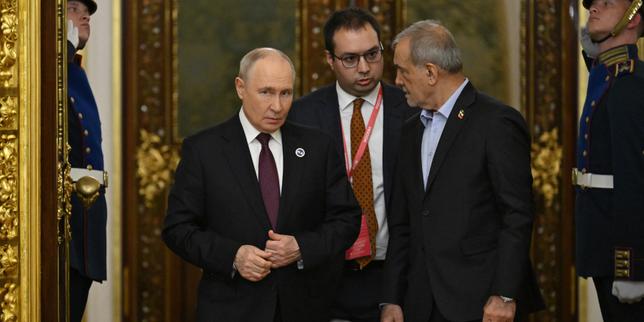
Under acute military pressure from Washington and Tel Aviv, real-time situational awareness becomes as valuable as heavy weaponry. Intelligence sharing—covering regional force movements, air defense posture, and threat warnings—helps Tehran reduce blind spots without requiring Moscow to deplete frontline stocks. High-level meetings between senior leaders reinforce this posture, signaling that Iran is not diplomatically isolated even while confronting naval blockades, sanctions, and active hostilities.
The operational limit is clear. Intelligence improves warning and targeting decisions, but it cannot substitute for air-defense interceptors, spare parts, or industrial replacement of damaged infrastructure.
2. Trade Corridors and Sanctions Workarounds
When traditional banking channels and maritime hubs tighten, bilateral trade shifts toward overland and littoral routes. The Caspian Sea serves as a primary maritime link between Russian and Iranian ports, while adjacent regional corridors connect into broader Eurasian trade networks.
Two mechanics govern how much relief these routes can provide:
- Throughput capacity: Moving bulk goods, energy equipment, and cargo across rail, road, and Caspian vessels involves physical transfer limits that cannot match unrestricted open-ocean shipping.
- Compliance exposure: Third countries along transit and financial chains face heavy pressure from Washington. Restrictions on intermediary hubs—such as tighter scrutiny around Gulf financial and commercial conduits—raise transaction costs, lengthen settlement times, and force reliance on smaller or less transparent channels.
3. Diplomatic Leverage in Regional Crises
In multilateral forums and backchannel negotiations, Moscow uses its alignment with Tehran to complicate United States and Israeli escalation options. By opposing further military strikes and framing regional conflict as a threat to broader stability, Russia seeks to preserve its own influence in Middle Eastern security equations.
At the same time, Iran uses external backing to strengthen its bargaining stance over core demands—such as sanctions relief, unfrozen assets, naval blockade removal, and terms governing navigation in the Strait of Hormuz. Diplomatic solidarity raises political costs for adversaries, though it does not resolve underlying military or economic imbalances on its own.
Cause-and-Effect Chains Standard Coverage Misses
Surface reporting often lists events side by side without tracing the causal loops driving them. Four cause-and-effect chains shape the trajectory of this relationship.
Pressure on Hormuz and Maritime Chokepoints Feeds Negotiation Deadlock
Military strikes and counterstrikes around regional installations and the Strait of Hormuz raise shipping risk, insurance costs, and routing disruptions. Higher maritime friction increases economic pain across the region and globally, which raises the stakes of talks while hardening preconditions on both sides. When talks stall over sanctions, blockades, or waterway security, Tehran has stronger incentives to lean on alternative partners like Moscow to offset diplomatic isolation.
Resource Rationing Forces Selective Support
Because Russia's military-industrial output and logistics remain heavily tied to its own war effort, Moscow must ration what it transfers abroad. That constraint creates a structural trade-off: providing high-demand munitions or air-defense systems to Iran could tighten Russia's own reserves, whereas sharing intelligence and diplomatic cover costs far less materially while still yielding strategic goodwill.
Tighter Financial Chokepoints Shrink Intermediary Buffers
As Western sanctions expand and regional commercial hubs restrict sanction-evasion pathways, Iran loses low-friction conduits for imports, exports, and payment clearing. That loss increases dependence on bilateral barter, national currencies, and state-backed logistics with partners like Russia—yet those mechanisms carry higher friction and narrower scale than global financial markets.
Regional Spillovers Alter Neighboring States' Calculations
Escalation involving Iran, Israel, and the United States affects Gulf states, maritime transit, and energy markets. Neighboring governments face a delicate balancing act: avoiding direct entanglement and protecting trade and energy infrastructure while managing relations with Washington, Tehran, and Moscow. Shifts in those neighboring postures directly affect how easily goods, funds, and diplomatic signals move across the region.
Separating Verified Facts from Analytical Hypotheses
Clear decision-making requires keeping established facts distinct from reasoned projections:
- Established facts: Confrontations involving Iran, Israel, and the United States have escalated into sustained military strikes, maritime tensions around the Strait of Hormuz, tightened sanctions, and mediated diplomatic tracks. Senior Iranian and Russian leaders have maintained high-level engagement and expanded cooperation across security, trade, and Caspian transit channels while Russia's war in Ukraine constrains its broader arms supply.
- Educated hypotheses: Closer coordination with Moscow will likely help Tehran manage short-term informational and diplomatic pressure, but it is unlikely to fully offset prolonged economic strain, naval restrictions, or major military damage. Similarly, Moscow will likely calibrate its backing to protect its own core war requirements and preserve room to maneuver in wider geopolitical negotiations rather than risk direct escalation with Washington.
Limits and Risks of the Alignment Strategy
Relying on deeper ties with Russia carries clear limitations for Tehran, just as backing Iran carries risks for Moscow:
- Asymmetric bargaining power: When one partner faces severe external pressure and narrower trade options, the stronger or less constrained partner holds greater pricing and negotiation leverage in bilateral deals.
- Delivery bottlenecks: Political agreements do not automatically clear physical logistics constraints, customs delays, or equipment shortages.
- Escalation and reputational exposure: Tighter military and security alignment increases scrutiny from the United States and Israel and can complicate how third countries balance ties with Moscow and Tehran.
- No substitute for domestic or regional resolution: External alignment can cushion pressure at the margins, but lasting relief from blockades, strikes, and sanctions depends on broader security and diplomatic settlements.
Strategic Play for Decision-Makers
Track three concrete indicators over the next quarter to gauge whether bilateral ties are merely stabilizing under pressure or crossing into deeper operational commitment: first, watch whether Caspian and overland cargo flows expand alongside measurable industrial or air-defense transfers rather than staying concentrated in intelligence and diplomatic signaling; second, monitor whether Gulf and Central Asian transit and financial chokepoints tighten further under external pressure; third, map how negotiations over sanctions, frozen funds, and Strait of Hormuz navigation move relative to military strikes. Decision-makers should treat the Tehran-Moscow partnership as a constrained tactical buffer—capable of extending Tehran's endurance and complicating adversary planning, but structurally bounded by Moscow's own resource limits and the hard economics of sanctioned trade.