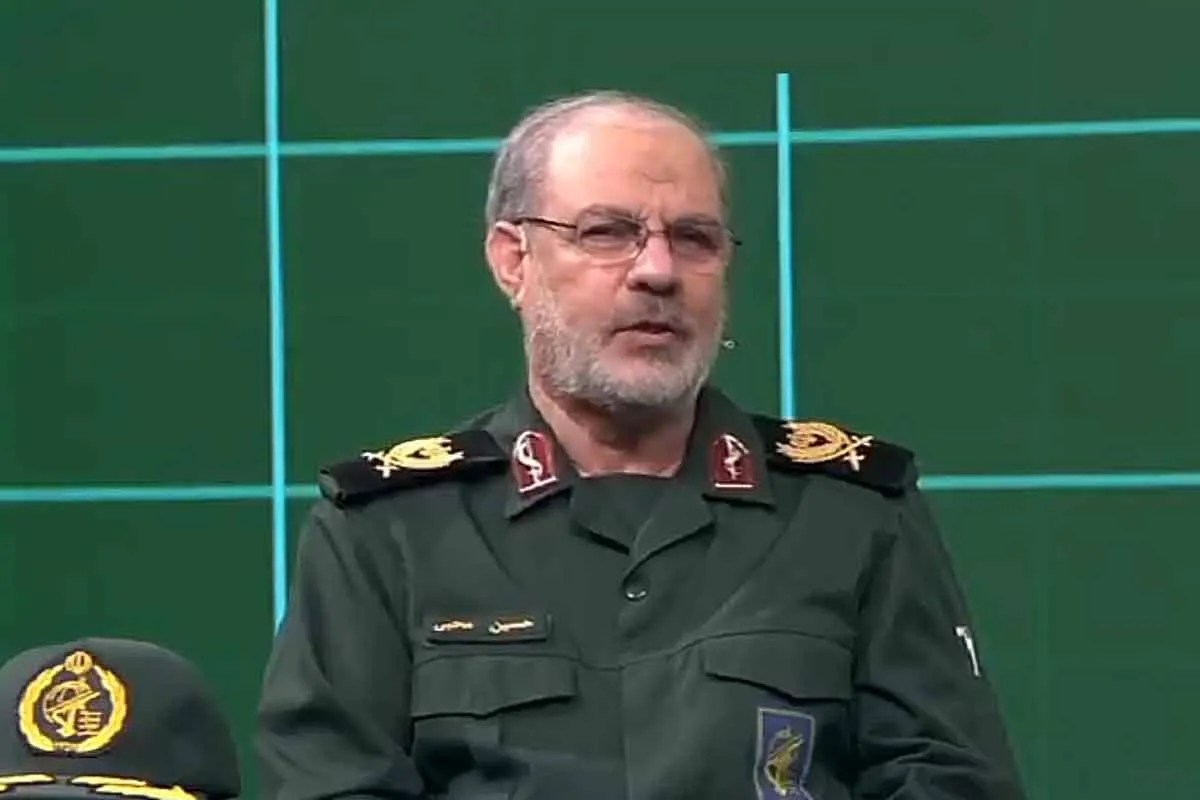
Iran has signaled a deliberate shift in its defense doctrine, moving away from purely reactive deterrence toward faster, broader strikes directly inside enemy territory if attacked. Senior military figures—including Islamic Revolutionary Guard Corps (IRGC) commander Major General Ahmad Vahidi and Iranian army spokesman Brig. Gen. Mohammad Akraminia—have warned that hostile actions against Iran can trigger doctrinal revisions and immediate responses without geographical limits.
Statements like these travel fast on social feeds and television chyrons. They rarely explain what actually changes on the ground.
For decades, Tehran built its regional posture around forward defense and asymmetric pressure. Instead of fighting a direct, symmetrical war against superior air forces and precision-guided munitions, Iran relied heavily on regional allies, missile deterrence, and attrition to raise the cost of confronting the Islamic Republic directly. Following the June 2025 conflict and escalating confrontations in 2026, Iranian officials have increasingly framed their posture around preemptive readiness, rapid retaliation, and expanding potential targets across the wider region.
Why Tehran Is Rethinking Its Deterrence Math
A doctrinal announcement is not a magic wand. It is a confession of constraint dressed up as resolve.
Iran faces a stubborn structural imbalance in conventional military power. Its aging air force and air defense networks cannot match the stealth platforms, electronic warfare suites, and sustained strike sorties available to the United States and Israel. Fighting a head-to-head war of attrition on traditional terms plays straight into an adversary's strengths.
So Tehran's planners lean on strategic denial. The goal is not necessarily to win a decisive conventional battle on paper. The goal is to convince an adversary that striking Iran will carry unpredictable, painful costs across multiple fronts—from military bases to energy and shipping infrastructure.
Consider a hypothetical scenario in the Persian Gulf. Suppose an airstrike hits a military or energy facility inside Iran, and Tehran responds not just with a single calibrated salvo, but with coordinated missile and drone launches aimed at airbases, radar nodes, or logistics hubs across several countries while disrupting maritime chokepoints. Even if air defenses intercept most incoming projectiles, the economic shockwaves, insurance spikes, and diplomatic alarm among neighboring states become part of the weapon system itself.
That logic is sharp on a whiteboard. In practice, it carries steep risks.
The Mechanics Behind an Offensive Posture
When military spokespeople say the IRGC or regular armed forces are being tasked with striking inside enemy soil or adopting a more offensive posture, they are pointing to a mix of operational habits rather than a brand-new set of physics.
- Decentralized command and dispersal: Mobile launchers, underground facilities, and delegated launch authority help preserve retaliatory capacity even after initial strikes hit fixed sites.
- Cost-exchange asymmetry: Saturation waves of drones and ballistic missiles are designed to force adversaries to burn through expensive interceptor stocks while keeping pressure on radar and command networks.
- Wider geographic scope: Threatening facilities in multiple states—or warning that energy and communications networks could enter the line of fire—aims to widen the blast radius of escalation beyond a bilateral duel.
None of this is secret in defense circles. What has changed in 2026 is the bluntness with which Tehran states that restraints on geography or timing could be cast aside if leadership judges a threat existential or imminent.
What Commanders Claim Versus What Reality Allows
Veteran defense analysts treat wartime rhetoric with healthy skepticism. Every military talks tough when under pressure.
When an army spokesman claims regional air defenses were degraded or promises faster, heavier strikes, observers have to separate operational intent from sustained capability. Firing dozens or hundreds of missiles and drones in a burst is one thing. Sustaining high-tempo strikes over weeks while absorbing counter-strikes against launch sites, logistics hubs, and leadership nodes is something else entirely.
There is also the question of regional cohesion. Analysts have noted strains across Iran's broader network of regional partners as individual groups pursue their own survival and local interests alongside broader ideological ties. A doctrine that assumes seamless multi-front coordination can fray quickly if allies face heavy pressure of their own or hesitate to absorb retaliation on Tehran's behalf.
Domestic Pressure and Economic Gravity
You cannot read Iran's defense doctrine in isolation from what is happening inside the country.
Sanctions, currency depreciation, inflation, and domestic unrest have placed immense strain on the Iranian state. Economists and policy watchers inside and outside Iran have pointed out for years that prolonged economic isolation narrows strategic room to maneuver.
Inside Tehran's leadership circles, that pressure cuts two ways. Some argue that economic exhaustion makes de-escalation and diplomatic breathing room urgent. Hardliners argue the opposite: that concessions under pressure only invite further strikes, making aggressive deterrence the only viable shield.
When a government faces severe economic headwinds at home, projecting unyielding military resolve serves a double purpose. It tries to deter external adversaries abroad while signaling strength to domestic audiences at home. Yet aggressive posturing can also backfire if it triggers harsher economic isolation or wider military retaliation that drains resources the country can ill afford to lose.
Why Neighbors and Markets Are Watching Every Word
A shift toward striking inside enemy territory changes the risk calculus for everyone in the region, not just the direct combatants.
Gulf states, shipping operators, insurers, and global energy markets sit right next to the fault line. Even when a crisis does not spiral into full-scale war, rhetoric about expanding targets or hitting regional infrastructure raises risk premiums across trade routes and energy supply chains.
The real danger in a crisis built on strategic denial is miscalculation. If one side believes a strike is a calibrated warning and the other reads it as the opening move of a broader offensive—or if a "preemptive" posture leads a commander to strike on flawed intelligence—events can outrun diplomatic off-ramps in hours.
Watch less what officials declare at podiums and more where mobile forces disperse, how air defenses are repositioned, and whether neighboring capitals quiet down or fortify in response.



