Silence.
That is what sits on the line for a fraction of a second before a secure transatlantic connection clicks open, carrying the weight of aircraft carriers, oil tankers, and millions of ordinary lives across a fiber-optic cable buried beneath the ocean floor.
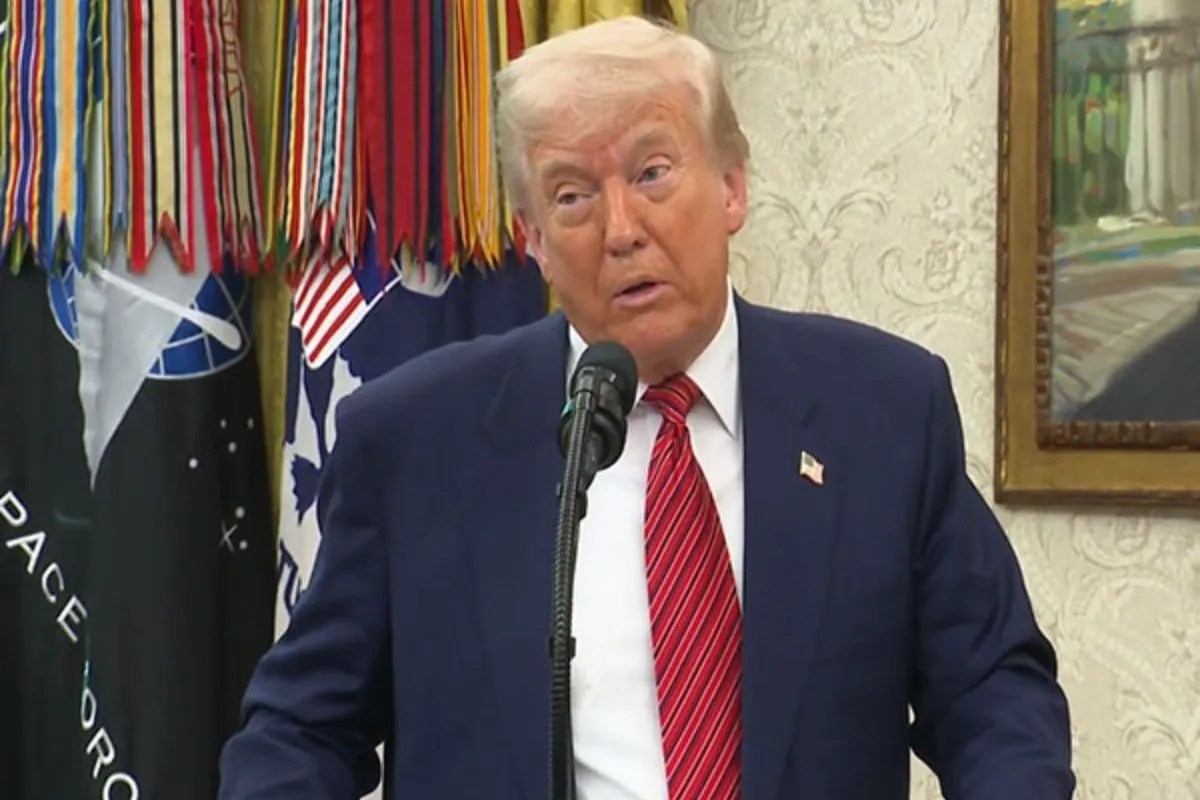
According to reports from international news outlets including The Times of India, President Donald Trump recently spoke by phone with Israeli Prime Minister Benjamin Netanyahu while Washington actively weighs the prospect of fresh military strikes against Iran. To a casual reader scanning morning headlines over lukewarm coffee, that sentence reads like routine diplomatic bookkeeping—just another entry in a decades-long ledger of Middle Eastern crises. Two leaders talked. Options are on the table. The world turns.
Yet anyone who has ever stood on a tarmac in the Persian Gulf at three in the morning, tasting jet fuel and desert dust in the back of their throat while waiting for an order that might never come, knows that there is nothing routine about that phone call.
The Architecture of a Decision
Think of high-stakes diplomacy not as a chess game—an overused metaphor that implies clean squares, predictable rules, and wooden pieces that do not bleed—but as two engineers standing beside a pressurized steam pipe in a crowded apartment building. One holds a wrench; the other holds a pressure gauge. Both are arguing over whether tightening the valve will stop a leak or blow the entire boiler room apart.
According to reporting on the recent discussions, the conversation between Trump and Netanyahu comes at a moment when the United States is evaluating potential military action targeting Iranian assets. Administration officials, defense analysts, and regional observers point to a convergence of pressures: ongoing regional proxy conflicts, disputes over Iran's nuclear trajectory, and the persistent friction over maritime security in vital shipping corridors.
When Washington and Jerusalem align—or even when they merely synchronize their calendars—the reverberations travel far faster than any official White House readout can capture.
Consider a hypothetical scenario to understand how this plays out away from the microphones. Imagine a maritime logistics coordinator named Tariq sitting in an air-conditioned office in Dubai, staring at three monitors glowing with shipping routes through the Strait of Hormuz. Twenty percent of the world’s petroleum passes through that narrow choke point. Tariq does not have security clearance. He does not read classified intelligence briefings. Yet the moment rumors of a Trump-Netanyahu consultation hit the financial wires, his phone begins to ring. Insurance underwriters in London double war-risk premiums overnight. Tanker captains slow their engines, burning extra fuel while waiting to see whether the water ahead remains a highway or becomes a minefield.
Before a single missile leaves a rail, the mere possibility of a strike taxes the global economy.
Why This Phone Call Matters Now
To understand why the current deliberations carry such acute tension, you have to look backward through the scar tissue of the last forty-five years. Since the 1979 Iranian Revolution, Washington and Tehran have existed in a state of suspended hostility—punctuated by covert cyber operations, tanker seizures, proxy skirmishes, and brief, fragile windows of negotiation.
Under the first Trump administration, the United States withdrew from the 2015 Joint Comprehensive Plan of Action—commonly known as the Iran nuclear deal—and instituted a "maximum pressure" campaign built on sweeping economic sanctions and targeted military deterrence, most notably the 2020 strike that killed Islamic Revolutionary Guard Corps commander Qasem Soleimani. Critics of that approach, including many European diplomats and former Democratic officials, argued that abandoning the accord removed international guardrails and accelerated Tehran's enrichment activities. Supporters, including Netanyahu and hawks within the Republican foreign policy establishment, contended that the original deal merely delayed an inevitable confrontation while enriching Tehran's regional network.
Now, with Trump back in the Oval Office and Netanyahu navigating both domestic political pressures and multi-front regional security challenges, the calculus has shifted again.
Why weigh fresh strikes now? Defense analysts point to three converging realities:
- Deterrence erosion: Military planners in both Washington and Tel Aviv have expressed concern that limited retaliatory measures fail to stop attacks by Iran-backed groups across the region, leading some strategists to argue that only direct, credible force restores deterrence.
- Nuclear latency: International inspectors and intelligence assessments have repeatedly warned that Iran's technical capacity to produce weapons-grade fissile material has shortened dramatically over recent years, narrowing the window for non-military intervention.
- Alliance coordination: Netanyahu has long advocated for a unified, uncompromising posture toward Tehran, and direct leader-to-leader communication signals to both allies and adversaries that the United States and Israel are actively comparing intelligence and operational timelines.
Still, recognizing the arguments for action does not erase the terrifying arithmetic of what follows.
The Fog Between Intention and Escalation
I remember sitting in a cramped briefing room years ago during an earlier Gulf flare-up, watching a senior planner trace his finger along a map of the Arabian Peninsula. Every base, every radar installation, every desalination plant along the coast was marked with a tiny colored pin. What struck me wasn't the precision of the map; it was how fragile the white space between the pins looked. Water, electricity, fuel, commercial air corridors—all of it sat within minutes of flight time from launch sites across the water.
When leaders discuss "fresh military strikes," the phrase sounds surgical. Clean. Clinical.
Reality is never clinical.
Military historians and former Pentagon officials frequently warn about the escalation ladder—a concept pioneered by Cold War strategist Herman Kahn. In theory, a nation climbs the ladder one rung at a time, applying calibrated pressure until the adversary backs down. In practice, smoke obscures the rungs. A strike intended to destroy a specific radar facility or weapons depot can inadvertently kill personnel whose deaths demand a domestic political response in Tehran. A retaliatory barrage aimed at an empty desert airfield can drift off course and strike a populated barracks.
Suddenly, neither leader can afford to look weak before their own public, and the off-ramps disappear behind walls of pride and grief.
Even seasoned strategists admit that predicting Tehran's exact threshold is closer to guesswork than science. Will Iran absorb a limited strike to preserve its regime's core infrastructure, as it largely did following previous targeted operations? Or will leadership in Tehran conclude that restraint only invites further blows, triggering a wider regional conflagration involving Hezbollah in Lebanon, Houthi forces in Yemen, and militias in Iraq and Syria?
Nobody sitting in Washington, Jerusalem, or Tehran holds a crystal ball. Anyone who claims certainty in moments like these is selling something.
The Human Ledger Behind the Headlines
Strip away the geopolitical jargon—asymmetric warfare, strategic ambiguity, kinetic options—and what remains are human beings living inside the blast radius of decisions made thousands of miles away.
Picture a family in northern Israel checking the seal on their concrete safe room before turning off the kitchen light, listening to the hum of drones overhead and wondering whether tonight is the night sirens wake their children. Picture a young shopkeeper in Tehran watching the rial plummet against the dollar every time foreign news broadcasts mention American bombers, knowing that bread, medicine, and heating oil will cost twenty percent more by Thursday regardless of whether a single bomb falls. Picture a twenty-year-old sailor aboard a U.S. Navy destroyer in the Red Sea, staring at a radar screen through a twelve-hour watch, knowing that a sea-skimming missile gives a crew less than two minutes to react.
These are not abstractions. They are the invisible stakes riding on every syllable exchanged between Trump and Netanyahu.
Public debate in the United States often fractures along predictable partisan lines whenever military action abroad is discussed. One camp insists that projecting overwhelming American strength is the only language authoritarian regimes respect, arguing that hesitation invites aggression. Another camp counters that decades of Middle Eastern interventions have drained American blood and treasure while producing unintended chaos, urging diplomacy and restraint above all else.
Both perspectives carry hard-earned truths. Appeasement has failed before; overreach has failed before. The tragedy of statecraft is that leaders rarely get to choose between a good option and a bad option—they are almost always forced to choose between two risks whose full costs will only be known in hindsight.
What Happens When the Line Goes Dead
In Washington, the machinery of national security moves in quiet, methodical rhythms even when the stakes are deafening. After a presidential phone call with a foreign counterpart, notes are transcribed, intelligence assessments are updated, and contingency binders are pulled from safes in the Pentagon. Diplomatic backchannels—often routed through European intermediaries or Gulf capitals like Muscat and Doha—hum with urgent, encrypted messages trying to test whether room for a compromise still exists before engines start on flight decks.
For the rest of the world, waiting is the hardest part. Markets twitch at every anonymous leak from a senior official. Families check news alerts before checking the weather.
Eventually, the call ends. The secure line clicks shut. Across the ocean, a light goes out on a console in a quiet room, leaving behind a silence that feels heavier than the conversation that came before it.