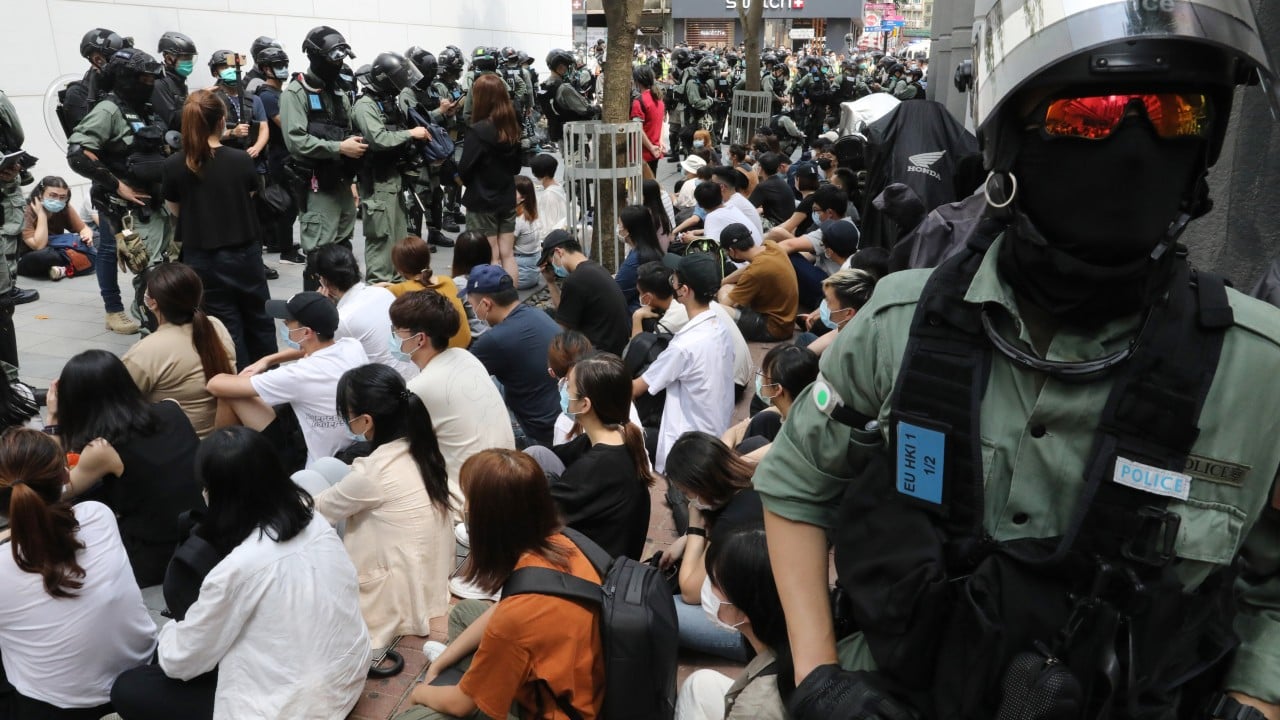
Hong Kong Secretary for Security Chris Tang Ping-keung recently announced that rehabilitation programs are now open to all individuals arrested during the 2019 social unrest, regardless of whether they have been charged or convicted. While the government presents this as a bridge to social reintegration, the initiative faces a fundamental hurdle: a deep-seated lack of trust between the state and the youth it seeks to reform. For many, the offer of "rehabilitation" feels less like a hand up and more like a mechanism for ideological alignment.
The push for reintegration comes at a critical juncture. Thousands of young people remain in a legal limbo, neither fully prosecuted nor fully cleared, while those who have served their time find that a criminal record in Hong Kong acts as a permanent barrier to employment and education. By expanding these programs to include the uncharged, the security bureau is attempting to stabilize a volatile demographic. However, the success of such an endeavor depends entirely on whether the target audience views the programs as a genuine path forward or a subtle extension of surveillance.
The Strategy Behind the Open Door
On the surface, the policy shift removes the prerequisite of a criminal conviction to access support services. This includes psychological counseling, vocational training, and "de-radicalization" efforts previously reserved for those inside the correctional system. Tang argues that by engaging with these individuals early, the government can prevent recidivism and steer them back toward mainstream society.
The mechanism relies heavily on the Correctional Services Department (CSD) and various government-aligned NGOs. These entities are tasked with providing the "Project Change" style of intervention. The logic is simple: if the state provides the tools for a stable life, the individual is less likely to engage in future dissent. But this logic ignores the psychological reality of the post-2019 era. To many of the 10,000 people arrested during the protests, the CSD is not a neutral service provider. It is the arm of the state that enforced their detention.
The Stigma That Policy Cannot Erase
Even if a former protester completes every rehabilitation module offered, they encounter a private sector that is increasingly risk-averse. In the current political climate, Hong Kong employers are wary of hiring anyone associated with the 2019 unrest. A background check is often the end of a career path before it begins.
The government has not yet offered a legal "clean slate" or an expungement mechanism for those who participate in these programs. Without such a legislative backbone, the vocational training provided in rehabilitation becomes a road to nowhere. A young person might learn a trade, but if the license for that trade requires a "fit and proper" person test—often interpreted to exclude those with political arrests—the training is a hollow gesture.
Deep Roots of Disconnection
We must examine why the "de-radicalization" aspect of these programs often misses the mark. The state views the 2019 events through the lens of external influence and misinformation. Consequently, their rehabilitation curriculum focuses on correcting what they term "distorted values." This approach creates a pedagogical wall.
When a participant feels their core motivations are being dismissed as mere brainwashing, they disengage. They might perform the necessary "repentance" to secure a better report or to access a specific benefit, but the internal shift the government desires does not occur. This creates a facade of success. The numbers might show high enrollment in rehabilitation programs, but those figures do not account for the silent resentment that remains beneath the surface.
The Cost of the Uncharged Status
There are over 6,000 individuals who were arrested but have not yet been charged. For years, they have lived with the sword of Damocles hanging over their heads. Opening rehabilitation programs to them is an admission that the legal process is moving too slowly to manage the social fallout.
By inviting this group into the fold, the security bureau is effectively asking them to participate in a system that still reserves the right to prosecute them later. It is a request for cooperation without a guarantee of immunity. In any other investigative context, a lawyer would advise their client to stay far away from such an arrangement. The vulnerability of this group makes the "voluntary" nature of the programs questionable.
Comparison With Historical Reintegration
Hong Kong is not the first society to grapple with the reintegration of a large, politically motivated youth population. Looking at historical precedents in other jurisdictions, the most successful programs were those that involved independent, third-party mediators—organizations not directly tied to the police or the prison system.
In the current Hong Kong model, the lack of independent oversight is glaring. The programs are designed, managed, and evaluated by the same security apparatus responsible for the arrests. This vertical integration of enforcement and rehabilitation creates a conflict of interest that undermines the credibility of the entire project.
The Economic Reality of Reform
The budget allocated for these programs is substantial, yet the ROI remains opaque. If the goal is social harmony, the metric shouldn't be how many people attend a lecture on the Basic Law. It should be how many people are successfully placed in long-term, meaningful employment.
Data from local social workers suggests that the most effective rehabilitation happens in the shadows, through informal networks and small businesses willing to take a chance on "troubled" youth. These grassroots efforts operate without the fanfare of government press releases. They succeed because they offer something the state cannot: a relationship built on shared experience rather than authority and submission.
Structural Barriers to Re-entry
Consider the specific professional barriers that these programs do not address:
- Professional Licenses: Nursing, teaching, and legal boards have tightened scrutiny, making it nearly impossible for those with protest-related records to practice.
- University Admissions: While some institutions claim to judge applicants on merit, the administrative "checking" process often filters out those with active police files.
- Travel and Finance: The inability to secure a "No Criminal Record Certificate" (Police Check) prevents these individuals from working for multinational corporations or traveling to certain jurisdictions, effectively trapping them in a localized economic ghetto.
The security bureau's offer of counseling does nothing to dismantle these structural fences. You cannot counsel someone out of the reality that they are barred from their chosen profession.
The Missing Piece of the Puzzle
True rehabilitation requires a two-way street. The state demands that the youth "reflect" on their actions, but there has been no corresponding reflection from the institutions. Without a mutual recognition of the grievances that led to the 2019 explosion, any rehabilitation effort will remain a one-sided exercise in compliance.
The current strategy focuses on the individual as the "problem" to be fixed. It ignores the fact that the individual is a product of a specific socio-political environment. By treating the symptoms—anger, disillusionment, unemployment—without addressing the root cause of the disconnection, the government is merely managing the friction rather than resolving the heat.
The Risk of Creating a Permanent Underclass
If these programs fail to produce genuine results, Hong Kong faces the prospect of a permanent underclass. This group, now in their 20s and 30s, will carry their exclusion into middle age. They will be less productive, more prone to mental health struggles, and permanently alienated from the city's governance.
A policy that offers rehabilitation while maintaining the threat of prosecution is a paradox. It asks for the individual's heart and mind while holding a pair of handcuffs behind its back. For the 2019 arrestees, the "open door" Tang describes may look less like an exit and more like another room in the same building.
Concrete change requires more than open enrollment in government classes. It requires a legislative path to closure, a genuine partnership with the private sector to guarantee employment, and a shift away from the rhetoric of "correction" toward a narrative of shared recovery. Until then, the rehabilitation project remains a high-stakes experiment in social management, conducted in a climate where trust is the one resource the state cannot simply manufacture.