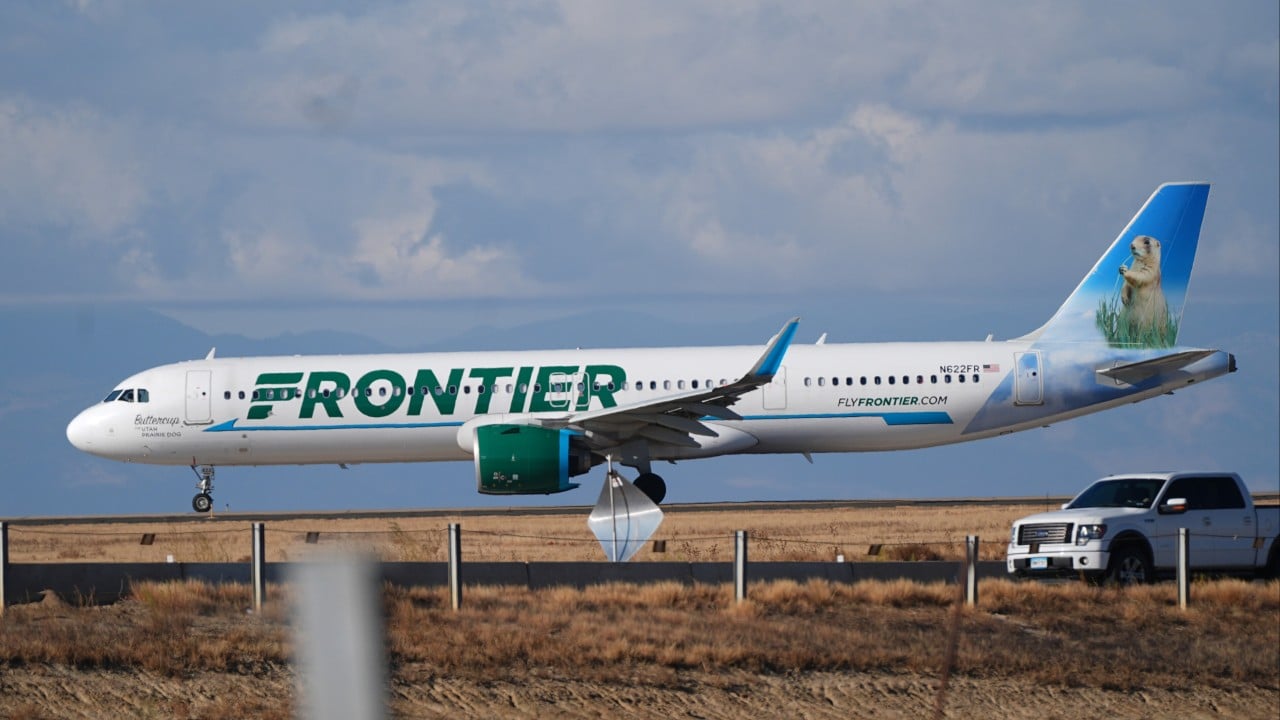
The tarmac at Denver International Airport is a labyrinth of light and shadow, a restricted geography where the rules of physics and bureaucracy collide. To a passenger peering through a scratched plexiglass window from Seat 14A, the ground is a sterile, governed space. We see the choreographed dance of tugs and fuel trucks. We see the blinking amber lights. We trust the boundaries. But on a Tuesday night that defied every safety protocol ever written, that trust shattered under the wheels of a Frontier Airlines Airbus A321.
A person died.
That is the clinical reality. A pedestrian was struck and killed on the airfield. But to understand how a human being ends up in the path of a multi-ton aircraft moving through the dark, you have to look past the news ticker. You have to consider the sheer, terrifying scale of an international airport. These are cities within cities. They are governed by ironclad security, high fences, and badge-access checkpoints. There is a line between the public world and the "airside" world. When that line vanishes, the results are catastrophic.
The incident occurred as Frontier Flight 1159 was taxiing. Imagine the cockpit in those moments. The pilots are managing a checklist that rivals a short novel. They are communicating with Ground Control, monitoring engine temps, and navigating a grid of taxiways that look like a tangled circuit board from above. The A321 is a beast of engineering. It is loud, heavy, and possesses blind spots the size of a suburban house. From the flight deck, a human being standing on the concrete is nearly invisible, a speck of shadow against the high-pressure sodium glare of the terminal lights.
There was no reason for a pedestrian to be there.
Safety investigators from the NTSB and the FAA are now picking through the wreckage of a protocol. They are asking the questions that keep airport managers awake at 3:00 AM. Was this a security breach? A tragic mistake by a ground worker? A moment of profound, inexplicable human crisis? While the authorities sift through the data, the rest of us are left to grapple with the vulnerability of our most secure systems. We build walls and install biometric scanners, yet the most basic element—a person walking where they shouldn't—can still bring a billion-dollar operation to a grinding, bloody halt.
The Physics of the Unthinkable
Consider the weight of an Airbus A321. Empty, it sits at roughly 100,000 pounds. When it moves, it does so with a momentum that cannot be bargained with. If you have ever stood near a jet engine while it’s idling, you know the sound isn’t just a noise; it’s a physical pressure. It vibrates in your marrow. To be in its path is to be up against an indifferent force of nature.
The pilots felt a jolt. Or perhaps they felt nothing at all until the radio crackled with a frantic voice from the tower. That is the horror of the machine. It doesn't feel the resistance of a human life. It simply continues its journey toward the runway, toward the sky, until the world outside the cockpit forces it to stop.
Denver International is the third busiest airport in the world. It is a sprawling 53-square-mile fortress. It is designed to be impenetrable. Every gate is a sieve, every employee is vetted, and every foot of perimeter fence is monitored. When a "pedestrian" is reported on the airfield, it represents a systemic failure so deep it feels surreal. It’s the equivalent of a ghost appearing in a bank vault.
The Human Cost of High-Speed Transit
We often treat air travel as a series of inconveniences. Long TSA lines. Expensive sandwiches. Cramped middle seats. We forget that we are participating in a miracle of logistics that requires thousands of people to do exactly the right thing at exactly the right time.
When a ground handler guides a plane with those glowing orange wands, they are standing inches away from death. When a mechanic checks a turbine, they are trusting that the cockpit is locked and the power is tagged out. The airfield is a workplace where a three-second lapse in judgment is a terminal event.
We do not yet know the name of the person who died. We do not know their story or what led them to that patch of concrete in the Colorado night. But we know the aftermath. We know the trauma inflicted on the flight crew, who went to work to fly people to their families and ended the night as part of a tragedy. We know the witnesses on the ground who will never be able to un-see the moment the light hit the person on the taxiway.
The investigation will eventually produce a report. It will be hundreds of pages long, filled with diagrams and timestamps and recommendations for new fencing or better lighting. It will "deconstruct" the event until it is a series of data points. But data points don’t bleed. Data points don’t leave behind empty chairs at dinner tables.
The Illusion of Control
This event forces us to look at the fragility of the "sterile" environment. We live in an era where we believe technology has solved the problem of human error. We have sensors that can detect a bird strike from miles away and software that can land a plane in a fog bank. Yet, a person simply walked out onto the tarmac.
This isn't just about Denver. It isn't just about Frontier Airlines. It’s about the reality that no matter how many layers of security we wrap around ourselves, we are always one broken gate or one bypassed door away from the unthinkable.
The airport resumed operations eventually. The blood was washed from the concrete. The A321 was towed to a hangar for inspection. The passengers on Flight 1159 were moved to other planes, delayed but safe, carrying their luggage and their frustrations into the next terminal. The world moved on because it has to. The schedule is relentless. The planes must fly.
But somewhere in the dark corners of the airfield, the echo of that Tuesday night remains. It serves as a grim reminder that the lines we draw—the ones meant to keep us safe and separate the flyers from the walked-upon—are thinner than we care to admit.
The machine is vast. The human is small. And on the tarmac in Denver, the machine didn't even blink.



