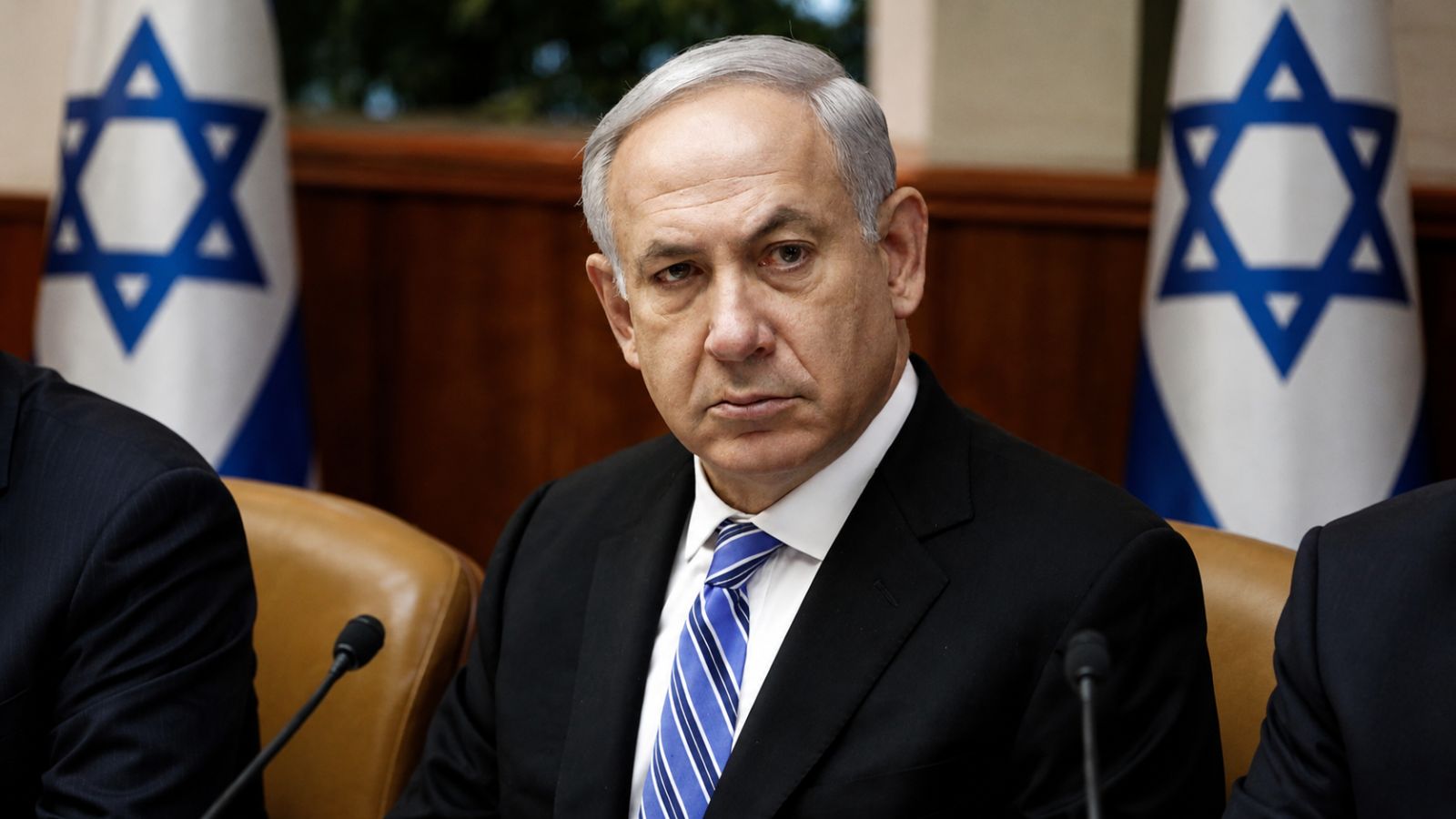
Ten days before Hamas executed its devastating assault on October 7, 2023, United Arab Emirates President Sheikh Mohamed bin Zayed Al Nahyan placed a direct phone call to Israeli Prime Minister Benjamin Netanyahu. The message was blunt: Yahya Sinwar was orchestrating a massive, violent operation in the Gaza Strip that threatened regional stability and the Abraham Accords. Netanyahu responded with relative calm, dismissing the urgency and insisting that any imminent threat emanated from the West Bank rather than Gaza.
This revelation, emerging from investigative reporting and upcoming historical accounts, exposes a systemic failure not just of collection, but of executive filtration. When foreign heads of state bypass traditional intelligence pipelines to deliver direct warnings, the architecture of command and control faces an existential test. Netanyahu's alleged choice to keep his defense establishment—including the heads of the Shin Bet and the Israel Defense Forces—in the dark regarding this high-level alert transforms a regional intelligence failure into a masterclass in political hubris. For a closer look into this area, we suggest: this related article.
The Anatomy of a Bypassed Warning
Intelligence is only as valuable as the ear of the person receiving it. State leaders often imagine themselves as ultimate arbiters of risk, filtering incoming noise to prevent strategic panic. Yet, when the President of the UAE—a nation deeply integrated into regional diplomatic networks—takes the unprecedented step of warning of an impending catastrophe, standard operating procedures demand immediate operational validation.
According to investigative findings, the Emirati leader's concerns did not materialize out of thin air. They traced back to frustrations within Hamas regarding stalled prisoner exchange negotiations. Sinwar had allegedly signaled through intermediaries that a massive shock was coming, utilizing language that translators of Middle Eastern political rhetoric should have flagged instantly as actionable intent. For broader details on this topic, in-depth analysis can be read at NPR.
Egypt's intelligence chief, Abbas Kamel, delivered a parallel warning around the same temporal window, speaking of an unusual and terrifying operation taking shape inside the blockaded enclave. Two separate state actors, holding distinct diplomatic channels, converged on the same conclusion. Both alerts crashed against the administrative brick wall of the Prime Minister's office, where a deeply entrenched preconception dictated that Hamas was deterred, contained, and economically pacified through work permits and Qatari cash transfers.
Cognitive Bias at the Top
Bureaucracies mirror the psychological blind spots of their leaders. For years, the prevailing political doctrine in Jerusalem maintained that Hamas wanted governance over destruction. This hypothesis provided a convenient framework for resource reallocation toward the West Bank and northern borders, leaving the southern perimeter reliant on automated fencing and remote surveillance rather than deep human intelligence.
When strategic assumptions become articles of faith, incoming data that contradicts the narrative is routinely discarded as posturing or psychological warfare. Netanyahu's reported reply to foreign interlocutors—that Israel was fully in control of the Gaza picture—was symptomatic of a dangerous cognitive lock. In the fields of strategic analysis, this represents the ultimate failure mode: the rejection of high-fidelity signals because they disrupt a politically comfortable status quo.
Senior defense officials interviewed after the fact noted that even a fraction of this external intelligence could have completely altered the military's posture on the night of October 6. The Shin Bet could have re-evaluated intercepted communications under a different interpretive weight. Divisional commanders would have canceled routine weekend leaves. The automated reliance on technical surveillance, which Hamas famously blinded during the opening hours of the attack, might have been supplemented by active human reconnaissance.
The Denial and the Political Fallout
Predictably, the official response from the Prime Minister's Office was swift and total, labeling the reports an absolute fabrication and denying any such communication took place during the critical window. Yet, this denial collides with a political landscape in Israel that is increasingly desperate for accountability. Opposition figures have seized upon these disclosures to argue that the historic security failure was compounded by an institutional cover-up at the highest echelon of power.
The implications extend far beyond domestic electoral politics. International alliances in the Middle East depend on quiet, reliable channels of trust. If regional leaders realize that sharing sensitive, life-saving intelligence with their Israeli counterparts results in political suppression or public denial, future intelligence-sharing will atrophy. The architecture of the Abraham Accords was built on mutual security cooperation; discovering that high-level warnings were dismissed out of hand damages the foundational credibility required for future regional integration.
History will record October 7 not merely as a tactical surprise, but as a monumental collapse of executive listening. When leaders choose comfort over candor, and political narrative over raw reality, the cost is ultimately paid in blood on the border.