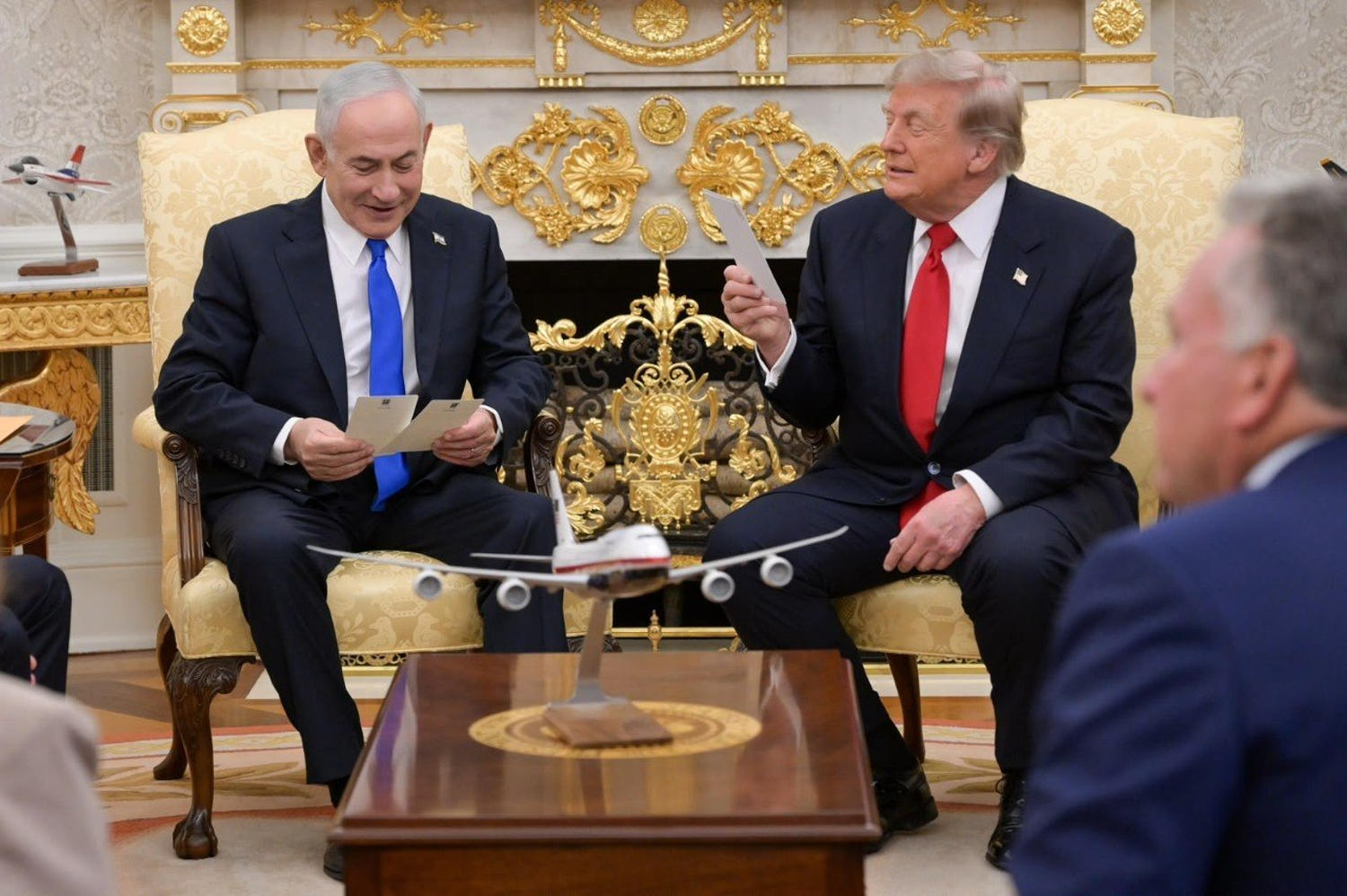
When Israeli Prime Minister Benjamin Netanyahu stood before his cabinet to officially reject Washington's 1ّة-point roadmap for Gaza, he did not just defy a crucial American diplomatic push. He exposed a staggering chasm between the Oval Office and the military reality on the ground.
President Donald Trump had spent the prior week taking to social media to broadcast what he framed as a monumental breakthrough. According to the White House narrative, a newly minted framework backed by international mediators had secured the agreement of both Hamas and Israel. It promised a phased transition: Hamas would surrender its remaining weapons to a nascent Palestinian technocratic body, the National Committee for the Administration of Gaza, while Israeli forces executed a corresponding withdrawal. For an alternative look, check out: this related article.
Reality proved far more stubborn. Netanyahu’s flat refusal to accept the text signaled that the underlying sequencing mechanics of the proposal were dead on arrival.
The Sequencing Trap
At the heart of the diplomatic fracture lies an irreconcilable disagreement over chronology. Who moves first? Related reporting on the subject has been provided by NBC News.
Washington’s framework attempted to engineer a simultaneous or closely calibrated step-by-step drawdown. Under the plan, heavy weaponry, underground infrastructure, and remaining arms depots would shift into the custody of the newly formed administrative committee, paving the way for staged Israeli troop pullouts.
Jerusalem views this sequencing as an existential trap. Israeli security doctrine, hardened by decades of asymmetric conflict, treats complete disarmament not as the midpoint of a peace process, but as an absolute prerequisite. Netanyahu made this explicit during his public address, declaring that the Israel Defense Forces will not yield a single millimeter of territory until Hamas undergoes what he termed genuine, total disarmament rather than a cosmetic handover.
From the perspective of Israeli military planners, any withdrawal executed while militant cells retain hidden caches or structural command capabilities transforms a tactical pullback into a strategic retreat. They point to the persistent low-intensity skirmishes and the lingering threat environment across the enclave as proof that the operational infrastructure of Hamas remains intact.
The Domestic Survival Calculus
Diplomacy is rarely insulated from domestic political survival. Netanyahu operates within a fragile coalition heavily influenced by far-right factions. Figures like Finance Minister Bezalel Smotrich have drawn hard red lines, threatening government collapse if the military loosens its grip on the strip before the destruction of Hamas is absolute.
With domestic political pressure mounting ahead of scheduled electoral contests, any concession on Gaza's security perimeter is viewed by the ruling coalition as political suicide. This creates an immovable domestic ceiling on how much compromise Netanyahu can stomach, regardless of pressure from Washington.
Conversely, Hamas faces its own rigid structural imperatives. Senior political bureau members have insisted that the group remains committed to the roadmap only if Israel implements the initial phases of previous ceasefires by immediately halting all military campaigns and pulling back forces first. To surrender arms before an Israeli withdrawal, from the perspective of Hamas leadership, is to forfeit the only leverage they possess.
The Washington Miscalculation
How did the White House misread the alignment so severely? Part of the answer lies in the bifurcated nature of modern diplomacy, where high-level summits often substitute for granular, operational synchronization.
Reports from political insiders indicate that core enforcement mechanisms for Gaza were noticeably absent or glossed over during high-level meetings in Washington. The administration relied on broad conceptual buy-in, mistaking diplomatic politeness for structural agreement. When the text of the 15-point document hit the public sphere, it laid bare provisions that Jerusalem found fundamentally unacceptable, transforming a supposed milestone into a public diplomatic rupture.
The fallout extends well beyond bilateral friction between longtime allies. Regional actors have reacted swiftly to the deadlock. A joint declaration issued by a coalition of Arab and Muslim-majority nations condemned ongoing military operations in the enclave, warning that the failure of international peace frameworks risks unleashing a wider regional conflagration.
The Path of Permanent Stalemate
As the diplomatic architecture frays, the structural impasse hardens. Washington faces a stark choice between doubling down on an enforcement mechanism that neither primary combatant trusts or stepping back to allow a protracted continuation of the status quo.
The White House insists that channels of communication remain open and that alternative adjustments are under discussion. Yet, the fundamental physics of the conflict have not changed. Until a formula is discovered that bridges the gap between total military elimination and phased diplomatic transition, peace plans drafted in foreign capitals will continue to shatter against the harsh realities of the ground