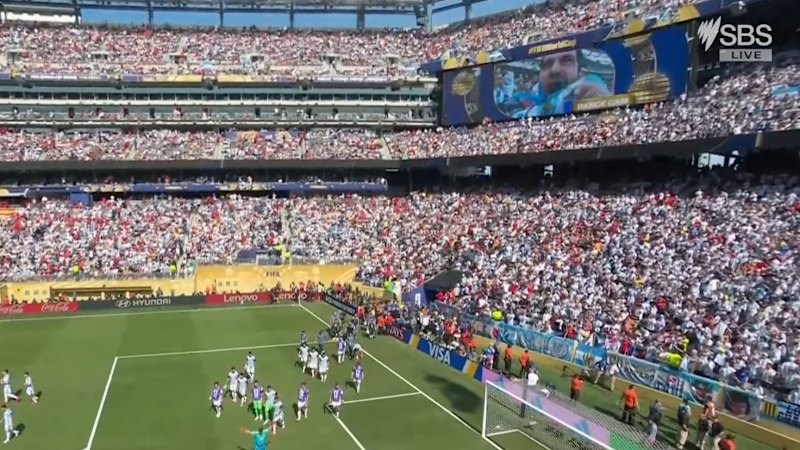
European football governing bodies are preparing to stage an unprecedented boycott of the World Cup if international football authorities push forward with a controversial private equity funding proposal. This looming showdown is not merely a dispute over television rights or match calendars; it represents a fundamental clash over who controls the financial architecture of the sport. At stake is the sovereignty of traditional associations against aggressive external capital injection, threatening the very existence of the quadrennial tournament as the world knows it.
For decades, the commercial model of association football remained remarkably stable. Confederations generated revenue through broadcasting contracts, corporate sponsorships, and ticket sales, reinvesting those profits back into grassroots development and continental competitions. Private equity firms smell blood in the water. They see undervalued assets, under-monetized global fan bases, and massive potential for short-term yield extraction.
The Anatomy of the Private Equity Incursion
Wall Street and global investment funds do not buy into sports purely for the love of the game. They demand predictable cash flows, high margins, and accelerated growth trajectories. When international football authorities explore multi-billion-dollar funding deals with private investors, they are trading long-term institutional stability for immediate liquidity injections.
Consider how this dynamic functions in practice. A private equity consortium offers a massive cash injection upfront in exchange for a permanent slice of future commercial revenues or a controlling stake in newly created tournament structures.
- Upfront Capital: The governing body receives billions immediately to distribute to member associations, securing political loyalty.
- Revenue Chokehold: The investors take a priority cut of broadcasting and sponsorship streams for decades.
- Operational Control: Financial partners gain seats at administrative tables, shifting decisions toward profit maximization rather than sporting integrity.
European leaders recognize this mechanics engine. They understand that once external capital embeds itself into the commercial bloodstream of international tournaments, stripping it out becomes practically impossible.
Why Europe Holds the Leverage
UEFA occupies a uniquely powerful position in this high-stakes poker match. The European confederation houses the world's most lucrative domestic leagues, the elite clubs, and the vast majority of players who actually drive global television ratings. Without European participants, a World Cup ceases to be a global championship. It becomes an expensive regional exhibition match devoid of sporting legitimacy.
The Domestic League Backlash
Domestic leagues across England, Spain, Germany, Italy, and France operate as self-sustaining commercial giants. Their club owners and executives view international governing bodies with deep suspicion. If global authorities invite private investors into the ecosystem, domestic calendars face immediate disruption.
- Player burnout reaches critical thresholds due to expanded tournament formats.
- Domestic television rights values drop if international matches crowd out local league fixtures.
- Club revenue streams suffer when star players return from international duty injured or exhausted.
This alignment of interests between continental executives and domestic league bosses creates a formidable united front. They can freeze the global calendar overnight simply by refusing to release players.
The Financial Realities Fueling the Crisis
Why would international authorities risk a total fracture with their most powerful confederation? The answer lies in the constant pressure to expand operations, fund global development programs, and satisfy the political ambitions of diverse member associations across Africa, Asia, and the Americas.
Many smaller federations depend entirely on financial distributions from international governing bodies to survive. When these authorities dangle the prospect of increased funding backed by private equity, poorer federations vote in favor of structural changes regardless of long-term consequences.
The structural divide creates a dangerous political polarization within the sport.
| Stakeholder Group | Primary Motivation | Stance on Private Equity |
|---|---|---|
| European Associations | Maintaining sporting quality and revenue protection | Fiercely Opposed |
| Global Governing Body | Expanding global footprint and immediate cash liquidity | Strongly Supportive |
| Private Equity Investors | Securing high-yield asset streams and commercial control | Aggressive Drivers |
| Domestic Leagues | Protecting domestic calendar and player welfare | Deeply Skeptical |
This table maps the core fracture lines splitting the sport. Bridging this gap requires reconciling fundamentally incompatible worldviews. One side views football as a cultural heritage institution. The other views it as an under-optimized asset class ripe for consolidation.
The Historical Precedent of Structural Fractures
Major sporting institutions rarely collapse overnight. They splinter through slow-burning institutional rivalries that suddenly ignite.
Look back at previous commercial battles over television rights and tournament expansions. Every single time external commercial pressures threatened to override traditional sporting structures, resistance movements formed within the dominant confederations. The current standoff mirrors the early tensions that preceded previous continental breakaways, though the stakes have multiplied exponentially due to the sheer volume of modern sports capital.
When billions of dollars enter the ecosystem, governance standards tend to erode. Transparency takes a back seat to expediency. Decisions that should require broad consensus are rushed through executive committees under the pressure of financial deadlines.
The Player Factor
Amidst boardroom maneuverings and threats of boycotts, the athletes caught in the middle face unprecedented physical and mental demands. Modern footballers already play upwards of seventy matches a year when accounting for domestic leagues, domestic cups, continental competitions, and international windows.
Adding more matches to satisfy private equity investors is a recipe for catastrophic injury rates. Players and their union representatives have reached their breaking point. A boycott threat by European governing bodies finds quiet, resolute backing inside dressing rooms where fatigue has become an acute occupational hazard.
When a star player tears an Achilles tendon in a meaningless expanded tournament match arranged to satisfy private equity revenue targets, the illusion of sustainable growth shatters.
The Endgame
The looming boycott is not an empty threat manufactured for media consumption. It is the defensive reaction of an established power structure guarding its turf against an external financial invasion.
If international authorities continue down the path of private equity integration, European football will not hesitate to pull the plug. They possess the infrastructure, the talent, and the commercial independence to survive outside the traditional global framework.
The financial architecture of the sport hangs in the balance, and the margin for diplomatic error has officially vanished.