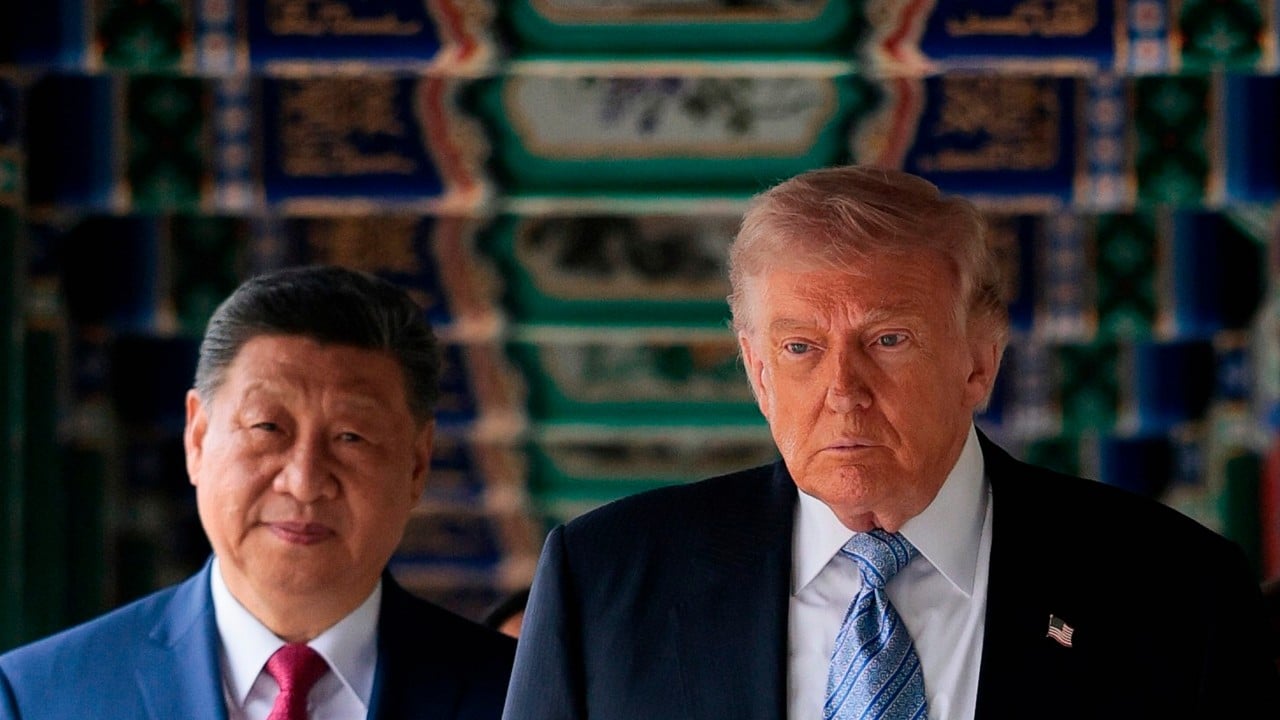
U.S. President Donald Trump has fixed September 24 for Chinese President Xi Jinping to arrive in Washington for a high-stakes state visit, framing the upcoming summit around artificial intelligence and economic stabilization following earlier talks in Beijing. Yet beneath the diplomatic scheduling lies a volatile political reality that few mainstream analysts are willing to confront.
The trouble with superpower summits is the vast chasm between White House press releases and the grinding machinery of geopolitical friction. While official channels project an air of carefully managed optimization, the bilateral architecture between Washington and Beijing is under severe strain from overlapping electoral calendars, technological flashpoints, and long-standing territorial disputes.
The Artificial Intelligence Battleground
Artificial intelligence has displaced traditional trade imbalances as the primary arena of superpower competition. When Trump traveled to China earlier this year, advanced semiconductor supply chains and algorithmic supremacy dominated closed-door sessions. Now, as the reciprocal September visit approaches, both administrations are racing to establish domestic dominance before sitting down at the table.
The stakes could not be higher. Washington wants rigid guardrails around foundational models and hardware exports, while Beijing views American export controls as an economic containment strategy designed to stunt its technological rise.
Consider a hypothetical semiconductor restriction package drafted by the Department of Commerce. If enacted right before a summit, it acts as a mechanical wrench thrown directly into the diplomatic gears, forcing the Chinese delegation to either retaliate publicly or absorb a humiliating domestic blow.
Diplomacy requires face. Modern American domestic politics often demands public confrontation. Those two imperatives cannot coexist indefinitely.
The Domestic Political Pressure Cooker
Timing is everything in statecraft, and the late September window places this summit directly inside the most toxic phase of the U.S. midterm election cycle. Capitol Hill is a pressure cooker where appearing tough on foreign adversaries is a prerequisite for political survival.
Lawmakers from both parties treat Beijing as a convenient punching bag. When candidates across the country launch aggressive anti-communist advertising campaigns, the atmospheric hostility inevitably drifts back to the Oval Office.
Xi faces a mirror-image dilemma at home. The Chinese Communist Party operates under strict internal expectations of national strength and sovereignty. If the White House backdrop feels overly hostile or performative, Beijing will pull back its concessions.
A successful summit requires quiet rooms and pragmatic compromises. Modern media ecosystems reward grandstanding and immediate rupture.
The Taiwan Variable
No discussion of superpower friction can ignore the maritime line in the sand. Taiwan remains the most dangerous unresolved variable in global security.
During previous diplomatic exchanges, senior officials from both nations have restated their red lines with weary predictability. Yet the military posture in the Taiwan Strait continues to intensify.
A sudden arms sale announcement or an unauthorized legislative delegation visit can instantly freeze months of meticulous diplomatic groundwork. Treaties signed on paper mean very little when destroyers are operating within visual range of each other in choppy international waters.
The Cost of Managed Decline
The prevailing narrative suggests that high-level summits prevent catastrophic conflict. That view ignores the slow erosion of trust happening beneath the diplomatic surface.
Every postponed meeting, every retaliatory sanction, and every leaked intelligence warning hardens the institutional mindset inside both capitals. Officials stop looking for cooperative solutions and start planning exclusively for worst-case scenarios.
When President Xi walks into the White House on September 24, the red carpet will roll out smoothly. The cameras will flash. The joint statements will emphasize mutual respect and constructive stability.
Outside those doors, the structural rivalry will continue unchecked.
Trump sets tone for crucial September meet with AI as main agenda
This video provides a direct look at how the White House is framing the upcoming bilateral talks centered around artificial intelligence and superpower diplomacy.