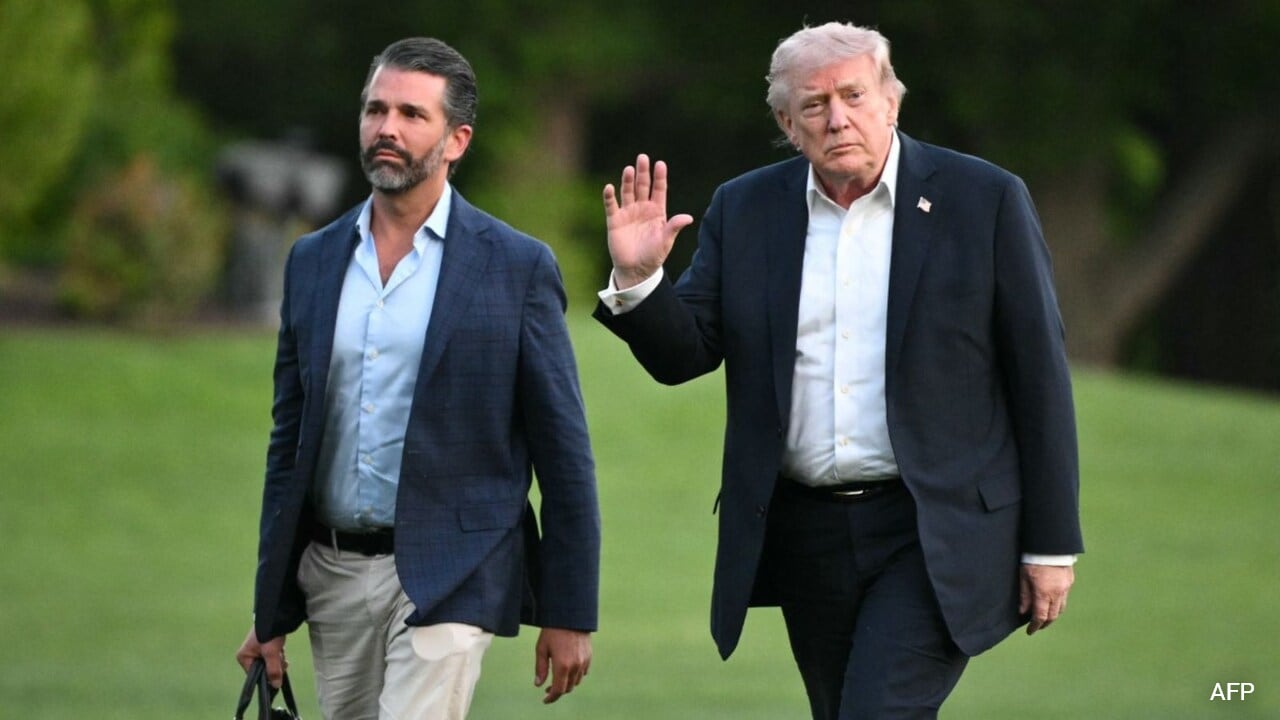
Reports that Donald Trump Jr. privately urged his father not to launch a military campaign against Iran expose a sharp fault line inside the MAGA coalition over dragging the United States into another Middle East war.
That warning did not come from a Beltway dove or a traditional diplomat. It came from the president's eldest son, a figure treated by loyalists as a barometer of populist sentiment, who reportedly opposed the conflict from the start and shared skepticism aligned with voices like the late conservative activist Charlie Kirk. Yet despite private reservations inside the family and cautious murmurs among senior officials such as Vice President JD Vance, Secretary of State Marco Rubio, and CIA Director John Ratcliffe, the administration still moved forward with military action against Iran.
When a president ignores warnings from his own political base's most vocal heirs, the clash is rarely about one tactical strike. It is a collision between two competing versions of America First that have been straining against each other for years.
Why a Family Warning Hits Differently in Washington
In ordinary administrations, internal dissent leaks through policy memos, turf wars between departments, or carefully worded testimony on Capitol Hill. Inside Donald Trump's orbit, family dynamics carry a weight that standard institutional channels cannot match.
Donald Trump Jr. has spent years cultivating ties with populist activists, podcasters, and grassroots organizers who view foreign intervention as a betrayal of the movement's core promise. When he reportedly told his father to avoid another Middle East entanglement, he was speaking the language of voters who came of age watching American resources poured into Iraq and Afghanistan with little to show for it.
Still, family loyalty in the Trump circle operates on an unwritten rule. Private arguments stay private. Even as reports surfaced about his opposition to the Iran conflict, Trump Jr. avoided public confrontation with the president. That restraint matters. A public break would fracture the movement's front; a quiet warning preserves influence while signaling to insiders that the political risk is real.
The tension also carries personal stakes that go beyond poll numbers. Threats against the president's family—including an Iranian state television broadcast that drew Secret Service attention over segments referencing youngest son Barron Trump—underscores how quickly regional hostilities turn personal in modern asymmetric warfare. For a family whose brand and daily security are tied directly to the office, escalation is never just an abstract strategic move.
The Economic Shockwave Behind the Curtain
Foreign policy debates in Washington often sound like chess matches on paper. At the pump and the grocery store, they look like inflation.
Fuel prices averaging above $4 per gallon for a record 158 consecutive days and U.S. inflation climbing to a three-year high of 4.2 percent in May gave domestic critics concrete ammunition. When energy markets tighten amid Middle East hostilities and friction around maritime choke points like the Strait of Hormuz, the bill arrives fast for American households.
Consider a hypothetical example of how that math plays out in a swing district. Suppose a voter backed Trump specifically to lower everyday costs and keep troops out of foreign quagmires. Six months into a regional conflict, gasoline costs more, freight rates creep higher, and negotiations over sanctions, maritime access, and frozen assets drag through mediation rounds in places like Doha without a clean exit. Even if the White House insists Iran has been severely degraded and a settlement is close, voters judge the moment by their monthly bills.
- Energy volatility translates geopolitical friction into immediate retail pain at the gas pump.
- Protracted negotiations over sanctions relief, naval blockades, and nuclear terms complicate quick political victories.
- Public fatigue shows up early in polling, with a Pew Research Center survey finding 65 percent disapproval of the administration's handling of the Iran operation.
Power Pressure Versus Restraint in Trump's Statecraft
To understand why the president pressed ahead despite warnings from his son and caution from top aides, look at how Trump approaches leverage. Throughout his political career, he has treated pressure, disruption, and unpredictability as tools to force concessions rather than liabilities to avoid.
In his view, overwhelming force or the threat of renewed strikes can bend an adversary toward a deal on Washington's terms—whether that involves nuclear constraints, uranium transfers, or reopening shipping lanes. White House pushback framing the campaign as decisive and nearing resolution reflects that mindset.
Yet history offers a sobering counterweight. Middle East escalations rarely stay neatly contained within the initial script. Adversaries adapt asymmetrically, regional partners hedge their bets, and diplomatic off-ramps narrow once strikes begin and casualties or economic shocks mount.
There is also a genuine gray area in assessing what restraint would have cost. Critics of military action warn of quagmire, higher oil prices, and wider instability. Defenders of a harder line argue that backing down or relying solely on sanctions leaves adversaries free to expand influence, threaten shipping, and stall nuclear limits. Neither path is cost-free, which is precisely why the argument inside the administration has been so fierce.
What the Split Reveals About the MAGA Coalition
The friction over Iran lays bare a structural divide inside modern American conservatism. On one side stands hawkish unilateralism, which favors decisive military strikes, maximum pressure, and confronting adversaries head-on when diplomacy stalls. On the other stands populist non-interventionism, which views foreign wars as expensive distractions that drain domestic strength and alienate working-class voters.
Trump has long bridged both impulses through sheer force of personality, convincing hawks he is tough and convincing restraint-minded voters he hates endless wars. A prolonged conflict with Iran tests the limits of that balancing act.
| Coalition Impulse | Core Priority | Main Vulnerability |
|---|---|---|
| Populist Restraint | Avoiding new wars, protecting pocketbook issues | Accusations of weakness or conceding leverage |
| Hardline Pressure | Forcing concessions through strikes and blockades | Escalation risk, energy spikes, protracted talks |
Watch how negotiations unfold over sanctions, frozen funds, and maritime security—because the terms of any exit will decide whether this warning becomes a footnote or a turning point for the movement.
Trump Jr. opposed father's Iran war on YouTube
This video directly covers the report that Donald Trump Jr. opposed the U.S. war with Iran from the outset and favored avoiding another Middle East conflict.


