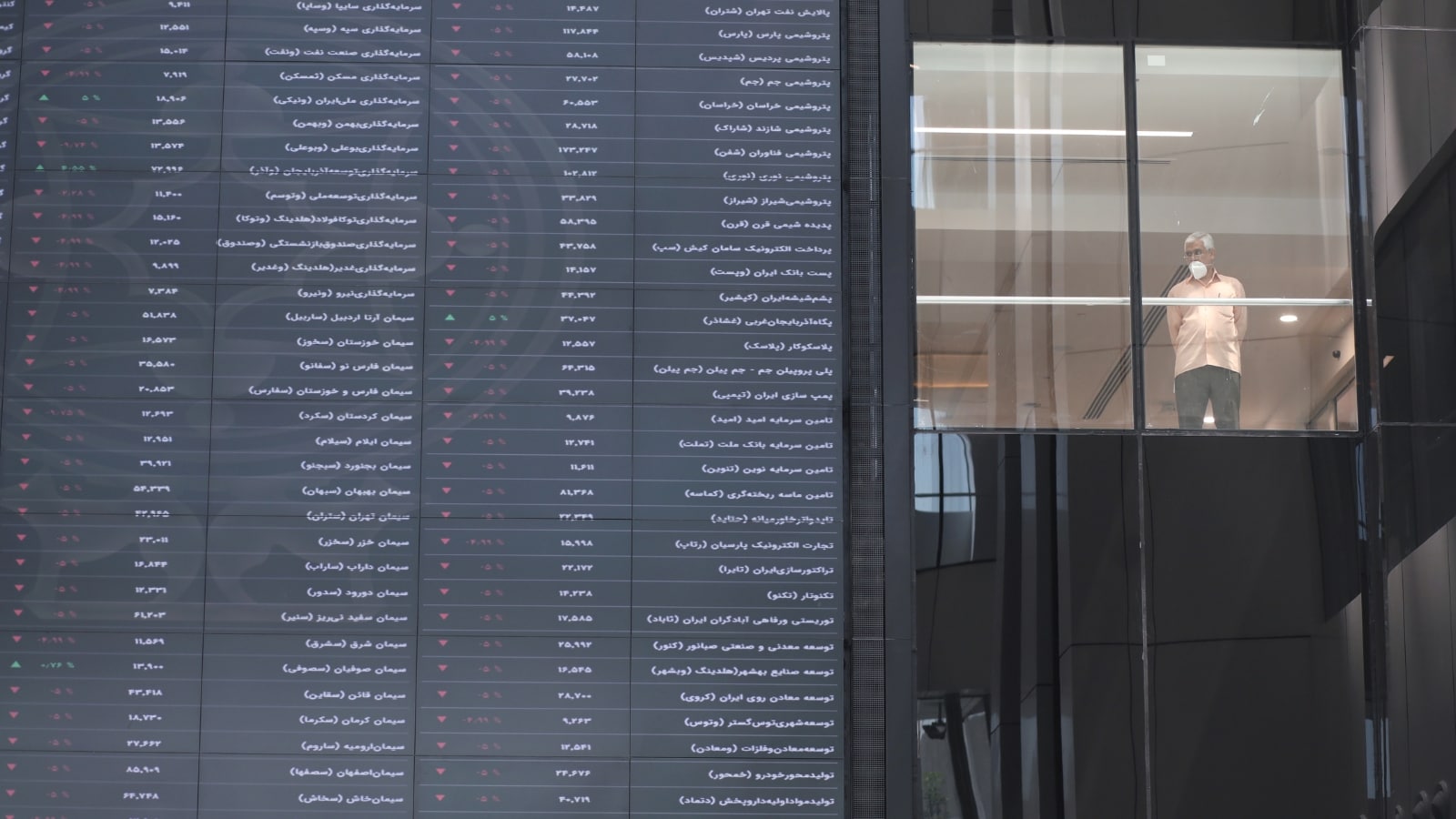
The Tehran Stock Exchange reopened today after an 80-day mandatory wartime suspension, triggering an immediate and massive wave of selling that exposes the severe structural damage within Iran's domestic economy. While state officials framed the resumption of trading as a transition from emergency management to controlled normalization, the numbers on the trading floor tell a far more volatile story. Sell orders swelled to 10.3 trillion tomans against a mere 1.575 trillion tomans in buy orders, leaving nearly 72 percent of active tickers deeply in the red.
This artificial pause, instituted on February 28 following joint U.S. and Israeli missile strikes on Iranian infrastructure, succeeded in freezing paper losses for nearly three months. It did nothing to cure the underlying economic rot.
The Illusion of Investor Protection
Securities and Exchange Organization (SEO) officials previously asserted that shutting down the bourse was necessary to safeguard retail assets and prevent emotional panic. For a nation where an estimated 50 million citizens hold shares—and roughly 1.5 million operate as active traders—the freeze effectively trapped vital household liquidity during a period of unprecedented domestic currency collapse.
The Iranian rial has depreciated rapidly, trading near 1.8 million rials per U.S. dollar on the open market. By locking investors out of the market while the currency cratered, the state did not protect wealth; it ensured that when citizens finally regained access to their capital, its real-world purchasing power had been thoroughly decimated.
Wartime inflation has further complicated this dynamic. Data from the country's statistics center peg annual inflation at 53.7 percent, with food inflation breaching 115 percent. For the 600,000 frequent traders who rely on the market for consistent liquidity, the 80-day freeze was a financial chokehold. The immediate rush to sell at the opening bell was not an emotional overreaction. It was a rational, desperate dash for whatever hard currency or physical assets investors could still acquire.
The Missing Industrial Core
A look at the market heatmap reveals that the reopening is highly selective. More than 40 major corporations remain completely suspended from trading. These are not minor players; they form the industrial backbone of the benchmark TEDPIX index, primarily concentrated in the chemical, petrochemical, and basic metals sectors.
- Physical Bombardment: Multiple production facilities sustained direct damage during the intensive military campaign in March, rendering their asset valuations temporarily unquantifiable.
- Accounting Void: Regulatory rules require timely financial disclosures, yet dozens of listed entities could not hold shareholder meetings or audit inventories while working under wartime blackouts and infrastructure disruptions.
- Supply Line Severance: Ongoing maritime restrictions and the effective closure of the Strait of Hormuz have halted the export pipelines that these industrial giants rely on for revenue.
SEO Chairperson Hajatollah Seydi noted that over 500 companies managed to submit the required financial reports to resume trading. However, returning banking and automotive shares to the board while keeping the heavily damaged heavy-industry symbols frozen creates a skewed representation of the market's true health. The benchmark index cannot realistically price in the macro shocks of a conflict when its largest revenue-generating components are hidden from the order book.
State Intervention and Capital Flight
To prevent a total collapse of the financial system on day one, regulatory authorities deployed strict administrative dampeners. Leveraged funds were subjected to rigid sales caps, limited to 100,000 units per account. Extensions were added to daily trading windows to allow institutional players more time to absorb information and inject stabilizing capital.
These interventions highlight a fundamental flaw in the state's strategy. By placing artificial floors on a market under intense systemic pressure, the government merely delays the price discovery process. Institutional stabilization funds, largely financed by state-aligned banks and pension funds, are being forced to buy equities that retail investors are desperate to dump.
This dynamic transforms the stock exchange into a mechanism for transferring risk from private individuals to an already overburdened state apparatus. President Masoud Pezeshkian explicitly acknowledged the gravity of the situation, warning state institutions that the country must brace for deepening economic pain, reduced oil exports, and unavoidable infrastructure deficits.
The Macroeconomic Reality
The International Monetary Fund projects that the Iranian economy will contract by approximately 6 percent by the end of the year. This contraction is directly tied to the disruption of seaborne trade. Washington’s tightening of naval and port restrictions has shaved over $500 million from Iranian revenue streams in a matter of months, limiting the central bank’s ability to defend the rial or subsidize key industrial inputs.
While global energy markets remain hyper-fixated on the price of Brent crude hovering near $110 a barrel and the resulting inflationary ripples hitting Western bond yields, the internal mechanics of Iran's domestic market have been largely ignored. The Tehran Stock Exchange does not operate on global capital inflows; Western sanctions severed those links years ago. Instead, it serves as a closed-loop pressure cooker for domestic wealth.
When a closed financial system faces a sudden, massive supply shock paired with hyperinflation, equities typically serve as a crude hedge against currency debasement. The fact that the market opened to heavy selling pressure, rather than an inflation-driven rally, demonstrates that local investors are prioritizing immediate cash liquidity over long-term corporate equity.
The state can extend trading hours, mandate reporting guidelines, and ration fund liquidations, but it cannot manufacture investor confidence through regulatory decrees. As long as key industrial tickers remain offline and the physical transit of goods through regional chokepoints remains blocked, the reopening of the bourse serves as an indicator of economic distress, not a signal of recovery.