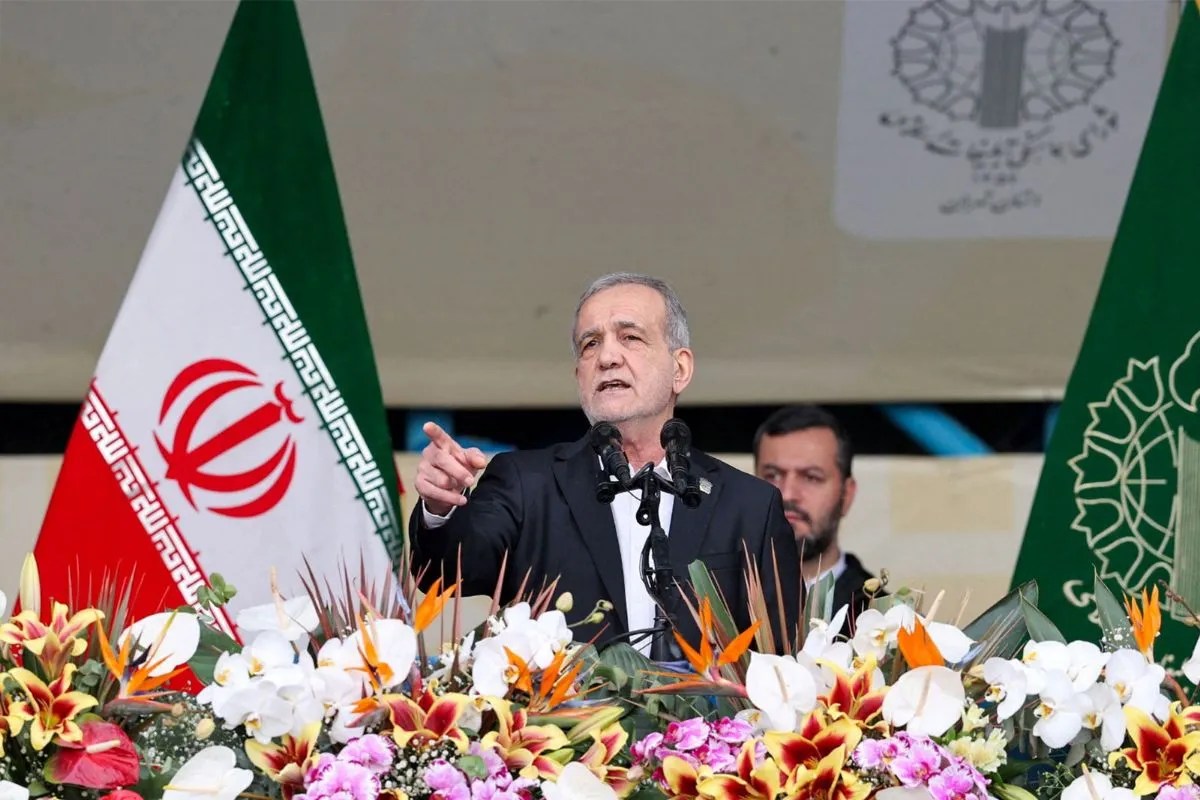
Iranian President Masoud Pezeshkian has drawn a hard line, declaring that Tehran will maintain its military and strategic resistance until American and allied leadership fully regret their ongoing campaign against the Islamic Republic. Speaking through official channels, Pezeshkian asserted that while his administration historically opposes conflict, the reality of the ongoing theater leaves no room for capitulation. This stance exposes the widening chasm between public diplomatic posturing and the grim calculus playing out across regional energy corridors and shipping lanes.
The immediate trigger for this rhetoric involves the persistent breakdown of diplomatic frameworks, specifically the unravelling of arrangements brokered earlier through regional intermediaries like Qatar and Pakistan. Tehran accuses Washington of bypassing the Islamabad memorandum, a temporary accord meant to cap hostilities and ease naval blockades. Instead of a winding down of hostilities, the theater has transformed into a grinding war of attrition marked by missile exchanges, drone activity, and severe disruptions to regional infrastructure.
The Anatomy of a Broken Accord
Diplomacy in the Middle East often dies in the details of enforcement. When regional mediators arranged terms earlier in the year, optimism flickered across foreign ministries from Tokyo to Muscat. Japan, heavily reliant on secure energy transit through the Strait of Hormuz, watched closely as foreign ministers engaged in rapid shuttle diplomacy.
Yet, implementation stalled almost immediately.
- The Naval Blockade: Tehran insists that financial and logistical chokeholds enforced by Western warships violate the spirit of any de-escalation framework.
- Infrastructure Vulnerabilities: Energy facilities and shipping routes remain primary targets, turning commercial transit into a high-stakes geopolitical gamble.
- Trust Deficit: Each side accuses the other of bad faith, rendering third-party mediation largely toothless against domestic political pressures in both capitals.
When Pezeshkian states that the aggressors must feel regret, he is speaking directly to the economic and strategic cost imposed on Washington and its partners. The underlying calculation inside Iran's Supreme National Security Council relies on endurance. Tehran believes that by absorbing initial shocks and projecting asymmetric retaliation, it can alter the cost-benefit analysis of foreign intervention over the long term.
The Regional Spillover
The friction does not stay confined to bilateral statements between Tehran and Washington. Neighboring states find themselves uncomfortably squeezed between two nuclear-adjacent or heavily armed heavyweights. Recent escalations involving strikes near energy hubs and regional population centers have triggered sharp rebukes from the Gulf Cooperation Council.
States like Saudi Arabia, Oman, and the United Arab Emirates walk a tightrope. They cannot afford total regional conflagration because their economic diversification programs depend on absolute stability. At the same time, they must manage security ties with a Western coalition that views containment of Iran as an existential priority.
Consider a hypothetical scenario where shipping insurance rates through the Persian Gulf spike by three hundred percent overnight. Energy importers in Asia and Europe immediately absorb the shock, translating localized military friction into global inflationary pressure. This is the exact lever Tehran intends to pull. By raising the global price of confrontation, the leadership aims to fracture the coalition standing against it.
The Domestic Imperative
Pezeshkian campaigned on a platform of economic reform and pragmatic re-engagement with the international community. Hardline factions within Iran viewed his reformist leanings with deep suspicion. By adopting a fierce rhetorical posture against foreign aggression, the president must constantly balance reformist promises with the ironclad demands of the security establishment.
Showing weakness is fatal in this political ecosystem. When foreign strikes hit domestic infrastructure, public sentiment hardens, even among citizens weary of economic mismanagement and sanctions. The state apparatus channels this nationalist reflex into unified resistance. Pezeshkian's message on social media platforms was tailored precisely for this internal audience: the government will not bow, and sovereignty remains non-negotiable.
The Limits of Maximum Pressure
Washington's strategy relies on the familiar architecture of maximum pressure. Economic sanctions, diplomatic isolation, and targeted military operations form the triad of this approach. Yet, decades of application have revealed diminishing returns. Iran has spent decades engineering a sanctions-resistant economy, relying on clandestine oil-smuggling networks, regional proxies, and bilateral trade arrangements with other isolated powers like Russia and China.
The assumption that financial pain alone will force a complete capitulation ignores historical precedent. Instead, pressure tends to consolidate power around the most radical elements of the security state, pushing moderate voices to adopt defensive nationalism to survive politically.
As foreign ministers trade accusations and naval patrols maintain their tense vigils across critical waterways, the prospect of a breakthrough recedes. Pezeshkian's insistence on total regret ensures that the cycle of action and reaction will continue until one side calculates that the price of persistence outweighs the reward of victory.