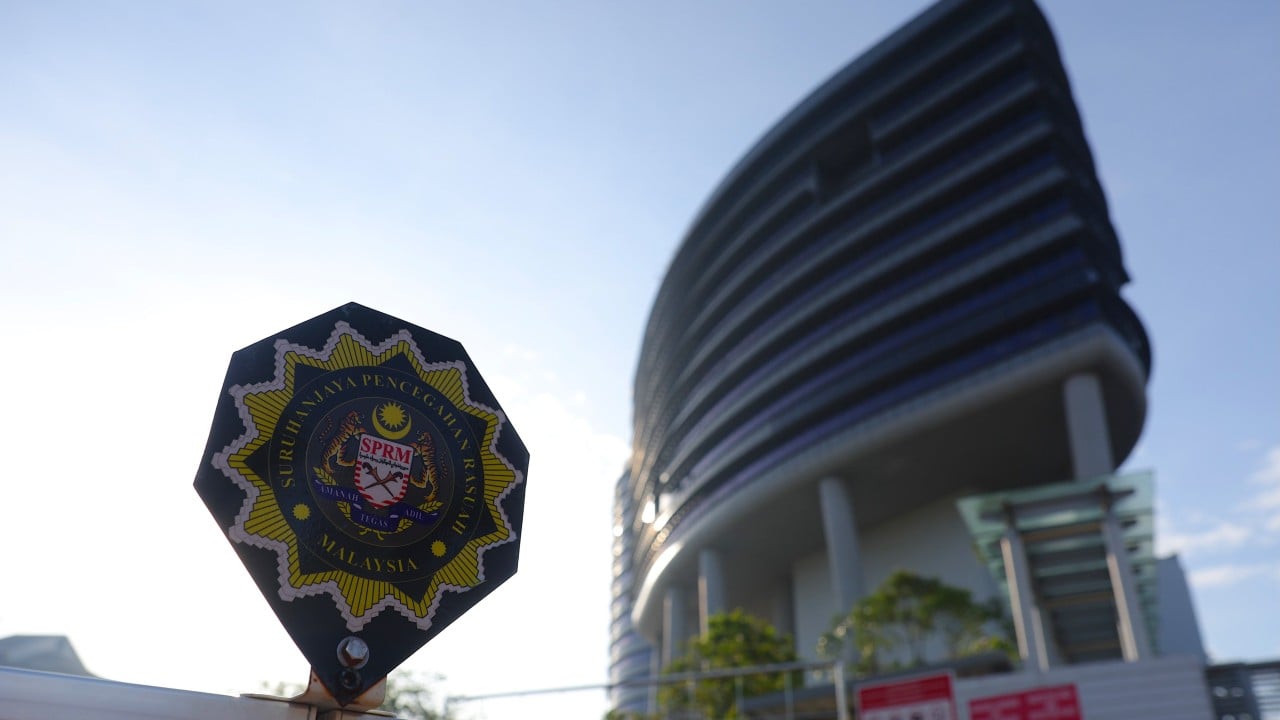
A former Malaysian government minister is scheduled to face three counts of dishonest misappropriation of property at the Kuala Lumpur Sessions Court, marking a sharp escalation in the ongoing legal fallout from the Lembaga Tabung Haji (TH) corruption scandal. The charges, greenlit by the Attorney-General’s Chambers and driven by the Malaysian Anti-Corruption Commission (MACC), stem directly from deep-seated financial irregularities exposed by a Royal Commission of Inquiry (RCI). This state-backed pilgrimage fund, which holds the lifelong savings of millions of ordinary Muslims hoping to fulfill their religious obligations, has long operated behind a shield of institutional piety. Beneath that sacred exterior, however, decades of political patronage, opaque asset leasing in Saudi Arabia, and high-risk investments turned the institution into a playground for elite impunity.
Understanding how a holy institution became vulnerable to systemic looting requires looking past the standard political theater of courtroom arraignments. Tabung Haji is not an ordinary sovereign wealth fund. It is a repository of trust, built on small, incremental deposits made by rural farmers, factory workers, and civil servants who sacrifice for decades for a single spiritual journey. When those at the top treat depositors' funds as discretionary capital, the betrayal cuts deeper than standard corporate malfeasance. The current wave of prosecutions, which has already seen several high-profile corporate figures and former executives hauled before judges, exposes a systemic failure in corporate governance that went unchecked for years because questioning the fund's management was historically painted as questioning Islam itself.
The Anatomy of Institutional Capture
For years, warnings regarding Tabung Haji's sliding asset values were dismissed or actively suppressed. The RCI report, which scrutinized operations and management choices spanning from 2014 to 2020, painted a grim picture of creative accounting designed to artificially inflate dividends. Depositors were paid returns funded by selling down solid assets or through accounting maneuvers, while underlying losses mounted.
Political interference served as the primary engine of this decay. When political appointees sit on boards with fiduciary duties to millions of everyday citizens, conflicts of interest multiply exponentially. In a hypothetical scenario common to state-linked corporate governance across the region, a politically connected board member might advocate for an unviable overseas property acquisition not because it serves the fund's balance sheet, but because it satisfies bilateral political optics or enriches intermediary entities.
The mechanics of the recent charges highlight this structural rot. Take, for instance, the separate prosecution of former TH chairman Abdul Azeez Abdul Rahim, who faced charges for allegedly abusing his position to secure lucrative external corporate roles and influence massive internal investments. When executive power is decoupled from strict accountability measures, institutional checks evaporate. The MACC's current investigative files reveal a pattern where institutional oversight was sidelined to push through transactions involving foreign entities, particularly in Saudi Arabia.
The Cross-Border Enforcement Maze
Investigating financial crimes tied to foreign real estate and international transactions is rarely straightforward. MACC Chief Commissioner Datuk Seri Abd Halim Aman noted that several remaining investigation papers take considerable time to prosecute because they involve foreign entities in jurisdictions like Saudi Arabia and Singapore.
Cross-border asset recovery requires navigating complex Mutual Legal Assistance (MLA) frameworks. Foreign bureaucracies move slowly, banking secrecy laws protect illicit accounts, and paper trails are deliberately obfuscated through layers of shell companies.
The Mechanics of Cross-Border Extraction
- Layering Transactions: Funds are funneled through multiple foreign accounts to sever the direct link to domestic deposits.
- Asset Inflation: Overseas real estate purchases are systematically overvalued, allowing siphon-off margins to disappear into offshore structures.
- Bureaucratic Friction: Obtaining certified banking and property records from foreign sovereign states requires prolonged diplomatic and legal negotiation.
This international dimension explains why sweeping RCI revelations do not instantly translate into immediate courtroom trials for every culpable actor. Building an ironclad case under Section 403 of the Penal Code for dishonest misappropriation, or Section 23 of the MACC Act for abuse of power, demands forensic precision that survives aggressive defense scrutiny.
The Cost of Impunity
The human cost of the Tabung Haji crisis cannot be measured solely in lost ringgit. Every million mismanaged in speculative foreign hotel leases or questionable corporate equity injections represents delayed dreams for aging depositors who find their annual haj allocation slots pushed further out of reach, or their dividend yields reduced to fractions of what they should be.
Reform efforts currently underway, including forensic audits and structural firewalls recommended by the RCI, attempt to restore a semblance of financial health. Yet, institutional rehabilitation requires more than asset recovery and high-profile show trials. It requires a permanent cultural shift that strips away the institutional immunity long enjoyed by political custodians of public wealth.
As the courts process the current lineup of former ministers and executives, the broader system remains on trial. If accountability stops at a handful of scapegoats while the structural incentives for patronage remain intact, the cycle will repeat. The sacred trust of millions demands systemic transparency, and the unfolding legal battles are merely the first step toward reckoning with decades of institutional decay.