The diplomatic architecture of the Persian Gulf is fracturing in real time. While Western news desks hyperventilate over indirect messages and hypothetical peace summits, Tehran and Muscat are quietly rewriting the operational reality of the Strait of Hormuz.
Iran’s foreign ministry made it explicitly clear that recent high-level bilateral discussions with Oman regarding the management and safety protocols of the strategic waterway are taking place entirely without American participation. The message is blunt. Washington is no longer at the table, because Tehran refuses to pull up a chair for them.
To understand why this bilateral pivot matters, look past the immediate headlines of military standoffs and examine the hard geography of global energy choke points. The Strait of Hormuz handles a massive percentage of the world's seaborne petroleum and liquefied natural gas. For decades, the Western security paradigm relied on the U.S. Navy acting as the ultimate guarantor of transit through these narrow shipping lanes. That security architecture is now broken. By engaging directly with Oman—the sovereign custodian sharing the southern coast of the passage—Iran is establishing a new administrative status quo that bypasses Western naval dominance entirely.
The Mechanics of Exclusion
Diplomatic isolation is a two-way street, but Tehran has weaponized it into a strategic asset. Iranian deputy foreign ministers spent days locked in intense operational meetings with their Omani counterparts. The focus of these closed-door sessions was not grand ideological posturing. It centered on common principles and concrete operational mechanisms for commercial shipping.
The Islamic Revolutionary Guard Corps is enforcing strict transit protocols. Commercial vessels attempting to navigate the passage are finding that deviation from Iranian-designated lanes results in immediate interception. Multiple cargo ships and tankers have already been turned back for straying outside these newly imposed corridors.
Tehran insists that the administration of the waterway, including the collection of service fees, falls under a regional management model shared between Iran and Oman as the primary coastal states. Washington is being treated as an external actor with zero locus standi. American officials find themselves reduced to receiving secondhand updates via third-party mediators, entirely cut out from the operational decisions determining whether oil tankers move or stall.
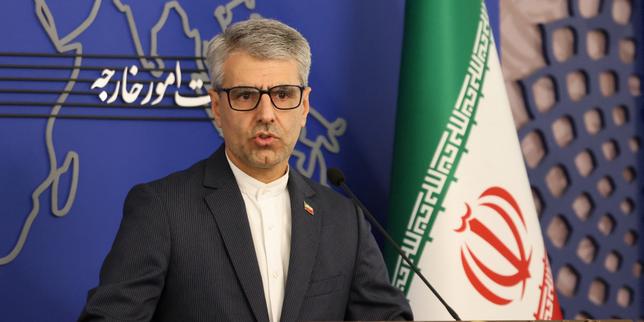
"Claims that Iran has requested negotiations are fabrications that the other side circulates from time to time. As long as the rule-breaking behavior of the United States continues, we cannot be hopeful about any reasonable diplomatic process."
— Iranian Foreign Ministry Spokesperson📖 Related: The Cost of a Carry On
This rhetoric reflects a deeper geopolitical calculation. Tehran recognizes that Washington is constrained by domestic political exhaustion and military supply chain strain. By refusing direct talks with the U.S. while a fragile, temporary pause in hostilities holds, Iran is institutionalizing a regional security framework. Oman acts as the acceptable neutral interlocutor, maintaining traditional ties with Western powers while functionally accommodating Iran's security perimeter in the Gulf.
The Vulnerability of Global Supply Lines
Markets hate uncertainty, but they despise institutional ambiguity even more. For shipping conglomerates, insurance underwriters, and energy traders, the exclusion of the United States from these talks introduces an unprecedented risk matrix.
Under the old rules, a captain knew which maritime coalition patrols guaranteed protection. Today, safety through the strait depends entirely on compliance with Tehran's directives and Omani administrative coordination. If a vessel fails to follow the Traffic Separation Scheme enforced by the Revolutionary Guards, naval assets intervene within minutes.
Insurance premiums for Gulf transit have reacted violently to this shift. Marine underwriters are pricing in the reality that Western navies cannot project power inside the bottleneck without triggering a wider conflagration. Consequently, shipowners are capitulating to the new procedures. They log into regional reporting channels, adjust their headings to match Iranian specifications, and pay whatever administrative or service tolls are demanded.
The Omani Balancing Act
Muscat plays a historically delicate hand with masterly precision. As a neighbor to both the Gulf Cooperation Council states and Iran, Oman’s foreign policy is rooted in strict non-alignment and active mediation. Hosting these bilateral talks allows Oman to secure its own maritime approaches while preventing total economic strangulation in the region.
Yet, this stance carries inherent hazards. By cooperating with Tehran on the operational governance of the strait without Western oversight, Oman risks irritating defense planners in Washington and London.
The strategy highlights a sobering reality for Western foreign policy experts. Regional actors are increasingly willing to solve security crises independently, even if it means codoning unilateral assertions of power by adversaries. When security guarantees from distant superpowers fail to prevent disruptions, littoral states revert to local accommodation.
The Broader Middle Eastern Realignment
This exclusion of American oversight is symptomatic of a broader regional decay of U.S. hegemony. Across the Middle East, back-channel diplomacy is bypassing traditional Western mediation. From Red Sea security architectures to Gulf energy transit routes, local capitals are concluding that Washington's ability to police trade lanes is outmatched by local asymmetric deterrence.
Iran's enforcement of transit restrictions proves that physical control on the ground—and on the water—trumps distant maritime superiority. You can park aircraft carriers in the wider ocean, but if coastal batteries and fast attack craft dictate the day-to-day clearance of a twenty-mile-wide channel, local actors write the rules.
The temporary lull in direct kinetic exchanges offers a deceptive calm. Beneath the surface, a permanent structural change is solidifying. The Strait of Hormuz is transitioning from an internationalized commons under western naval oversight into a managed regional corridor overseen by its actual neighbors, with the United States left watching from the outside.
Commercial vessels continue to creep along the designated paths under the watchful eye of patrol craft. The toll collectors are established. The Western patrol boats remain anchored over the horizon, powerless to alter the transit terms enforced in the bottleneck.