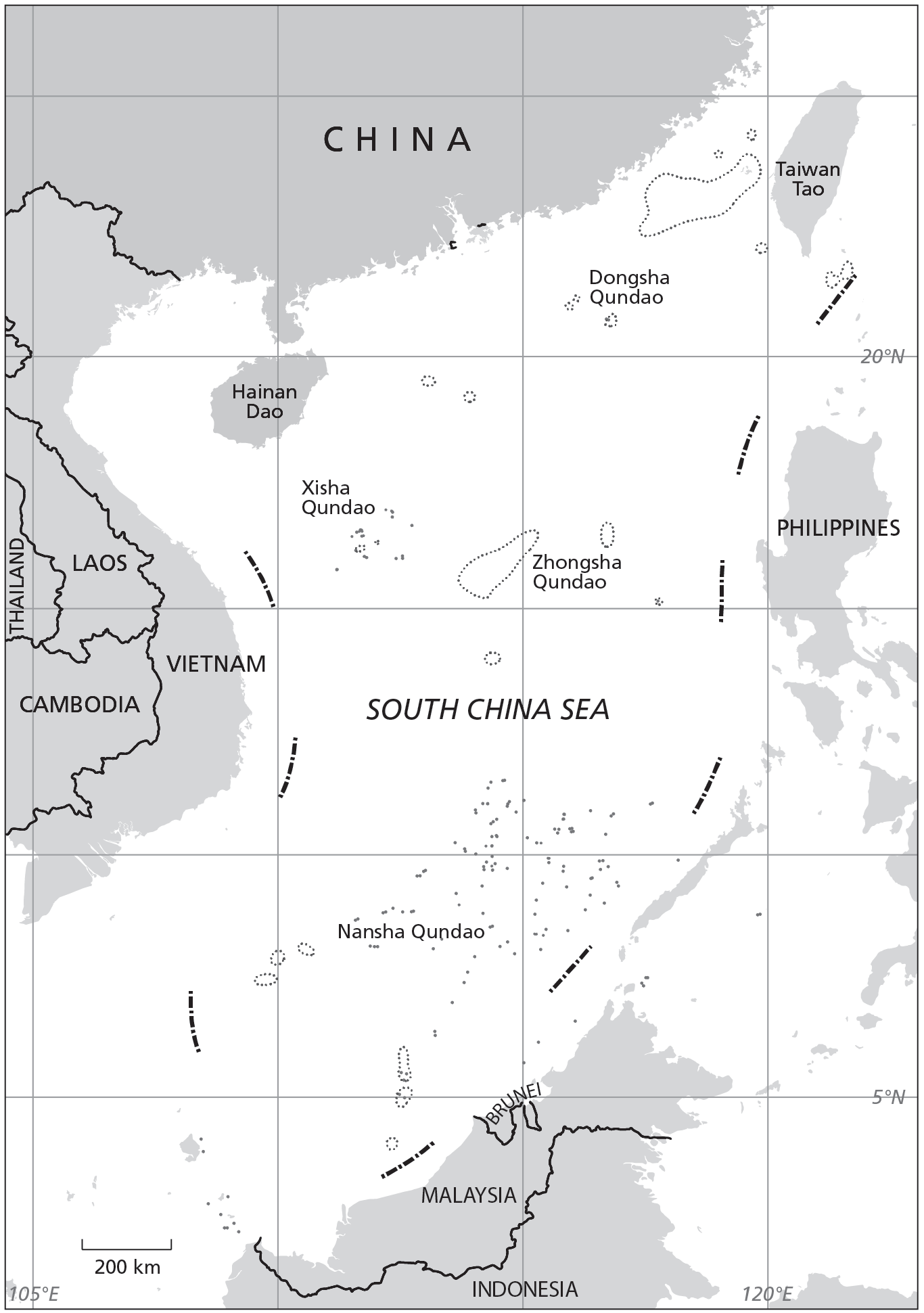
The standoff at Sandy Cay did not start with the five Philippine personnel who stepped onto the sandbar this Sunday. It started years ago, when the strategy of "assertive transparency" turned a quiet coral reef into a theater for a high-stakes game of chicken. On May 3, 2026, the familiar script played out again: Beijing accused Manila of "illegal" landings, while Manila countered by tracking four Chinese vessels conducting unauthorized research in Philippine waters. The accusations are loud, but they are merely the surface noise of a much deeper, structural decay in regional stability that no memorandum of understanding has yet been able to patch.
This latest flare-up near Thitu Island is not an isolated incident. It is a symptom of a permanent state of friction. For the Philippines, these landings are essential acts of sovereignty to prevent the "Sabin Shoal scenario"—where a lack of continuous presence leads to a de facto Chinese takeover. For China, any footprint by a U.S. ally on these features is a direct challenge to the "nine-dash line," a maritime boundary that international law rejected in 2016 but which Beijing enforces with increasing physical force.
The Sabin Shoal Ghost
To understand why the Philippines is now aggressively landing personnel on unoccupied sandbars like Sandy Cay, one must look at the scars left by the BRP Teresa Magbanua. In late 2024, that vessel was forced to retreat from Sabin Shoal after five months of a brutal Chinese blockade. The crew was reduced to eating rice porridge; four personnel were carried off on stretchers, suffering from dehydration and malnutrition.
The withdrawal was a tactical defeat that Manila is determined not to repeat. The current strategy has shifted from anchoring large, vulnerable ships to deploying small, mobile teams of personnel. This "mosquito" tactic is designed to be harder to blockade but easier to message. By putting boots on the sand, the Philippines forces China to choose between two unpalatable options: ignore the presence and lose face, or use force against individuals and risk triggering the 1951 Mutual Defense Treaty with the United States.
The Cyanide Factor and Environmental Warfare
While the headlines focus on ship maneuvers, a more insidious conflict is happening beneath the waves. In April 2026, Philippine national security officials confirmed that laboratory tests on bottles seized from Chinese fishing boats near Second Thomas Shoal contained cyanide. This is not just about illegal fishing; it is a form of environmental sabotage that destroys the very ecosystems the Philippines relies on for food security.
China denies these claims, calling them a "stunt," but the pattern is consistent with a broader strategy of "gray zone" harassment. If you cannot legally claim the territory, you can make it uninhabitable for the local population. By destroying the reefs, the incentive for Philippine fishermen to venture into these waters vanishes, effectively clearing the area for Chinese maritime militia without firing a single shot.
The Illusion of the Red Line
The United States has repeatedly stated that an "armed attack" on Philippine public vessels, aircraft, or armed forces would invoke mutual defense obligations. However, the definition of an "armed attack" remains dangerously fluid. Is a high-pressure water cannon that blinds a sailor an armed attack? Is the deliberate ramming of a coast guard hull—as seen in August 2024—a trigger for war?
Beijing has masterfully operated just below this threshold. They use "non-lethal" coercion that causes structural damage and physical injury but stops short of kinetic warfare. This leaves Washington in a diplomatic bind: intervene and risk a global conflict over a pile of sand, or stay back and watch an ally lose its territory inch by inch.
Why the Code of Conduct is Failing
Diplomats often point to the ongoing negotiations for a South China Sea Code of Conduct (CoC) as the light at the end of the tunnel. In reality, the CoC is a stalling tactic. While China engages in "monthly meetings" with ASEAN members, it simultaneously builds military infrastructure and expands its coast guard's legal authority.
In June 2024, China introduced Order #3, which allows its coast guard to detain "foreigners" in disputed waters for up to 60 days without trial. This law transformed a territorial dispute into a legal trap. When Manila lands personnel on Sandy Cay, they aren't just facing ships; they are facing a legal architecture designed to criminalize their existence in their own Exclusive Economic Zone.
The Logistics of Exhaustion
The struggle in the South China Sea has become a war of attrition. It is a contest of who can stay on station longer and who has the stomach for perpetual tension.
- China's Advantage: A massive fleet of maritime militia and coast guard vessels that can rotate indefinitely, supported by artificial island bases like Mischief Reef.
- The Philippines' Challenge: A much smaller fleet that must travel long distances from the mainland, vulnerable to blockades and mechanical failure.
- The Global Stake: One-third of global shipping passes through these waters. A miscalculation by a single ship captain could disrupt trillions of dollars in trade.
The current "thaw" in relations—heralded by recent bilateral consultation meetings in Quanzhou—is a mirage. Both sides are finalizing a "cooperation agreement" between their coast guards, but these documents rarely survive the first water cannon blast. The fundamental issue is that Manila and Beijing are no longer talking about the same map. One follows the United Nations Convention on the Law of the Sea (UNCLOS), while the other follows a historical narrative that the rest of the world does not recognize.
The personnel who landed on Sandy Cay this Sunday have since returned or been rotated, but the vessels watching them have not moved. The standoff has simply moved to a different coordinate. Until the international community moves beyond "expressing concern" and begins to impose actual costs for environmental destruction and maritime harassment, the cycle of accusation and escalation will continue until the friction finally generates a spark that cannot be extinguished.
Secure the perimeter or lose the sea. It is that simple. Mounting a defense requires more than just sovereignty patrols; it requires a permanent, sustainable presence that can withstand a blockade without starving. Manila’s pivot to smaller, more frequent landings is a desperate but necessary evolution in a fight where the rules are written by the side with the most ships.