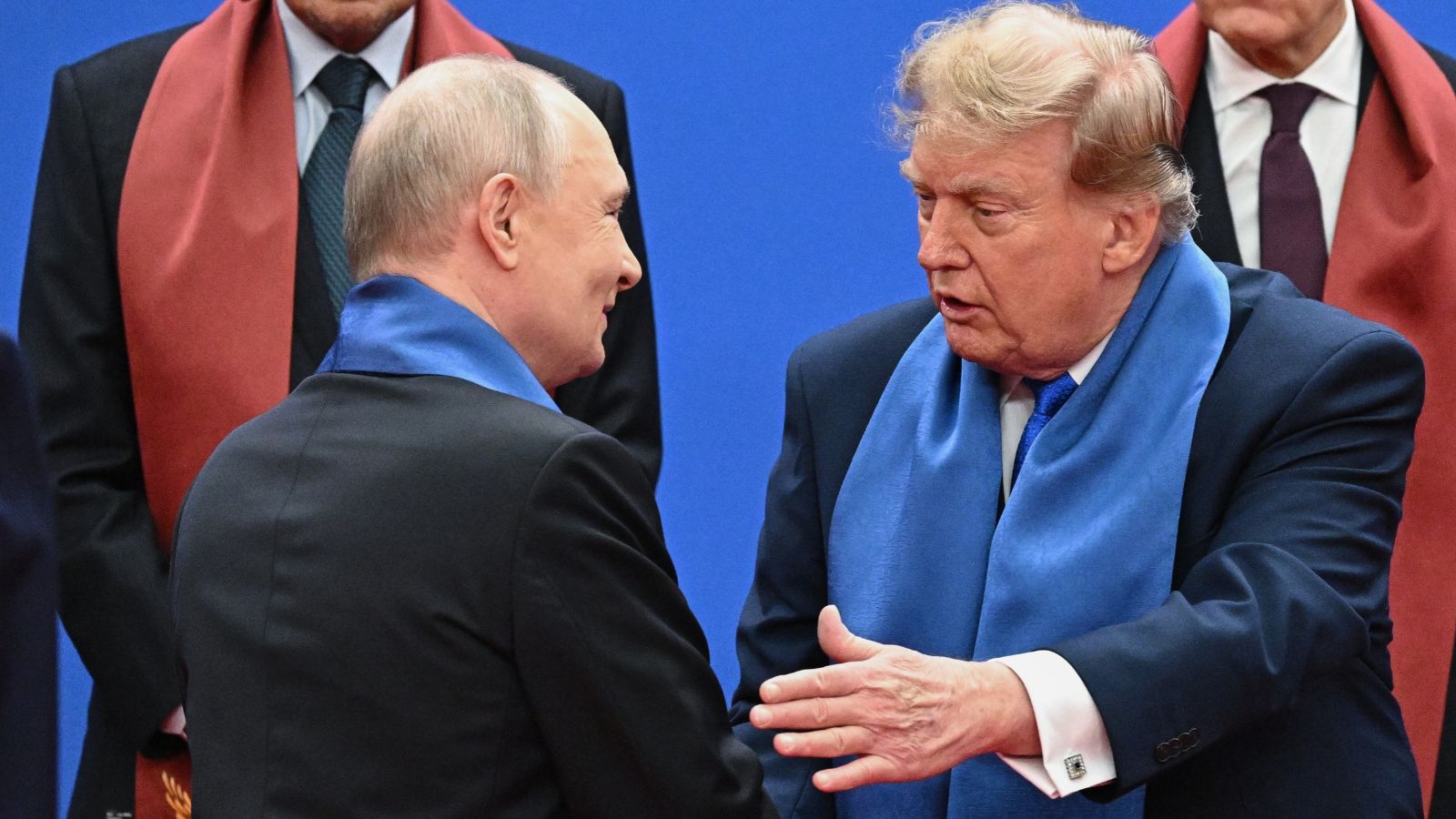
When Donald Trump, Xi Jinping, and Vladimir Putin sat down at Kylin Villa in Shenzhen on November 19, 2026, the optics were unmistakable. For roughly ninety minutes on the sidelines of the APEC summit, the leaders of the world’s three dominant nuclear powers convened the first trilateral meeting of its kind, emerging with a four-point joint declaration on peace—and zero concrete resolutions on the active wars in Ukraine or Iran.
Most coverage of the Shenzhen trilateral summit focused on the pageantry. Trump told the room they were "really making history" and insisted that "no peace was ever forged by declining opportunities for engagement". Yet behind the carefully choreographed handshakes, the meeting operated less as a breakthrough peace conference and more as a high-stakes transaction where each leader walked away with vastly different domestic and geopolitical dividends.
The Architecture of a Photo Op
To understand what happened in Shenzhen, look first at what was left off the table. Despite Trump's pre-summit remarks about the staggering casualty rates in Eastern Europe—estimating 25,000 soldiers lost a month—the final communiqué made no mention of Ukraine, Taiwan, or the conflict involving Iran.
Beijing engineered it that way. Days before the leaders arrived, Chinese diplomats pushed aggressively for a tightly scripted format built around prepared remarks rather than open-ended negotiation. Xi Jinping had zero interest in being ambushed on live television over Russian military operations or dragged into mediating a European land war on Chinese soil. By hosting the Shenzhen trilateral summit on his own turf, Xi secured the ultimate visual prize: positioning China as the indispensable convener of global power, the room where Washington and Moscow must come to talk.
For Vladimir Putin, the return on investment was equally immediate. Facing Western diplomatic isolation and an International Criminal Court arrest warrant, Putin stepped back onto the center stage of international diplomacy. Better still, he got Washington and Beijing to co-sign a remarkable clause in the U.S.-Russia-China Heads of State Declaration toward Peace. Buried within the four points was an explicit endorsement of the "principle of state consent and respect for immunities of State officials," paired with a warning that the International Criminal Court and similar bodies "must not abuse their jurisdiction". Without firing a shot or conceding an inch of Ukrainian territory, Putin secured joint superpower backing to delegitimize the legal mechanisms targeting his regime.
What the Four-Point Declaration Actually Says
Strip away the diplomatic varnish, and the Shenzhen declaration reveals a careful balancing act of recycled language and quiet mutual self-interest. The document rests on four pillars:
- United Nations Reform: All three nations pledged to overhaul the UN to better respond to global challenges. In practice, this serves as a reminder of their shared status as permanent, veto-wielding members of the Security Council—an exclusive club that excludes rising powers like India, Brazil, and Germany.
- Energy Market Stability: The leaders committed to boosting the production and supply of refined petroleum products. For Trump, stable energy flows directly serve domestic inflation goals. For Putin, it signals tacit acceptance of Russian energy remaining wired into global supply chains.
- Sovereign Immunity: The joint pushback against international tribunals reflects a shared skepticism of supranational legal oversight—a longstanding pillar of both Kremlin and Beijing foreign policy that aligns neatly with the Trump administration's own hostility toward international courts.
- Nuclear Risk Reduction: The statement reaffirmed the classic Reagan-Gorbachev formula that "a nuclear war cannot be won and must never be fought," accompanied by a pledge to conduct dialogue on reducing nuclear risks and preventing proliferation.
Notice the phrasing on that fourth point. "Dialogue on reducing nuclear risks" is a far cry from binding nuclear arms control. Washington has spent years trying to pull Beijing into formal treaty limits as China rapidly expands its warhead stockpile. Beijing has consistently refused. In Shenzhen, Xi gave Trump a talking point on nuclear stability without agreeing to a single inspection, cap, or verification mechanism.
Why European Capitals Are Sounding the Alarm
The loudest skepticism following the Shenzhen meeting hasn't come from Washington, Beijing, or Moscow. It has come from Brussels, Berlin, and Kyiv.
European security analysts view the trilateral format as an asymmetric trap. On paper, a three-way summit suggests three independent poles balancing one another. On the ground, Russia and China operate with deep strategic alignment—reaffirmed in their May 2026 joint statement criticizing NATO and Western influence. When Trump sits across from Xi and Putin simultaneously, he isn't mediating between two rivals; he is facing a coordinated two-against-one dynamic where Moscow and Beijing reinforce each other's core security narratives on Ukraine and Taiwan.
Furthermore, bypassing traditional European allies to discuss global security architecture directly with Moscow and Beijing revives old anxieties about great-power spheres of influence. While foreign policy veterans at the Council on Foreign Relations noted that fears of a "Yalta 2.0" carving up the map proved overblown—largely because no substantive territorial deals were struck—the precedent itself carries weight. If Washington signals that major security frameworks can be negotiated bilaterally or trilaterally without European input, allies from Warsaw to Tokyo face mounting pressure to rethink their reliance on American security guarantees.
The Leverage Imbalance Behind Closed Doors
Beneath the geopolitical grandstanding lies a stark economic reality. Trump entered Shenzhen seeking tangible wins for American voters—specifically pressing Beijing on the first day of APEC to purchase more American agricultural products. That transactional approach plays directly into Xi Jinping's hands.
Chinese statecraft operates on long time horizons, willing to absorb short-term economic friction to protect core political priorities. By dangling agricultural purchases or vague commitments on artificial intelligence guardrails, Beijing extracts high-value diplomatic legitimacy from Washington while keeping its real chokepoints—like rare-earth processing and industrial supply chains—in reserve. Meanwhile, the bilateral friction over advanced semiconductor export controls and chip smuggling remains entirely unresolved.
Russia's position inside this triangle is equally revealing. Despite the pomp of equal seating at Kylin Villa, Moscow enters these talks as Beijing's junior economic partner, heavily reliant on Chinese markets and industrial goods to sustain its wartime economy. Putin needs the trilateral stage precisely because it masks that dependency, projecting parity with Washington and Beijing at a moment when Russia's conventional military remains bogged down in attrition.
The Miami Test
Diplomatic theater only holds its value until the next crisis tests the script. The Shenzhen summit established a channel for direct communication among the three leaders, which carries genuine utility in preventing accidental escalation during periods of acute friction. Talking is better than miscalculating.
Yet the true measure of Shenzhen won't be found in the white papers released by the White House or China's Foreign Ministry. It will play out on December 14 and 15 in Florida, when Trump hosts the G20 summit at his Doral resort in Miami. Xi is expected to attend, and Trump used their Shenzhen huddle to float an invitation to Putin as well. Whether Moscow accepts—and whether Washington backs its rhetoric on Ukraine, semiconductor enforcement, and nuclear verification with concrete demands rather than applause lines—will determine if Shenzhen was the start of serious diplomacy or merely an expensive photo op.