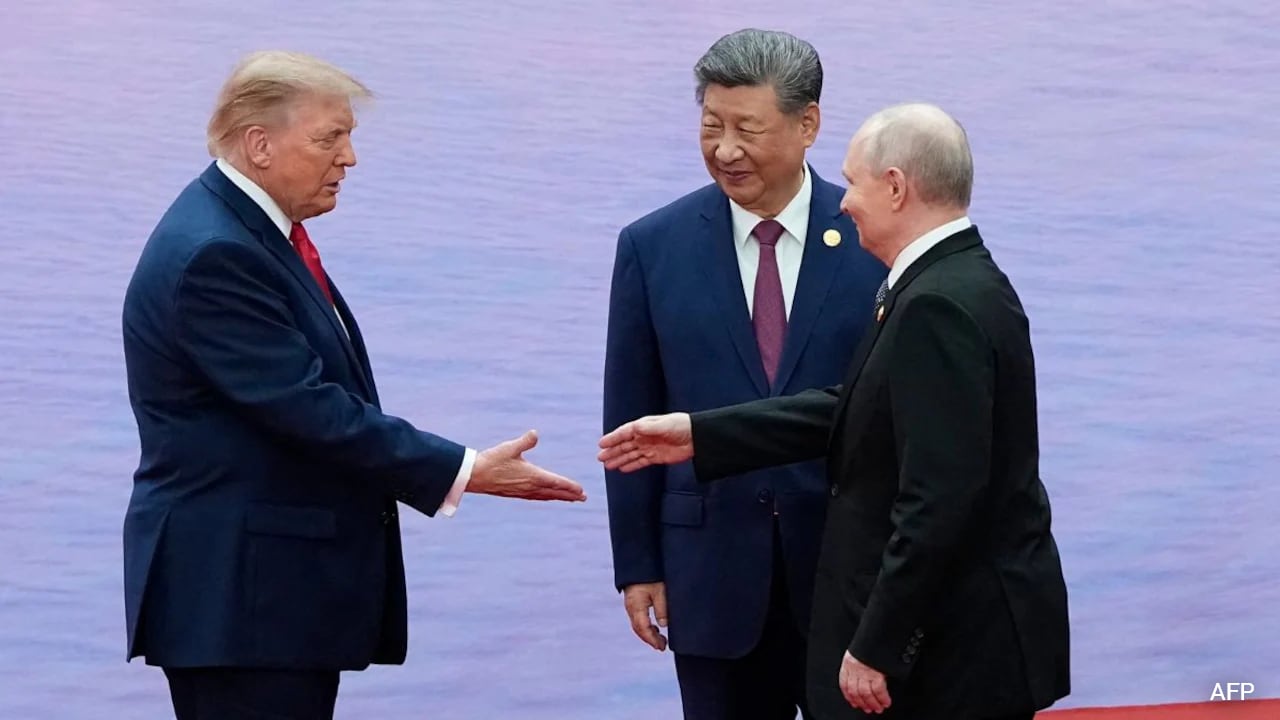
When Donald Trump, Vladimir Putin, and Xi Jinping walked into Kylin Villa in Shenzhen on November 19, 2026, the cameras captured a geopolitical rarity: the leaders of the world's three most heavily armed nations sitting together in the first-ever U.S.-Russia-China trilateral summit. Official readouts framed the gathering around a four-point Declaration toward Peace covering United Nations reform, refined petroleum production, nuclear risk reduction, and limits on international courts. Strip away the diplomatic pleasantries, however, and the meeting served a far sharper purpose. Rather than settling active wars in Ukraine or Iran, the three leaders used the sidelines of the Asia-Pacific Economic Cooperation (APEC) forum to test a new model of great-power management—one that sidelines traditional alliances and elevates sovereign immunity over international oversight.
The Four Pillars of the Shenzhen Declaration
Diplomatic communiques rarely reveal everything, yet the text signed in Shenzhen reads like a blueprint for how Washington, Moscow, and Beijing intend to insulate themselves from external accountability. While the headline promises sounded cooperative, each clause carried specific institutional targets. Meanwhile, you can explore other events here: Why Prosecuting Radicalized Teens Like Masterminds Is Failing Counterterrorism.
- United Nations Security Council Reform: As permanent veto-wielding members, the three governments pledged to restructure the UN so it conforms to what they called its fundamental mission of international peace. In practice, this signals an effort by the P3 (the three major nuclear powers on the council) to reassert control over an organization increasingly fragmented by General Assembly votes and regional blocs.
- Refined Petroleum Expansion: Rather than focusing on green transition targets, the leaders committed to boosting the production and global supply of refined petroleum products. With Middle Eastern shipping lanes strained by the ongoing Iran conflict, Washington, Moscow, and Beijing share a direct domestic interest in keeping fuel prices from spiking ahead of winter.
- Curbing the International Criminal Court: In the sharpest break from post-Cold War legal norms, the declaration explicitly rebuked the International Criminal Court (ICC) and similar tribunals. The three leaders stated that state consent and the immunity of sitting officials must come first, accusing international bodies of abusing their jurisdiction.
- Nuclear Risk Dialogue: Reaffirming the Reagan-Gorbachev dictum that a nuclear war cannot be won and must never be fought, the three countries agreed to open talks on reducing nuclear risks and halting proliferation.
"No problems were ever solved under the old school refusing to talk about them. So, no peace was ever forged by declining opportunities for engagement and speech." — Donald Trump, opening remarks in Shenzhen.
What Each Leader Actually Walked Away With
To understand why three rivals agreed to share a stage in southern China, you have to look at their separate domestic pressures. Nobody traveled to Guangdong Province out of altruism. To explore the full picture, we recommend the detailed analysis by NPR.
Xi Jinping and the Optics of Parity
For Beijing, hosting the summit was a high-wire act. Chinese officials wanted to showcase their country's convening power without allowing the trilateral spectacle to swallow the broader APEC leaders' meeting. Xi achieved both. Within a single twelve-month stretch, the leaders of the other four permanent UN Security Council members—Emmanuel Macron, Keir Starmer, Vladimir Putin, and Donald Trump—had all traveled to China.
Protocol details told the real story. Xi personally greeted Trump at the Shenzhen airport and sat beside him at the opening dinner. In group photographs, however, Beijing carefully alternated who stood to Xi's right—the position of higher honor in Chinese diplomatic protocol. Trump held that spot before the gala dinner; Putin stood there in the final summit portrait. By rotating the two men around himself, Xi visually positioned China as the indispensable hub between Washington and Moscow. At the same time, Chinese scholars such as Fudan University's Wu Xinbo pushed back against comparisons to the 1945 Yalta Conference—a meeting from which China was excluded—insisting Shenzhen was about stabilizing great-power friction rather than carving up spheres of influence.
Vladimir Putin's Rehabilitation Tour
For the Russian president, simply sitting between the leaders of the world's two largest economies broke years of Western diplomatic isolation. Putin arrived in Shenzhen facing an active ICC arrest warrant, making the declaration's attack on international court jurisdiction a direct diplomatic victory for the Kremlin.
Beyond the optics, Putin used the trip to remind Asia-Pacific nations that Russia remains an integral regional actor despite European sanctions. Calling the discussions "open" and "very useful," he framed the trilateral format as a return to World War II-era great-power responsibility. Crucially, he secured that validation without making a single public concession on Russian troop deployments in Eastern Europe.
Donald Trump's Transactional Gamble
Trump entered Kylin Villa operating on a personal conviction: direct talks among top decision-makers bypass bureaucratic gridlock. Having already held bilateral sessions with both Xi and Putin earlier in the day, the U.S. president used the three-way table to push two immediate priorities. First, he sought leverage to contain fallout from the conflict with Iran, testing whether Moscow and Beijing would help stabilize regional energy markets. Second, he secured Beijing's signature on a nuclear risk dialogue—a notable shift, given China's long-standing refusal to enter arms-control discussions while its nuclear arsenal remains smaller than those of the U.S. and Russia.
The Glaring Omissions Behind Closed Doors
What a summit leaves off the communique often matters more than what gets printed. Despite hours of bilateral and trilateral diplomacy in Shenzhen, the toughest flashpoints remained frozen.
Ukraine sat at the center of Trump's separate bilateral meeting with Putin, yet neither side reported progress on territorial boundaries or postwar security guarantees. Earlier in November, U.S.-brokered negotiations between Russian and Ukrainian representatives in Abu Dhabi—the fourth round of such talks—had already ended without an agreement. Bringing Xi into the room did not unlock a breakthrough. While Putin told reporters that Moscow, Washington, and Beijing share an interest in resolving the war, China showed no appetite for pressuring Russia into terms the Kremlin rejects.
Even the nuclear clause stopped well short of a treaty. Agreeing to talk about nuclear risk reduction is a far cry from capping warhead counts or verifying missile deployments. Moreover, the three capitals approach proliferation from entirely different angles. Washington worries about Tehran's nuclear ambitions. Moscow and Beijing, by contrast, are increasingly focused on preventing U.S. allies—specifically Germany, Japan, Poland, and South Korea—from developing independent nuclear deterrents if they begin doubting American security umbrellas.
The Semiconductor and Trade Clock Is Ticking
Beneath the handshakes in Shenzhen lies an unresolved economic collision. The trilateral declaration made no mention of tariffs, export controls, or supply-chain chokepoints—the exact issues driving day-to-day friction between Washington and Beijing.
Trump confirmed to NBC that he discussed artificial intelligence directly with Xi during their meetings. That conversation took place against a backdrop of tightening U.S. enforcement against AI chip smuggling and persistent threats from Beijing to restrict exports of rare-earth minerals and critical processing materials. While the two countries extended a temporary trade truce to buy negotiating room, that truce expires on January 10, 2027.
For American and European businesses operating across Asia, the Shenzhen photo ops should not be mistaken for a permanent thaw. If Washington enforces stricter semiconductor controls over the coming weeks, Beijing still holds the ability to squeeze Western manufacturers on rare earths. Conversely, the White House retains substantial tariff and financial escalation tools if talks stall before the January deadline.
Why Middle Powers Are Watching With Unease
Perhaps the most consequential reaction to the Shenzhen summit came not from the three principals, but from the capitals left outside the room. By convening a top-level directorate of Washington, Moscow, and Beijing on the sidelines of APEC, the three leaders revived an old fear among mid-sized nations: that major powers will cut deals over their heads.
In Tokyo, Japanese Prime Minister Sanae Takaichi used her own bilateral encounter on the summit margins to press Putin directly for the release of a detained Japanese journalist—a reminder that regional neighbors face immediate, unresolved friction with Moscow even as Washington extends diplomatic courtesy. In Brussels and Kyiv, officials watched the joint attack on the International Criminal Court with alarm, recognizing that an informal pact between the U.S., Russia, and China to shield state officials weakens the legal architecture Europe relies upon to deter aggression.
The real test of Shenzhen arrives in less than three weeks. On December 14 and 15, 2026, Trump hosts the Group of 20 (G20) summit at his Doral resort in Florida. Xi is expected to attend, and Putin has received an invitation. Unless the three leaders turn their Shenzhen communique into measurable movement on Ukraine, Iran, and the January 10 trade deadline before they reconvene in Miami, November's historic gathering will be remembered less as a turning point for global peace and more as a masterclass in mutual political theater.