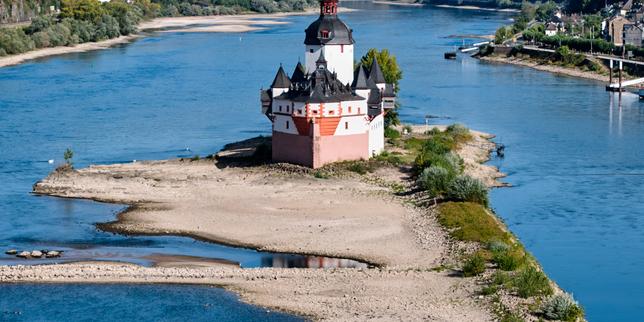
The water is disappearing. When the Rhine drops to critical depths, the economic engine of Central Europe stutters, chokes, and threatens to grind to a permanent halt.
Low water levels on the Rhine are no longer isolated seasonal anomalies. They represent a structural threat to the logistics networks of Germany, Switzerland, and the Netherlands. For decades, this legendary river functioned as a liquid highway, carrying millions of tons of coal, steel, chemicals, and consumer goods. That reliability has shattered. Climate shifts across the European continent mean prolonged summer droughts and meager winter snowpacks. The river cannot replenish itself fast enough to keep pace with modern industrial demands.
The Logistics Bottleneck
Barges moving up and down the Rhine operate on tight margins of weight and clearance. When water levels at critical gauges like Kaub drop below forty centimeters, standard vessels can no longer load to full capacity. Operators must scale back cargo weights by fifty percent or more just to keep from scraping the riverbed.
The arithmetic of freight transport changes overnight. Shippers require twice or three times as many vessels to move the same volume of goods. Rates skyrocket. Manufacturers in the industrial heartland of North Rhine-Westphalia watch their transport costs multiply within days.
- Partial loads: Barges run half-empty to reduce draft.
- Vessel shortages: Demand for shallow-draft ships spikes instantly.
- Spike pricing: Spot market freight rates surge beyond corporate budgets.
Alternative modes of transport offer little relief. The rail network, particularly in Germany, suffers from chronic maintenance backlogs and capacity constraints. Shifting cargo from water to rail is a logistical impossibility when the tracks are already congested with passenger traffic and freight. Highways face similar gridlock, and trucking companies struggle with severe driver shortages.
Industrial Fallout
Heavy industry absorbs the initial blow. Chemical giants, steel mills, and energy producers rely on the river for continuous feedstock delivery. When raw materials fail to arrive on schedule, production lines slow down or shut down entirely.
Consider the energy sector. Coal-fired power plants situated along the banks require massive daily tonnages to generate electricity. Low water levels restrict fuel deliveries precisely during summer heatwaves when electricity demand for air conditioning surges. Power generation drops, forcing grid operators to scramble for expensive alternatives.
Refineries face identical pressures. Crude oil and refined products move efficiently by water. Interruptions force operators to ration supply, rippling outward into fuel prices at service stations across the region.
Economic Ripple Effects
Macroeconomic indicators rarely capture the immediate friction felt on the ground. Gross domestic product figures for Germany dip noticeably during severe Rhine low-water events.
- Chemical production: Plants in Ludwigshafen trim output due to feedstock shortages.
- Steel manufacturing: Blast furnaces operate below capacity as coking coal deliveries stall.
- Automotive supply chains: Component manufacturing slows down, delaying vehicle assembly across Europe.
Supply chain managers now factor river levels into their annual risk assessments. Just-in-time manufacturing models collapse when the transport corridor dries up. Companies are forced to maintain larger buffer stocks locally, tying up capital and driving up warehousing costs.
Structural Adaptations
Naval architects and logistics firms are racing to redesign the fleet. Traditional deep-draft barges are giving way to specialized shallow-water vessels equipped with lighter hulls and more efficient propulsion systems. These ships can navigate skinny channels with minimal clearance.
Yet, fleet renewal requires massive capital investment. Smaller barge operators, many of them family-owned businesses running a handful of vessels, struggle to secure financing for new builds. Consolidation looms over the inland shipping sector as independent operators sell out to larger logistics conglomerates.
Infrastructure modifications along the riverbed itself remain contentious. Dredging operations can deepen channels, but environmental groups raise valid concerns regarding the impact on local ecosystems, fish habitats, and riverbank stability. Engineering projects move at a glacial pace, bogged down by bureaucratic hurdles and public opposition.
Governments in Berlin and Bern talk of comprehensive master plans. Investment in rail corridors accelerates, albeit slowly. Digital tracking systems for river traffic improve transparency, allowing operators to optimize departures and gauge loads with precision.
The water keeps dropping anyway. The fundamental reality of the Rhine remains unaltered by policy papers or boardroom strategies. Without a dependable channel, the geography of European manufacturing faces an unavoidable reckoning.
The Horizon
Every dry summer season tests the limits of adaptation. Shippers hoard capacity. Factories burn through emergency reserves. Policymakers debate long-term climate adaptation strategies while short-term deficits mount.
The river dictates the terms. No amount of corporate restructuring or logistical ingenuity alters the basic physics of floating a heavy steel hull through shallow water.
The margin for error has evaporated.