The New England Sports Network made a calculation that backfired instantly. By pulling a 15-second political advertisement from Maine U.S. Senate candidate Graham Platner midway through a Friday night broadcast, the network intended to protect its majority owner, Fenway Sports Group, from a blunt public shaming. Instead, the regional sports network triggered a major conversation about corporate censorship, regional sports networks, and the intersection of political speech and private corporate interests.
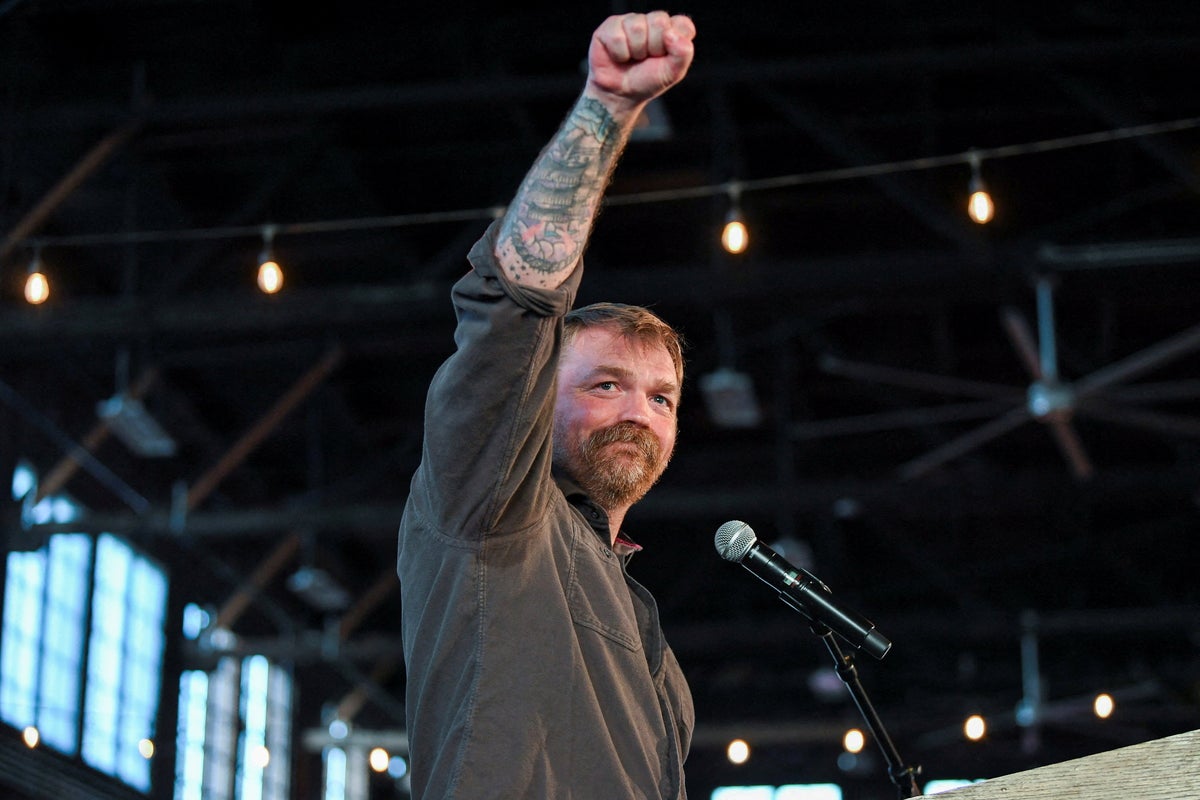
Platner, the presumptive Democratic nominee challenging incumbent Republican Senator Susan Collins, purchased commercial airtime during a Boston Red Sox game against the Minnesota Twins. His advertisement bypassed traditional political talking points to strike New Englanders directly in their emotional center. The spot blamed private equity and corporate consolidation for ruining the housing market, American public life, and the Boston Red Sox.
"Private equity has destroyed our favorite baseball team, stripping them for parts," Platner stated in the voiceover. "I approved this message because I miss Mookie Betts."
The Corporate Loophole in Political Broadcasting
The network stopped airing the commercial partway through the telecast, citing a technicality. In an official statement, a network spokesperson claimed the advertisement "included unauthorized use of third-party intellectual property and did not comply with NESN’s advertising standards." Specifically, the campaign utilized a stylized font that mirrored the classic Boston Red Sox typography.
Legal experts and veteran broadcast executives recognize the move as a highly calculated deployment of a massive regulatory loophole.
Under Federal Communications Commission guidelines, traditional over-the-air broadcast television stations like CBS, NBC, or ABC are legally barred from censoring or refusing ads from legally qualified candidates for federal office. If a candidate pays for the slot, the station must run it, regardless of how offensive or critical the content is to the station's management.
Regional sports networks do not operate under those rules. Because they are delivered via cable, satellite, and direct-to-consumer streaming apps, they are completely exempt from the FCC’s "reasonable access" and "no censorship" provisions. A cable network retains the absolute right to refuse any commercial it deems inappropriate, offensive, or harmful to its business interests.
The Core Deflection
The official explanation focuses entirely on typography. The network asserted that protecting intellectual property was the sole motivation for pulling the spot.
Industry insiders view this rationale with heavy skepticism. Political advertisements routinely use imagery, colors, and stylistic nods associated with local institutions to establish a sense of place and connection. Had the advertisement praised the historic legacy of Fenway Park while using the same font, the network's legal department almost certainly would have looked the other way.
The true friction point rests in the content of the critique. Fenway Sports Group, led by billionaire John Henry, has faced years of intense local scrutiny regarding its financial philosophy. Once celebrated for breaking the eighty-six-year championship drought and delivering four World Series titles, ownership now regularly encounters fierce fan backlash over payroll reduction, cost-cutting measures, and the high-profile departures of foundational superstars like Mookie Betts.
By linking fan exhaustion over a mediocre roster to the broader, systemic economic anxieties of the American working class, Platner hit a highly sensitive corporate nerve. The network did not just pull a political ad; it suppressed an internal critique of its own corporate parent on its own airwaves.
The Backfire Effect
The strategy miscalculated the realities of modern political communication. In trying to quietly bury a localized 15-second commercial, the network handed the candidate a massive national megaphone.
Platner immediately seized on the cancellation to validate his populist campaign narrative. Within hours, his campaign leveraged the ban into a viral fundraising tool, arguing that billionaires were actively suppressing the truth because they could not handle public criticism.
"We ran an ad during last night's Red Sox game exposing how private equity is making everything in our lives worse, and it got pulled midway through the game by a station owned by Red Sox ownership," Platner announced to his followers. He added a sharp jab that resonated deeply with disgruntled fans: "And of course, the Red Sox blew a 4-0 lead to lose the game."
The Collins campaign attempted to redirect the conversation, dismissing the incident as a tactical distraction from previous controversies surrounding the challenger's judgment. But the narrative had already shifted away from candidate optics and directly toward the mechanics of media ownership.
The Fractured Business Model of Local Sports Media
This censorship controversy highlights a structural vulnerability within regional sports networks. These networks are experiencing severe economic stress due to cord-cutting, declining subscriber fees, and shifting consumer habits.
To survive, these networks rely entirely on the intense emotional loyalty of local fanbases. They require consumers to pay premium monthly fees specifically to watch their local teams. When a network uses its regulatory freedom to shield its corporate owners from legitimate fan frustration, it risks alienating the very audience keeping the business solvent.
The decision to pull the ad shows a corporate structure prioritizing brand protection over regional goodwill. Fenway Sports Group has evolved into a global sports, media, and entertainment conglomerate with massive holdings, including Liverpool FC, the Pittsburgh Penguins, and NASCAR's RFK Racing. To a multi-billion-dollar enterprise, a single 15-second spot during a regular-season baseball game may seem minor. But to a regional audience that views the baseball team as a public trust, using corporate power to silence a critic looks defensive and weak.
The network succeeded in removing a specific font from its Friday night broadcast. In doing so, it confirmed the exact thesis of the advertisement it tried to kill.